Tuesday, June 06, 2006


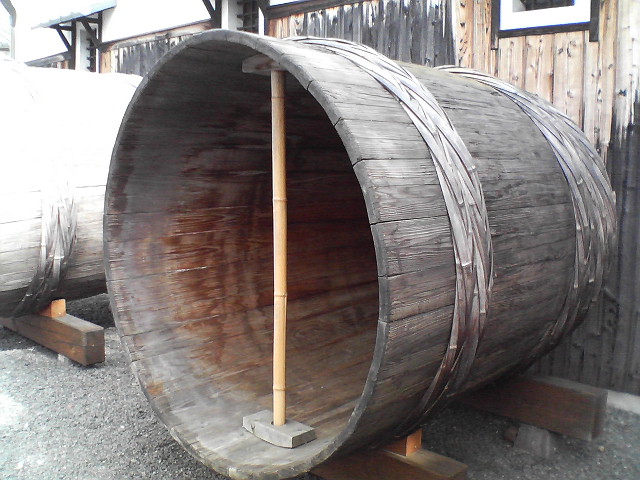
Here are the giant bottles of sake that I drank at the museum. The Japanese guy said I was the only one to ever drink them both and live. He wanted to take my picture and put it up on the wall, but I was already face down on the floor at that point.

These sake serving bottle pairs are very famous according to Maya - the Japanese girl who was to my left. Please don't ask me why these sake bottles are famous...I simply do not know.

Gekkeikan Sake Brewery (お酒)

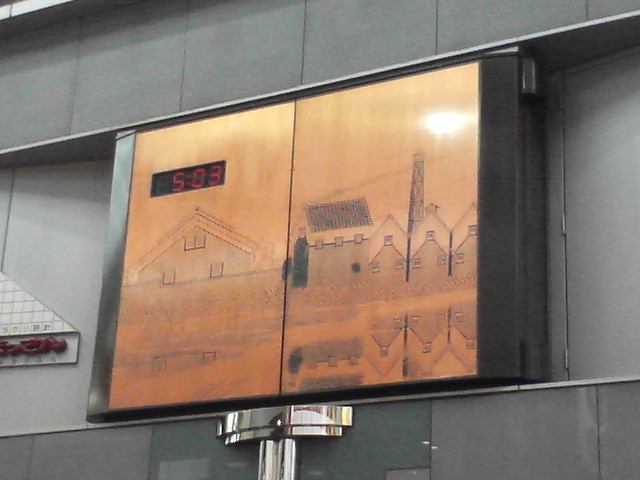
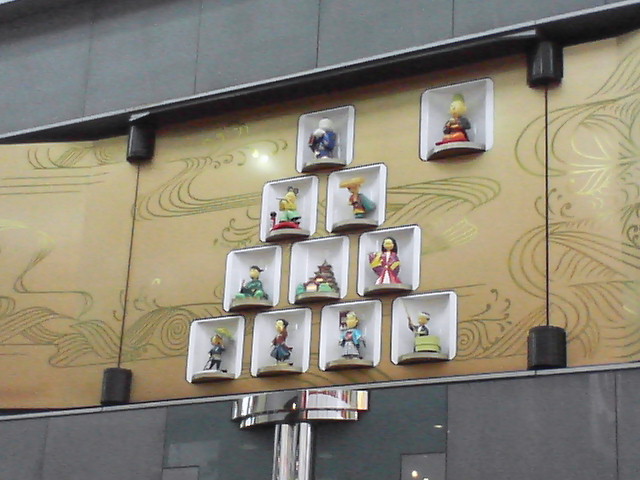
Before I attended the dazzling bank-front clock show pictured below, I went with a group of Japanese medical students from Kyoto University to the Gekkeikan Brewery.

As a short aside; in Japan you can major in medicine as an undergraduate, so most of the Japanese students were my age. After you get your undergraduate degree you then have to apply to med-school same as in America. Med-school in Japan is also very hard to get into just like in America.

Anyways, back to the juice! The Gekkeikan Brewery is one of Japan's most famous sake brands. A while back my father purchased a carbonated sake for me in America (one of my first sake tastes) and little did I know it was in fact made by this famous brand (you could buy it in the gift shop). They also make sake marinated pickles, sake fruit-juice drinks, sake-flavored soft serve (tastes just like regular vanilla - but maybe I was too drunk off sake at that point to appreciate the subtle sake flavor), and sake body lotions and shampoos, which make the scent of your skin and hair the apple of any Japanese homeless person's eye.

The brewery was basically a museum that showed how sake is made (you can see the steps down below). Most of the Japanese kids found the museum to be pretty boring (I guess I can't blame them - there are more fun things to do than stare at different sized barrels). One Japanese guy had mastered a sarcastic tone in English and kept practicing it throughout the day. He found an actual occassion to use it when describing the sake museum, "I enjoyed it SOOOOOOO much (rolls eyes)."

Sake in Japanese means either alcohol or sake. Just to be a language snob for a moment, *Sake is pronounced saw-kay AND NOT saw-kee as many foreigners say it. Just like geisha is gay-shah AND NOT gee-shah* Japanese people drink warm sake in the winter and cold sake in the summer (though you can always order both varieties...I like warm sake more cause it smoothes out the alcohol taste). Sake is either poured into very small cups or small wooden boxes.

I tried three different types of sake at the museum; a sweet sake, a dry sake, and a plum wine. I liked the sweet sake the best. The Japanese kids told me that this was going to be a picnic so I didn't eat lunch beforehand. Because of this there was nothing in my stomach and the sake got me a little buzzed.

B.E.W.

Here is the sign outside the famous Gekkeikan Sake Brewery in Kyoto. This is one of the two major sake breweries in Japan and is very famous. You can buy many of their products in America as well, including a carbonated sake. Follow me inside to see exactly how everyone's favorite rice wine is made!

A good sake requires good rice. It all starts with a heaping mound of everyone's favorite grain.

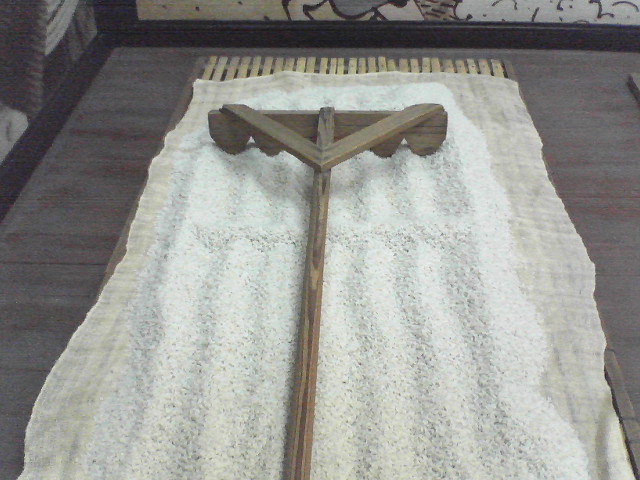
The rice is raked out in giant rows like this so that it can be inspected for impurities. Don't laugh, the Japanese take their rice VERY SERIOUSLY! This picture is like a zen rock garden only with rice.

Here is a big tank where the rice is cooked into a gooey mixture. Next it will be pressed and de-juiceified.

This looks an awful lot like a catapult, but it is in fact a sake press. The rocks tilt the stick-which pulls down the weight-which presses the juice out-which goes into the fermentation barrels. It's like the game MouseTrap.

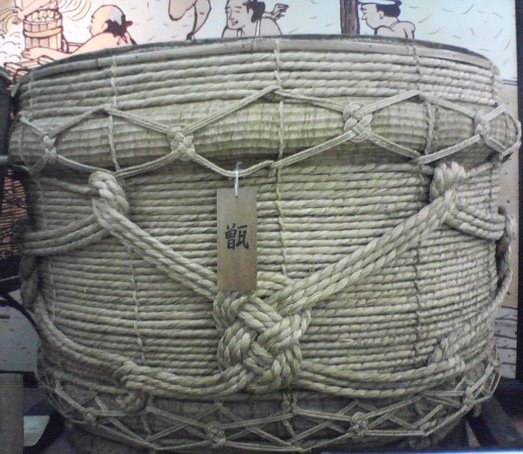
Here is one of the giant fermentation barrels - the sake is almost done!

Here is the finished product ready for the guzzling.

Monday, June 05, 2006

Machiya (町家)

We went and visited a "machiya" or traditional Japanese house as a field trip with all the center kids this morning (though many were visibly absent). The machiya was actually pretty far away by taxi, because you have to get out of the downtown Kyoto area in order to enter into the more historic districts.

As stated, a machiya is a traditional Japanese house. The one we visited today just celebrated its 100 year anniversary. Some machiya are older and some are newer. It is generally the case however that modern-day construction is killing off these old types of buildings, so it was neat to get the opportunity to glimpse into the past.

Below are some pictures you can browse to give you an idea how the furui-sedai (older generation) lived. The hostess at the machiya was very nice. She gave us a tour in Japanese (which very few of the Stanford kids could understand, so they groaned and made faces of boredom while she talked about the importance of shadows and light). After the tour, she gave us tea and sweets. Some people said the tea was too bitter, but I thought it was just right.

B.E.W.

The front of the machiya!

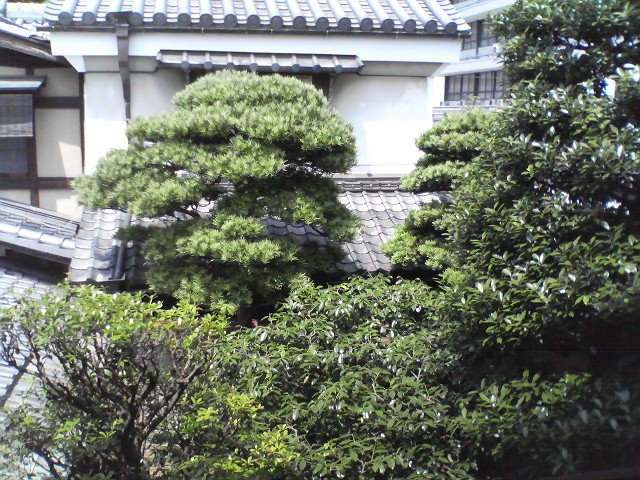
The view from the second floor of the machiya with all the pretty Japanese trees.

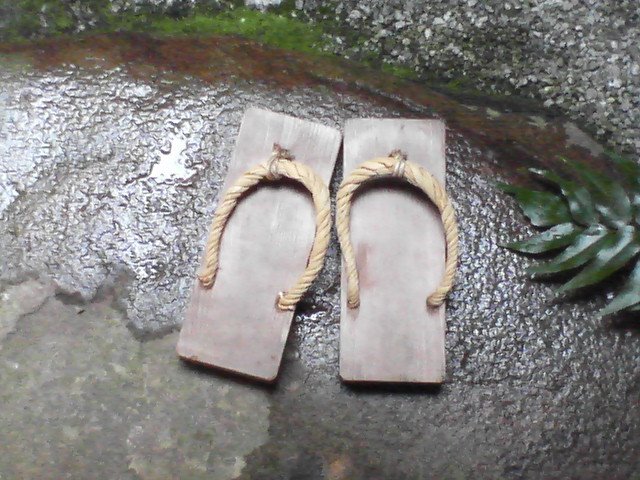
My artistic photo of a pair of wooden sandals or "geta" sitting on a damp rock by the machiya garden. If only I had some time-lapsed video of rain water dripping off moss-covered rocks, I could be Ang Lee's next cinematographer.

Here are some traditional Japanese cooking pots on display at the machiya (I love typing that word...M-A-C-H-I-Y-A...machiya!)

Here is a neat old-style hanging print / painting with a naked lady on it found on one of the walls of the machiya.

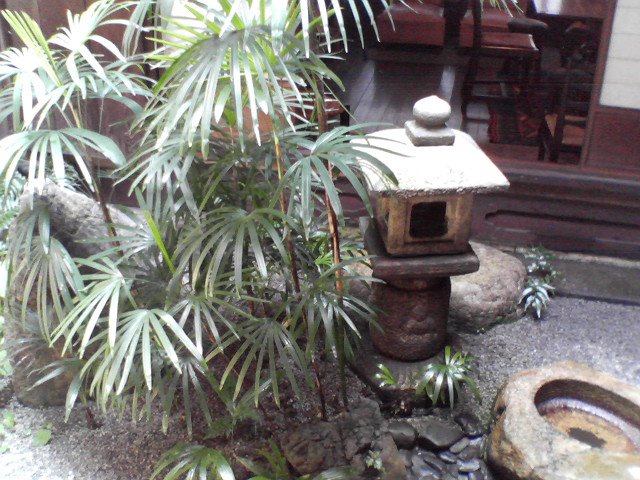
Here is a shot of the garden of the machiya. Light and shadows play an important role in the layout of the machiya. Nowadays there are electric bulbs throughout the premise, but it used to be that the garden was located in a specific place so that it would be illuminated by the sunlight.

Here is an interesting looking fish sculpture from one of the corners of a room in the machiya.

Here is a cooking space in the machiya's floor for making tea and others items that require a flame.

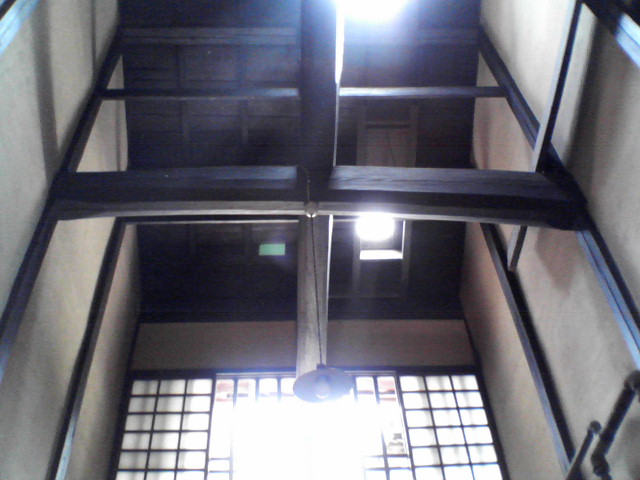
Here is the ceiling of the machiya. The ceilings were built extra tall back in the day so that, in the case of a fire, the flames would move upwards and not spread to nearby homes.

Sunday, June 04, 2006

The Fushimi Eclectic

Here are some random and fun pictures that didn't really fit into the categories up above (soon to be posted). These pictures (and the ones to come up above) were all taken during my day trip today to Fushimi with the English conversation club at Kyoto University.

I really don't know where exactly we went, because the trip was very much led by one all-knowing Japanese girl who led us around like the sheep we are. At one point we all piled onto a small wooden boat and went speeding down a river to an observation platform. After that a brief stop at the platform we took the boat back to civilization and walked through a small covered shopping area. It was in this shopping area that we waited and witnessed the majesty of the Kyoto City Bank public clock show.

Soon to come: Pictures of Sake...YUM

B.E.W.

Eagerly awaiting the beginning of the clock show!

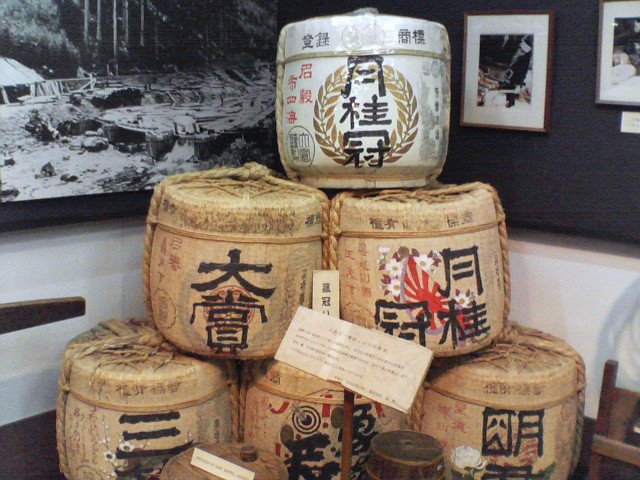
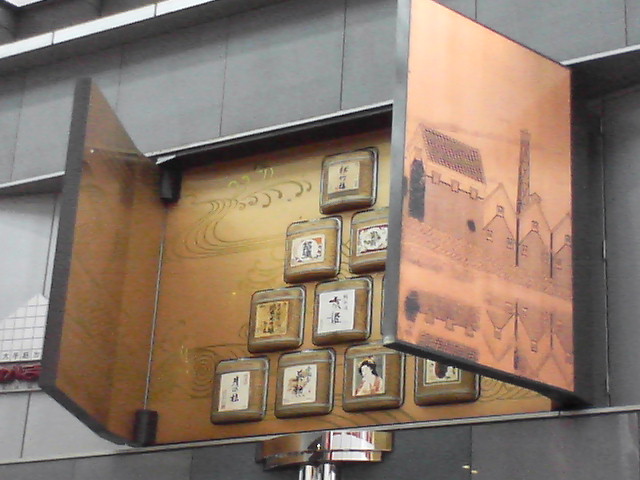
Here you can see that the clock show is opening. Inside is a pyramid of sake barrels - these will soon burst open in an eye-popping display of mediocrity.

Here is the end of the clock show with all the little figures playing their music and dancing (i.e. clunking back and forth). This is the payoff that captivated a crowd of Japanese people. SUGOI (not)!!!

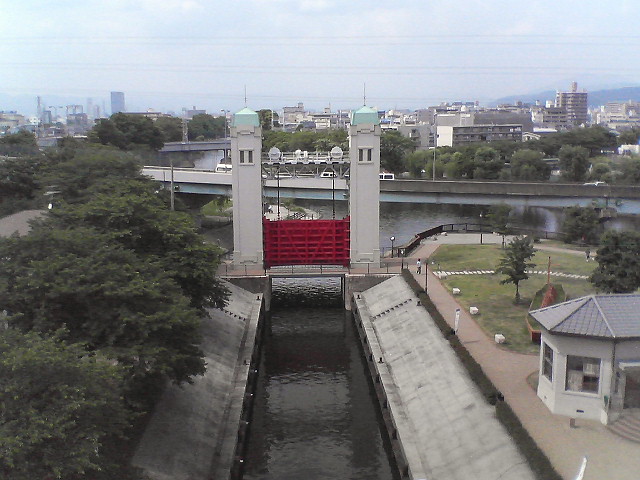
The view from the observation tower - I must say that the view was hardly breathtaking. The giant red gates lift up and down to let boats pass. The giant red gates, coupled with the fact that we were on a small boat reminded me of the Jurassic Park: The Ride at Universal Studios.

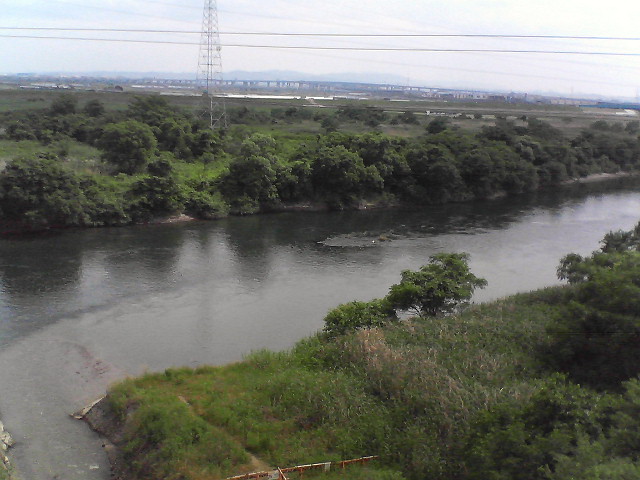
Here is a view of the river from the top of the observation tower.

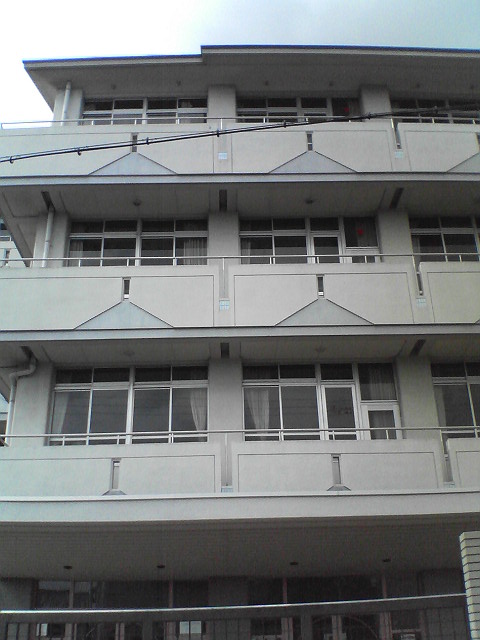
Here is a picture of the world's largest elementary school (or so it seems) in Fushimi, Japan. We passed by this place and I couldn't help but take a picture. This elementary school more closely resembles a hotel than it does a place of learning. It was so big that I couldn't fit it all into the frame.

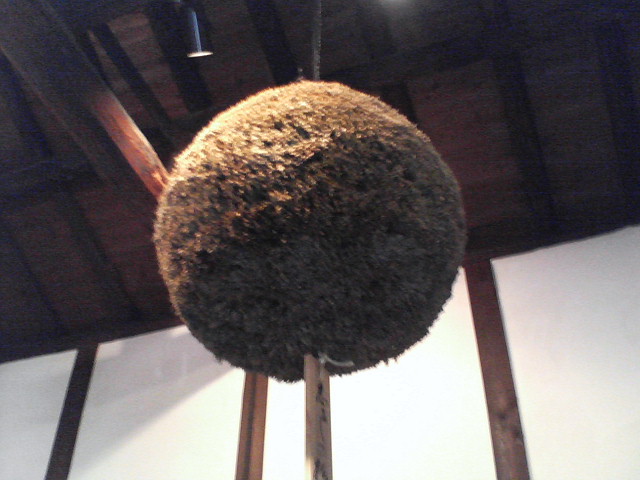
Here is a weird hanging ornament that looks like it was cut from somebody's front hedge. I thought it looked neat so I snapped the picture.

Mt. Hiei (比叡山)

Below are pictures from my religion class trip to Mt. Hiei. Mt. Hiei is the center for Tendai Buddhism, founded in the 800s by the Buddhist monk Saicho. There are several different temple structures on Mt. Hiei as you can see in the pictures down below. Certain factions of the monks on the mountain will travel the 23 mile round-trip mountain path everyday while reciting scripture. I guess out trip wasn't that bad.

However, the trip to Mt. Hiei was still an exercise in physical exhaustion. It seems that every religion class field trip ends with climbing a mountain. This one was no exception (I guess it wouldn't be since the place we were visiting had 'mountain' in the title).

By the time we left for home my clothes were saturated with sweat and I was panting like Brad Pitt the dog. Several of us joked that they should make shirts that say "The Emperor's Physical Fitness Test" on them and hand them out to anyone who completes the Mt. Hiei journey.

Enjoy the pictures below.

B.E.W.

Saturday, June 03, 2006


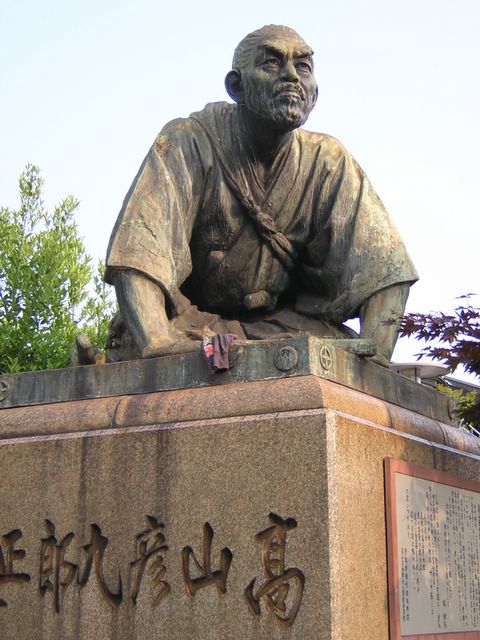
This guy is a famous (and surprisingly large) statue in downtown Kyoto called Dogeza-zo. I don't exactly know who he is, but I always pass him as I'm going downtown so I thought I'd snap a picture to show you all.

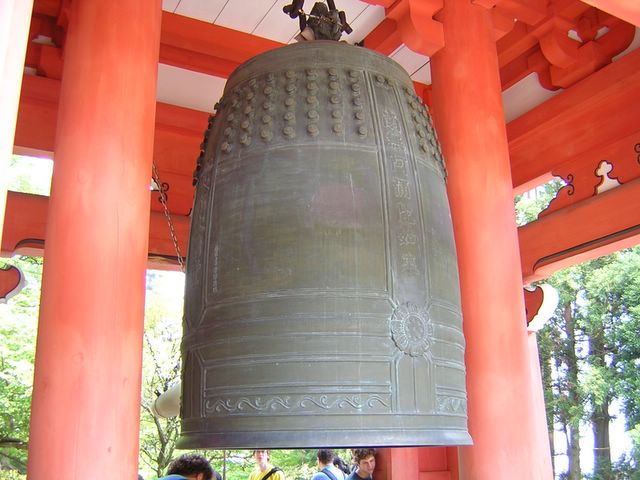
Another giant temple bell - pay to ring and ring it LOUD!

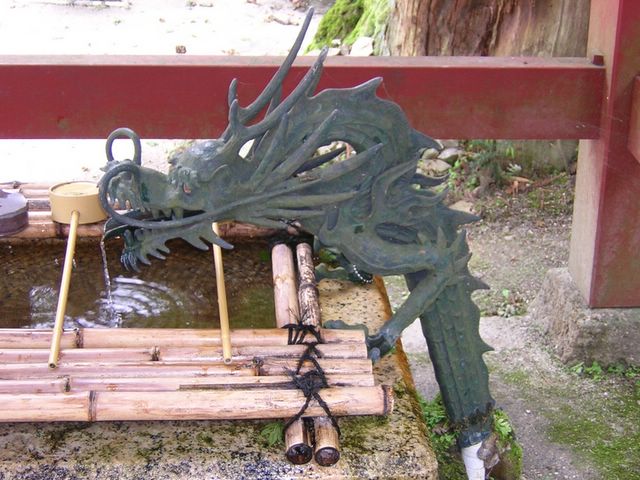
Here is a neat tatsu (dragon) shaped water spout at the ceremonial hand / mouth cleansing section in front of one of the temple areas.

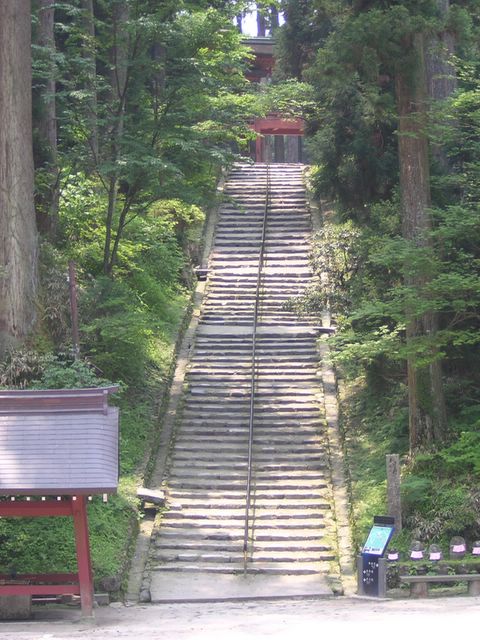
The Japanese sure do love stairs. Here is a small sample of the endless stair torture we had to endure on Mt. Hiei. I was so exhausted by the time we left the mountain that my legs could barely support me.

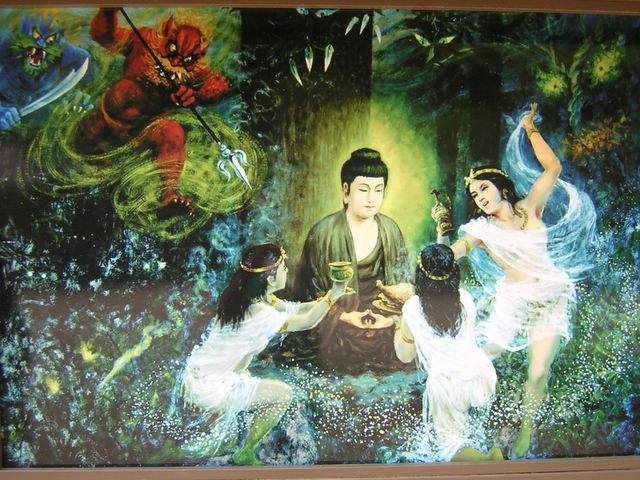
Here is one of a series of very pretty paintaings that showcase the life of the historical Buddha Sakyamuni (Shaka in Japanese). In this panel he is sitting under the famous bodi tree and resisting the temptations of the evil red devil dude (I forgot his name). The temptations are obviously the scantily clad chicks with food and wine in front of him. I thought these paintings were very neat.

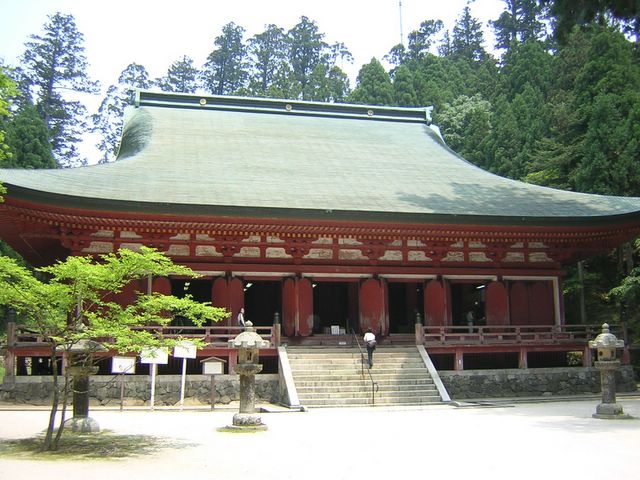
Here is Shaka-Do or the Buddha Sakyamuni's Hall. This is the biggest and oldest temple on Mt. Hiei. The original hall was burned down by the evil warlord Oda Nobunaga, and what you see in the photo is a rennovation done by the following ruler after Nobunaga died. There was actually not much to see inside, only a small golden statue representation of the Buddha.

Here is an outdoor Buddha (this is in fact a representation of the historical Buddha) with the classic "fear not" hand position.

Here is Ninai-Do or Benkei's Shoulders Hall. The left and right halls are areas for Buddhist practices. The legend goes that a 12th century Buddhist warrior monk named Benkei lifted the entire structure up with his bare hands in order to put it on the raised platforms as you see in the picture. Strong guy.

Here is the grave of Saicho a Buddhist monk and creator of the Tendai School of Buddhism (circa 800) )that finds its home on Mt. Hiei. To this day, many people request burial at the cemetary on Mt. Hiei, because they believe that Saicho will guide them safely into the afterlife. There was a German news crew interviewing a modern-day monk right in front of the gravesite, so we couldn't get any closer than this.

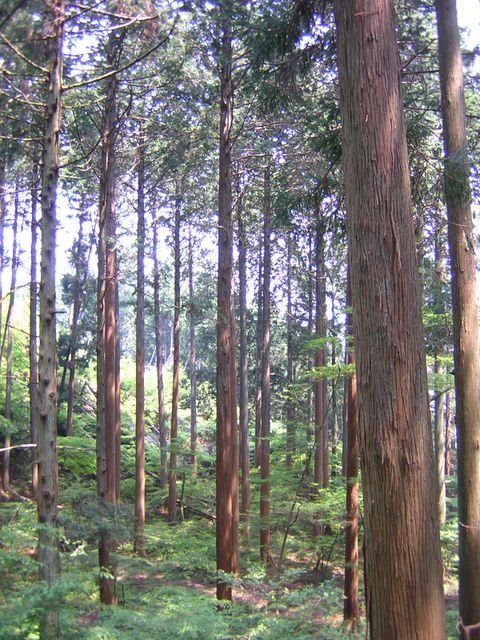
A forrest full of tall trees. They looked like redwoods - maybe they were hinoki or Japanese Cypress (you can tell that I don't know my trees).

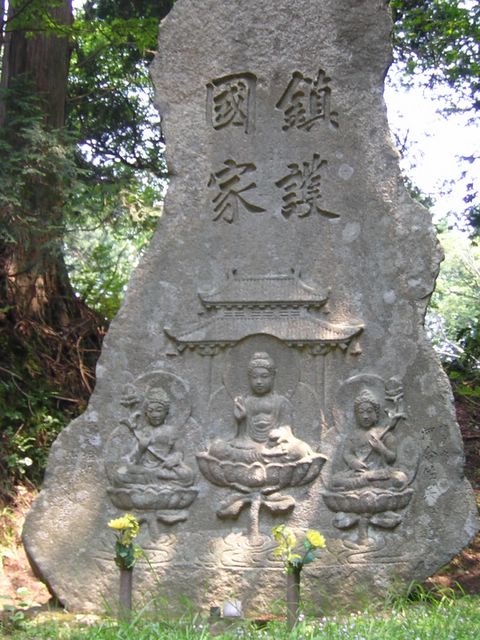
A large rock with carvings of the Buddha on it.

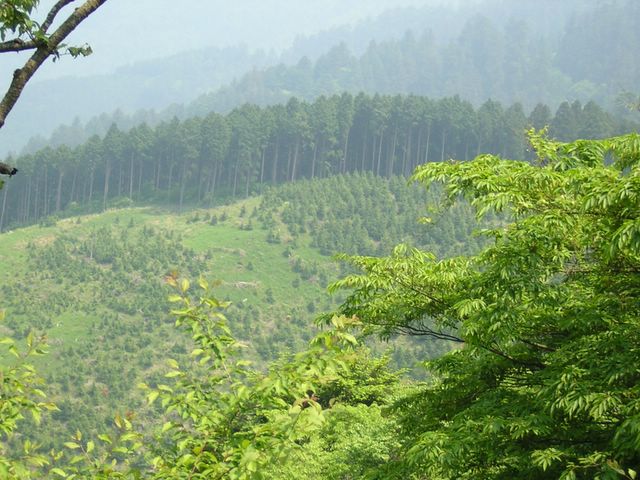
Here is another pretty view looking off Mt. Hiei. I really liked all the different sized trees there, it reminded me of the beginning of Princess Mononoke where Ashitaka is riding through the forrest, chasing after the boar demon.

The pretty keshiki or scenery atop Mt. Hiei. Certain viewpoints reminded me a lot of hiking the dish back on the Stanford campus.

Here is an observatory on top of Mt. Hiei. There was a ropeway car running up to it but we didn't go. It looks like a building from the future.

Enter the CAVE! (技術革新)

I took a trip yesterday to a technology lab at Osaka University with one of the Center's classes to experience a virtual reality world known as the CAVE.

We arrived at the labs and were taken upstairs to a conference room for a pre-VR briefing. This briefing would last over two hours and put several of the Stanford students into a deep dream-less sleep. I managed to stay awake somehow or another. The only bonus about the conference room aside from the free green tea was the nifty microphone consoles that everyone had in front of them. You could press a button and have your voice projected through the in-room sound system. It felt like you were at the UN. Before the lecture I flipped my mic on and said, "I'd like to address Japan's concerns about nuclear testing in North Korea." Another guy flipped his on and said, "Russia will rise again, fear the rise of Russia!" Boys with toys, what can I say?

A professor from Osaka University eventually interrupted our goofiness and spoke in not-so competent English about grid technology and its implications for the future of high speed communication and human grid mapping. (

(Pardon me, this next line is for my roommate Bryce) I don’t know what grid technology is but I know I want me some - don't you want you some?

Anyways, the professor didn't bother to explain the crucial term. I asked Maho if she knew what grid technology was, because I figured she was once one of those Japanese super babies who made transistor radios in preschool, but she was as lost as I was.

I love lectures on technology where no one actually has a grasp of what the technology is or how it functions. The technology in question is always named something like grid, genome, or nano. These generalized names when inserted into normal speech patterns create the illusion of intelligence as demonstrated in the following examples; "Power up the grid matrix," or "The grid network is online, but the reverse gamma fluxgates aren't responding to initial sensory tests."

After the lecture we walked around the facilities and saw supercomputers (now pretty slow when compared to world standards). Next we headed towards the CAVE (dum dum duuuuuum)! The CAVE was actually a dark room with three screens arranged in a square formation. I initially wandered off in the wrong direction as the room was pitch black, and the lab helper had to fetch me and bring me back to the proper CAVE route. We took turns standing within the screen formation with 3D glasses on and saw flashing white lines and little blue dots fly towards our faces. The Muppets 3D show at Disneyland blows the pants off the CAVE. After a few minutes in the CAVE my eyes started to hurt so I asked the guy running the booth if he would graciously put an end to my virtual "fun."

Back in the conference room we had an awkward question and answer session in which none of the Stanford students had any questions they wanted answered. We sat in silence mostly, and every now and then would have an enlightening interaction between a Stanford student and the Osaka University professor like the following:

Student - "I was wondering, what does CAVE stand for?"
Prof - "Um...stand for?"
Student - "Yes, does CAVE have another meaning?"
Prof - "..." (cough)

<15 seconds of silence>

Student - "Because...um...like CIA is the CIA, but it also means Central Intelligence Agency...so I was just wondering...(student looks down and trails off)"

<15 seconds of silence>

Prof - "...CAVE is...CAVE."
Student - "...uh..."
Prof - (As if molding an invisible lump of clay with his hands) "CAVE is CAVE...with hole (poking the air with his finger)...CAVE."
Student - "Uh...ok...thank you" (student looks down at the table)

<15 seconds of silence>

Hayashi Sensei (the teacher of the Stanford Center class) - CAVE stands for "Center for Advanced Virtual Engineering."

It turns out that the CAVE program we saw was a simulation of human speech patterns and the little blue balls flying towards our face were something of great importance related to airflow. I'll call them “vectoids,” so as to sound intelligent in this blog post. As if to rub it in, the Osaka University professor made sure to note that they also had a virtual rollercoaster simulation as well as a virtual city demonstration where you could walk through the cyber town. Ah well, vectoids are cooler than a virtual rollercoaster any day when you stop and think about it...yeah, I can’t even convince myself.

All in all, a day filled with transportation for a very little payoff (luckily the center paid for all the trains). I soon returned to Kyoto and walked around downtown with Maho for hours until it was time for dinner. We met up with my friend Kevin and the three of us had dinner. After that, the three of us went down and sat by the Kamo River and had some beers and talked. Far superior to the virtual reality of the CAVE was the actual reality of sitting with good friends and enjoying a few beers underneath the stars.

Till next time,

B.E.W.

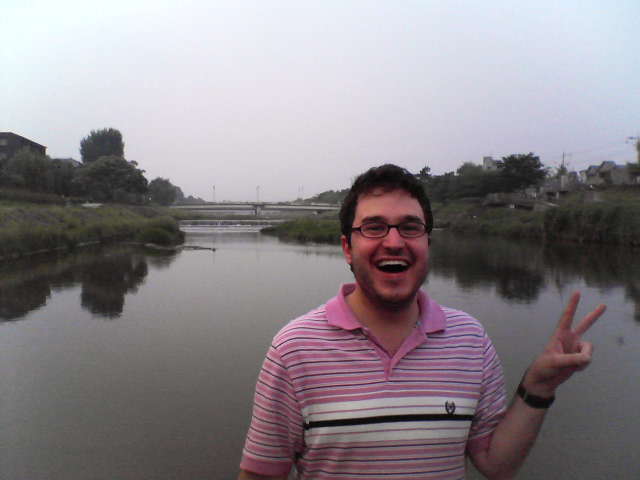
Here's a picture my friend Maho took of me in the middle of the Kamo River. Kamo River means Duck River by the way (I didn't know this). No, I'm not walking on water...you might recall from an earlier picture that there are individual floating rocks that form a bridge of sorts across the Kamo. I'm standing on one of those rocks. Maho and I crossed from one side to the other, but it was trickier than the little Japanese kids make it seem.

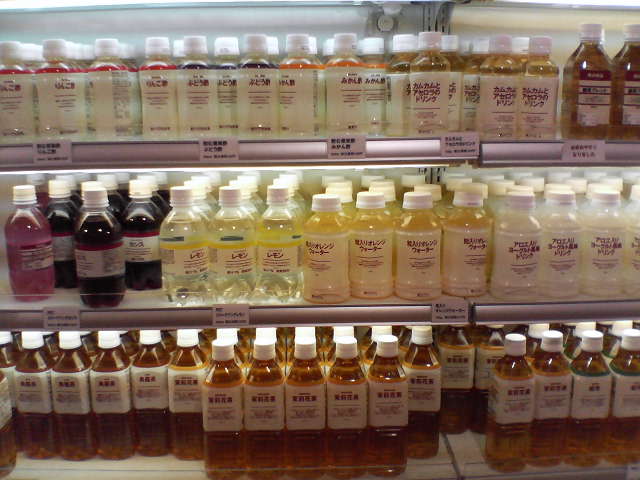
Here is an unbranded lychee drink. Any type of drink you could think of was there (from coke to gatorade to juice to coffee), but all had these simplistic mono-color labels. This would be a really interesting area to study for any product design majors at Stanford.

In Japan they have stores which sell nothing but "mujirushi-ryohin" or unbranded goods. In these stores, you can find any type of product you want, from food to bicycles and refrigerators. All items are devoid of any brand name logo and are created with a very simplistic design. The labels and product colors are usually solid blacks, whites, and browns. This picture is of a case of mujirushi drinks.

Here is a weird moon / face / satellite sculpture tower thing. My friend Maho told me that this is very famous because it was made by Japan's version of Frank Gehry.

Here is the Cybermedia Center at Osaka University. The building that housed the CAVE. Did you read the sign in Japanese or English? I read the Japanese.

Here is a container filled with powerful Japanese super computers and powerful Japanese super computer-related thingies. Maybe I can sell this photo to NASA.

Thursday, June 01, 2006

Noh Way Out (薪能)

It could be the fact that I had a test, presentation, three hour marathon class, and paper due today with only a one hour lunch break, but I would more likely attribute my drooping eyelids and sagging head to tonight’s “takigi” or firelight Noh performance.

For those who don’t know, Noh Theater, or Japan’s surefire cure for insomnia, is an ancient performance art form in which actors wear intricate masks (so that no one can see them yawning on stage) and move at a pace similar to that of a wheel-chair bound paraplegic escaping from a pit of quicksand.

Our Takigi Noh performance took place at the nearby Heian Jingu (only a ten minute walk from the center). We arrived very early (with all my fellow religion class members in tow) so that we could queue up in line in the blazing Kyoto sun and smile at the friendly program vendors who passed by for the next half hour while we waited outside. Once inside the gate, I quickly found my seat, Row D - Seat #14 on the wooden plank bench next to a Japanese man who obviously didn’t shave in front of a reflective surface this morning, as evidenced by the unsightly patches of black stubble scatter-plotted across his face.

The VIP seating close to the stage was nothing more than purple cushions on the cement. I looked for plank-side concession delivery but that was nowhere to be found. Equally lacking was the wasabi-cheese nachos and foam fingers that said “Noh #1!” on them.

What followed were four Noh Plays (two for me). Try as I might, within 15 minutes, the chloroform soaked rag of Noh Theater smothered my nose and mouth and brought me into a state of blissful sleep. When I awoke, it was the conclusion of the first play and the lightning god had already descended. A lightning god who takes one step per minute, pausing at every step to adjust the inclination of his head is an insult to lightning bolts everywhere.

The next play was evidently about the joys of turning your torso 90 degrees while keeping your feet glued to the floor. The young female character in the play literally stood in the middle of the stage for a good 30 minutes, opening and closing her fan. I wish I could have properly enjoyed the climax of the play, where she raised one leg and then put it back down, but I was busily punching myself in the side in an effort to stop the plank-induced searing pain wreaking havok on my lower back.

The narrated stories of Noh plays are unintelligible even to Japanese people because they are sung in classical Japanese in a voice that sounds like running a weed-whacker into the driveway gravel. We were provided with an English translation of the plays, but it soon became too dark to read the summaries and follow along with the story.

The third play was by far the best out of the bunch (the lesser of four evils would be more accurate). This play was spoken in near gendaigo (modern Japanese) so I could understand most of it. It was also only 10 minutes long! SCORE! The play was about two men who hate their wives, so they leave for the woods, but upon going into the woods find a rock formation that reminds them of their wives, so they get homesick and decide to return to their families. Now there's great writing! Annie Prolux eat your heart out!

The fourth and final Noh play had the best music of the bunch. Noh music is created by three different tone drums that beat in succession along with a squealing, banshee flute, and the chants of the musicians which usually take the form of “Zeeeeeeeeeeeeeeee – YOH! Uh, YOH, Zeeeeeeeeeeeeee YOH!” (ad nausea).

The syncopated rhythm in the beginning of the play got into a nice groove, I was rapping to it with lyrics such as; “I hate Noh, I wanna go, this is a horrible show. Fo’ sho’!” The conclusion of the play had the fox god Inari dance around the stage after presenting the protagonist with a magical sword. This was the only point of the evening where the pace actually quickened enough to simulate anything other than a slow painful death. The frantic drum beats allowed the fox god to bust his moves; flailing his arms like an awkward freshman at a frat party, and twirling around in circles to the syncopated beat.

I was cracking myself up by chanting, “Go Foxie, it’s yo' birthday, Go Foxie, it’s yo' birthday!”

Walking back to the center I was already creating a metal image of my Noh Theater public service announcement: Light’s up -- a sleeping and drooling face -- cut to masked female character raising her leg -- black out -- then the words, “Just say Noh!”

To be fair the main reason to attend Takiji Noh as opposed to a housed theater is for the “funiki” or atmosphere. The torch lit glow on the stage and surrounding Hein Jingu buildings was very beautiful. Even more beautiful though was sitting down on the couch in my room to write this post, instead of a wooden plank.

B.E.W.

Here is the gate to Heian Jingu where we saw our outdoor Takigi Noh or firelight Noh performance.

Here is a picture of the Noh stage in the daylight (when we arrived) with a Heian Jingu building behind it. You can't see it in the picture, but the roofs of the temple buildings were dark green and the columns bright red. The contrast was really beautiful - especially in the firelight.

Here is a line of the decretive lanterns that line the Noh courtyard. I always enjoy Japanese style paper lanterns, though I think these had electric bulbs inside.

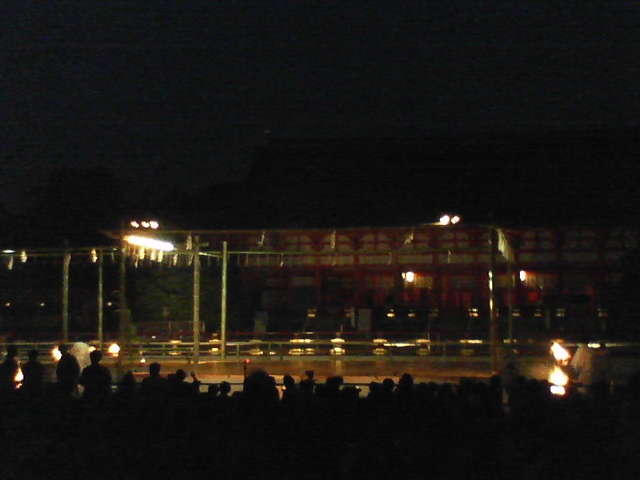
Here is a picture of the Noh stage at night. Sorry about the quality; pictures weren't allowed, so I had to covertly sneak shots with Ikanago between acts. If you look towards the perimeter of the stage, you can just barely make out the firelight torches that give Takigi Noh its name. A man had to keep filling these torches up with kindling throughout the show. He also wore a white robe with large billowy sleeves while doing so, as if asking to self combust.

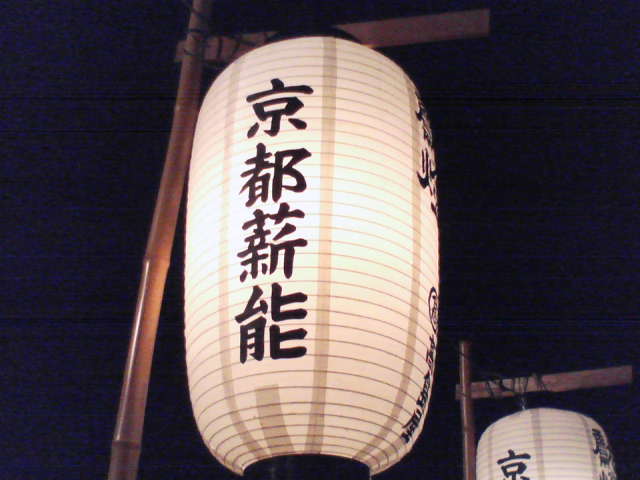
Here is a lantern that says "Kyoto Takigi Noh" or firelight noh plays.