Sunday, August 06, 2006


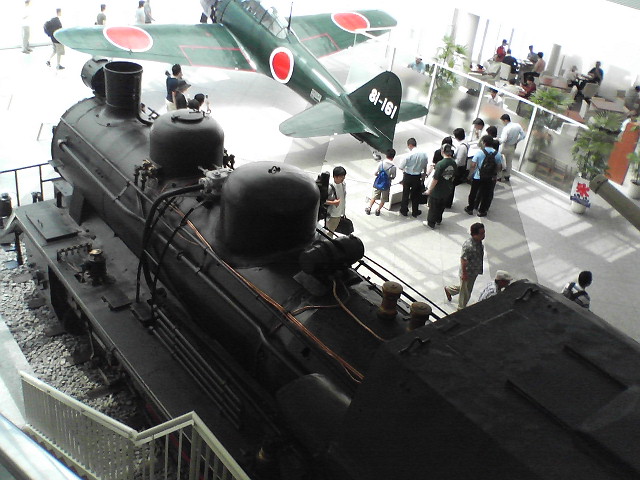
A locomotive on the ground floor of the museum, serving to illustrate Japan's rapid modernization after the isolationist period.

A statue of a lone Japanese soldier.

Here is a statue called "Wartime Friends."

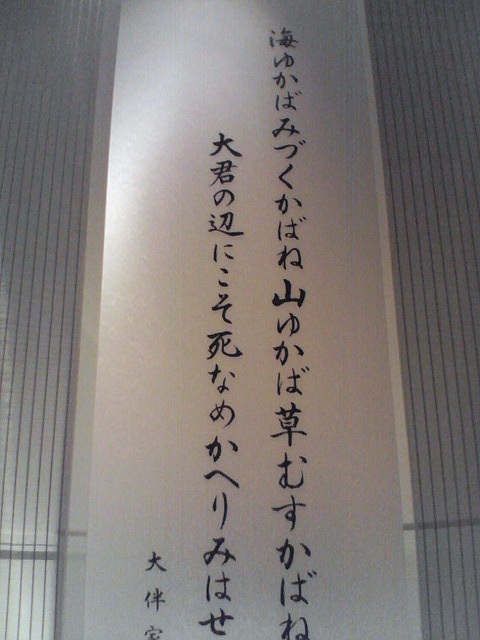
One of many wartime mottos written in Japanese throughout the museum.

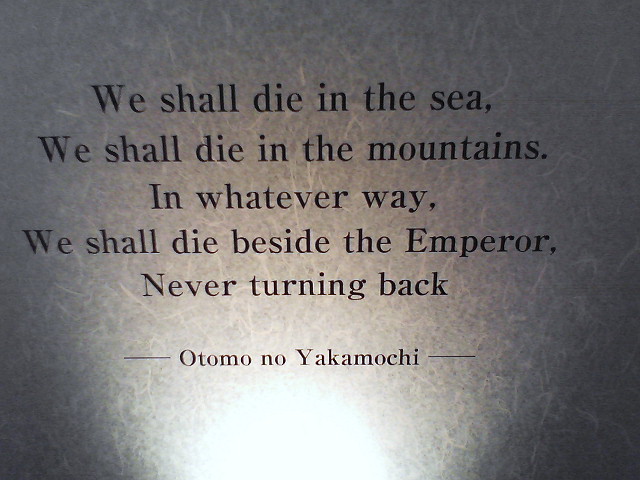
Here is the same phrase in English.

A saber used to decapitate enemies during a war.

Some cannons on the ground floor of the museum, right next to the gift shop. Kablamo!

A Japanese tank with different colors than the American versions.

A turret from a warship.

Walls and walls of pictures of Japanese who died in various wars. Some of these people are considered war criminals by China and Korea.

And lastly, my souvenir from the gift shop.

Saturday, August 05, 2006

61 Years Ago Today...


The atomic bombing of Hiroshima.

I guess this is the natural answer to fast food dining?

You may remember an earlier picture of the Condomania contraception superstore in Shibuya. Here is a picture of the greatest set of mascot characters ever created: The Prophylactics, courtesy of the Condomania store in Harajuku. There's Lubey, Pokey, and Ribber!

Found inside the store, here is a mask you can buy to turn your head into a giant condom. Is it just me, or does the giant condom mask look a lot like a KKK Clansman's hood?

"If you only knew the power of the Dark Side. Obi-Wan never told you what happened to your father..."

A giant Gizmo, part of a massive Gremlins toy display in a Shibuya toy shop. Old Giz' looks like he's put on a few pounds in this pose.

Friday, August 04, 2006


The ivory tower of Japan - Roppongi Hills! This is where you rent space from landlord Dennis Hopper when flesh eating zombies become your next door neighbors.

Japanese pop star Kimura Kaela with Doraemon! Her albums and singles always make it to the top 5 in Japan and she is the biggest pop star on my company's rock / pop label. I met her VERY briefly at Columbia and said hello. She's actually quite small - about my height. She has a new single called "Tree Climbers" coming out September 9th, so maybe she'll be around more often and I can take my picture with her if I meet her again!

Me with Doraemon! Not quite as cute as Kimura Kaela, but it works.

Don't know who this character is. Maybe one of Doraemon's friends? Or maybe someone else entirely.

Thursday, August 03, 2006

COMING SOON...


"Living the Dream;" a special series of posts about hard rock, sweet booze, soft women, and Power Rangers...STAY TUNED!

Takarazuka Revue (宝塚歌劇)

*Hi all. I’m sorry about the lack of updates on the blog recently; I’ve been getting home at 12 in the morning just about every night due to live events and just haven’t had the time or energy to write recently. I hope my next posts can make up for my absence as of late. I have a lot of good stuff to write about!*

Below are pictures from my first trip to see the Takarazuka Revue at their Grand Theater home in the Ginza area of Tokyo. I saw the musical “Akatsuki no Roma” or “The Dawn of Rome,” a rock opera based off of the play Julius Cesar by Shakespeare. After the two hour musical was the one hour song and dance revue, "Les Bijoux Brillants" or "Poetry of Glittering Jewels," featuring songs and imagery inspired by precious stones.

I am currently trying (to no avail) to secure tickets to the next Takarazuka show run of “Phantom,” based on “The Phantom of the Opera” (though not the Andrew Lloyd Webber version). However, because Takarazuka musicals are insanely popular in Japan, most seats sell out immediately for every show. Somehow or another, I was able to secure a great seat for the show I went to last weekend.

I will be writing my honors thesis for the Japanese major on the defining features of Takarazuka musical theater and answering the question, can this unique form of Japanese theater be brought to the American stage?

Takarazuka was formed in 1914 by the president of the Hankyu Railway Corporation, Kobayashi Ichizo (you may be familiar with the Hankyu Department Store chain in Japan that still bears his name). Kobayashi wanted to create a tourist attraction for his small city of Takarazuka (about 45 minutes from Osaka) that would increase the volume of people riding the full length of his train line, which just so happened to end in the city of Takarazuka. Created as a comical answer to the all-male kabuki theater, Takarazuka is an all female, highly modern, highly Japanese musical theater tradition that has a fanatically devoted fan base of middle-aged Japanese women.

A Takarazuka show usually consists of a two hour musical play followed by a short intermission, and then a one hour song and dance revue. Upon graduating high school in Japan, young girls may apply to be one of the 50 lucky members of each year’s entering class at the Takarazuka Music School in Takarazuka City, the only training school for this type of theater. The Takarazuka Music School is a highly prestigious school and considered to be the Julliard of Japan. When girls enter the school, they must choose whether they wish to play male or female characters on the stage. Once they decide, it is very unlikely that they will ever switch and play roles of the opposite gender. This is do to the fact that the decisions on what sex to play are often made based on height, look, and vocal range, and each specialization requires its own respective extensive movement and voice training.

There are only two formal Takarazuka Grand Theaters in Japan – one in Takarazuka City, right next to the school, and one in Tokyo. In its near 100 year history, Takarazuka has performed in Europe and North America as well. The themes of Takarazuka musicals are as diverse as the colors of the rainbow striped spandex pants worn by one star during a dance number. Some shows are based on traditional Japanese stories such as “The Tale of Genji,” while some may come from Japanese comics. Others are redoes of western musicals. Take for instance the all female versions of “Guys & Dolls” and “West Side Story.” Lastly, some are strange mixes of Americana, such as the original biopic musicals on the life of Ella Fitzgerald or JFK (the latter which featured a dancing Saddam and Castro). Takarazuka is certainly different from anything on Broadway.

Takarazuka is a money making machine! Not only was every seat at my show sold out, but there was a gift shop (with a fancy French name) that sold every piece of merchandise imaginable. One housewife rubbed a towel with a picture of her favorite actress on it across her face, while another woman loaded up on collector postcard sets at $20 a pop. Thanks to a research grant from Stanford, I was able to buy some stuff, including a $100 DVD video of a musical I wanted to see. One could easily drain their bank account on pencil sharpeners that play snippets of show music when you grind your writing utensils and ashtrays that let you snuff out your cigarettes into the face of your favorite star. This is not to mention the plethora of stalls inside the theater lobby that sell rice crackers with the Takarazuka logo grilled into it or a special kiwi mango flavored snow cone that happens to be favorite taste treat of a top star.

I was seated on the ground floor of the theater, dead center, about halfway back from the stage. I would say that the audience was between 85 - 90% females of age 40 and above. There WERE men present in the audience (some even my age), though most of them looked to have been dragged to the show by their wives / girlfriends / mothers. I was the only non-Japanese person in attendance as far as I could tell. I of course heard gossip about my unusual presence in the theater from the Japanese people in the surrounding rows. The gossip bit was funny, because obviously if a foreigner is going to a musical show entirely in Japanese, they would have to be able to understand Japanese in the first place. And yet, people kept making observations about me as if I was incased in a prison of incomprehensibility.

Here is the complete story of “The Dawn of Rome” in a simple, easy to follow arrow-linked chain.

Cesar is great, people like Cesar --> Brutus makes a speech, people hate Cesar --> Brutus kills Cesar, people like Brutus --> Antony makes a speech, people hate Brutus --> Brutus kills Brutus, Rome is happy! ~fin~

The song and dance review that followed the musical was everything that Takarazuka is famous for; blinding strobe lights, oversized novelty diamond rings, disco balls, glittering rhinestone studded pimp-costumes, and completely random American songs sung in Japanese. Music included, “Diamonds are a Girl’s Best Friend,” Madonna’s “Like a Virgin,” Will Smith’s rap “Wild Wild West,” and one of my real life favorite songs, “So Happy Together” by The Turtles.

Audience participation in Takarazuka is limited to robotic synchronized clapping during the opening and finale numbers. No one gives a standing ovation or calls for an encore as the performance comes to a close. Interestingly however, everyone will burst into applause whenever a performer makes use of the arched runway that extends out in front of the audience. Even if it was a dialogue scene, everyone would burst into applause if a character walked onto the runway – weird.

All in all, I thoroughly enjoyed my first Takarazuka Revue experience. There are links to various pages about Takarazuka on the right side of the page if you would like to learn more. I encourage anyone visiting Japan, who is brave enough, to experience the magic of Takarazuka. Right alongside kabuki and noh and puppet theater, Takarazuka is truly Japan’s modern theatrical tradition. Even if you don’t understand Japanese you should still go! The stories are simple enough that anyone can follow along, and the Takarazuka website provides English summaries of each of the shows they run. Well, what are you waiting for?!

B.E.W.
Monday, July 31, 2006


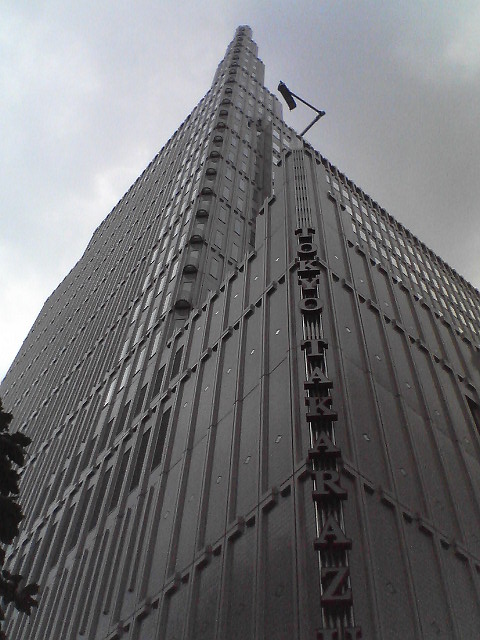
There she is, the Tokyo Takarazuka Theater in Ginza. A giant spire shooting skyward marks the front of this famous building, built exclusively for the performance of Takarazuka musicals.

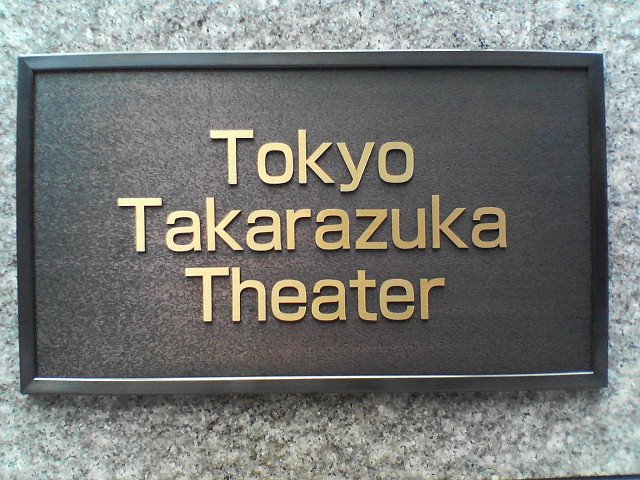
Here's where I went to see my play. There are only two Takarazuka theaters in Japan; one is this building in the Ginza area of Tokyo, and the other is right next to the Takarazuka Music School in the town of Takarazuka about 45 minutes from Osaka.

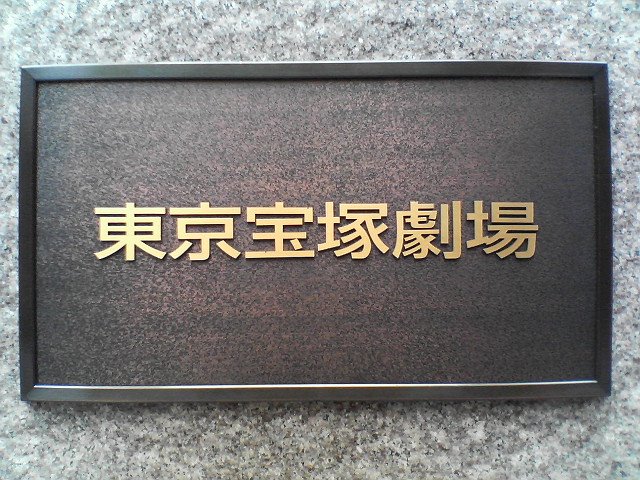
The same sign in Japanese. It reads "Tokyo Takarazuka Gekijoh."

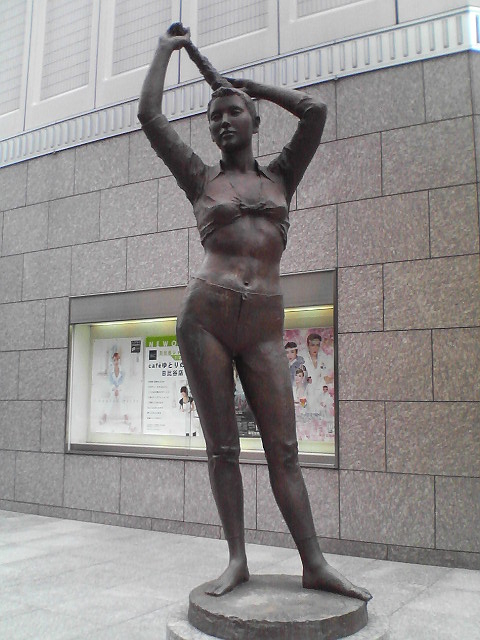
An interesting metal sculpture marking the front of the Tokyo Takarazuka Theater. I guess she's supposed to be a scantily clad Takarazuka dancer holding up her ponytail of hair - that makes sense!

The entrance to the theater complete with patrons exiting from the previous show. As you can clearly see, just about everyone is female.

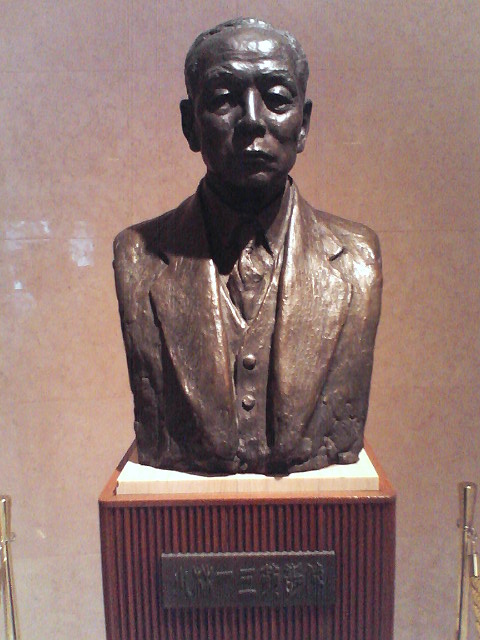
A bust of Kobayashi Ichizo, the president of the Hankyu Railway Corporation and original founder of the Takarazuka Theater Troop.

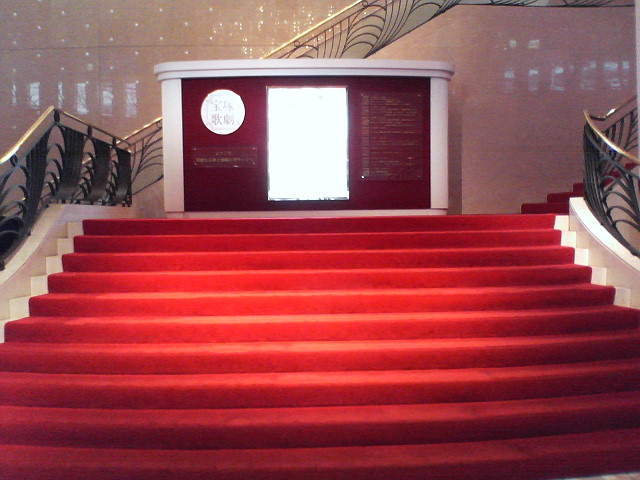
The red carpet steps leading up to the main and balcony seating areas. The carpet was so impecably clean that I felt bad walking on it.

The pretty flower shaped chandelir in the theater lobby.

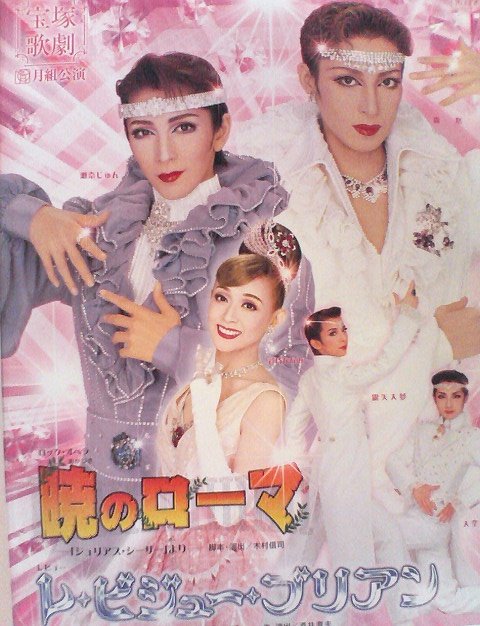
Here is a poster for the musical I saw, "Akatsuki no Roma" or "The Dawn of Rome." It was a rock opera version of Shakespeare's "Julius Caesar." The musical song and dance revue that followed was entitled "Les Bijoux Brillants" or "Poetry of Glittering Jewels."

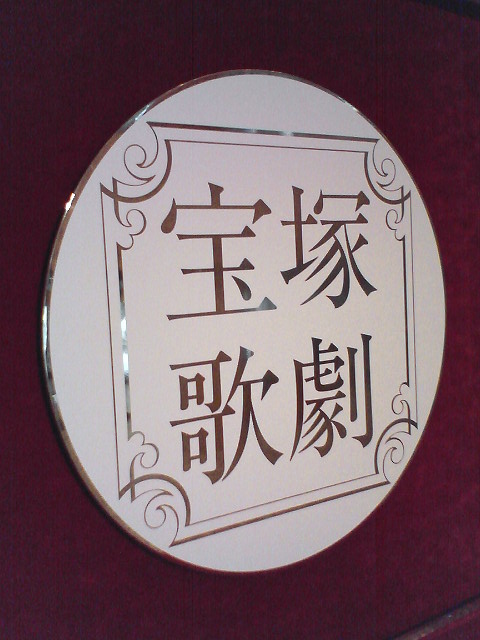
The formal logo for the Takarazuka Revue in kanji characters as seen in the theater lobby.

HENSHIN!!!

This past Thursday afternoon, two coworkers and I were treated to an advanced screening of the new Power Rangers / Masked Rider movie that hits theaters August 5th. The screening was held at Toei Films’ headquarters in Ginza. Toei is one of the major movie studios in Japan, but they are best known in the west for their animation and superhero footage which brought Power Rangers, Masked Rider, Ultraman, and countless other cartoon anime to life abroad. Ban-Dai of America still uses Toei footage for all the modern Japan-made live-action superhero shows.

As opposed to the U.S., going to the movie theater in Japan costs a minimum of $18 no matter when you go. I was pretty upset that I wasted that money on the anime Brave Story. Likewise, I was happy that I wasn’t shelling out the Yen to see this new flick. We were all handed a glossy movie flyer that explained the history and back stories of these two series and were instructed to sit in a medium sized theater room. Power Rangers (known as the Go Go Super Sentai series in Japan - 轟轟スーパー戦隊) celebrates its 30th Anniversary this year, while the Masked Rider series (仮面ライダー) is 35 years old. Both series are still going strong in Japan. A worker from Toei briefly introduced the films and we were off and running.

The movie was actually divided up into a 30-minute Power Rangers episode and a separate one hour and ten minute Masked Rider movie. The Power Rangers short was exactly what I expected; mediocre acting and special effects equal to (but not exceeding) that of the television shows I watched as a kid. The blue ranger had an annoyingly eschew tooth that I couldn’t take my eye off of. The format of Power Rangers is always the same (whether in the U.S. or Japan). There is a bad guy, the rangers morph and fight the evil monster only to have him grow to gigantic proportions, requiring the rangers to use their giant transforming karate fighting, gun blazing mega-zord robot to lay the evil monster to rest and save the world.

While Power Rangers was a nostalgic piece of fluff, I was pleasantly surprised by the Masked Rider movie, entitled,“God Speed Love.” You could tell this movie was targeted at 20-something-year-olds; there was fake blood and a love interest and everything.

For those who don’t know, The Masked Rider is a human who uses advanced corporate technology from the Zynex Company to transform into a beetle-themed bug-powered super soldier. The character rides around on a super-powered motorbike which gives the series its name.

A little known fact is that any Japanese person can actually perform the Masked Rider transformation move on command if asked (they teach it in primary school). The move involves raising your right hand above your head with your index finger pointed to the heavens, and bringing it down in a swift chopping motion while yelling “Henshin!” When the chop reaches your abdomen, you throw the switch in the middle of the beetle icon on your phantom belt and transform into The Masked Rider!

Masked Rider had a short run on Fox TV opposite Power Rangers but was soon canceled due to low ratings. Other shows of the same genre that used footage directly from Toei Japan included “Big Bad Beetleborgs” and “VR-Troopers.”

The Masked Rider movie told the story of two Masked Riders who had to fight the forces of an evil terrorist organization in order to save the world and a special young woman, who just happened to be the sister of one MR and the fiancée of the other. The villain was a grandiose pimp-looking character who wore a long fuzzy white coat and threw deadly blue roses that exploded on impact. When he transformed into an evil gold Masked Rider, all hell broke lose when he unleashed his flaming hurricane kick!

In the end, the battle injured fiancée MR sacrifices himself so that the woman he loves can live on. He accomplishes this in a somewhat baffling sequence of events that involve him traveling back in time and bestowing his last ounce of Rider super-strength on his love, in order to prevent a piece of office building from falling and fatally injuring her. In any event, the movie was about as poignant as a Saturday morning kids show could get – I didn’t cry though.

After the movie was over we all filed out of the room and left - kind of anticlimactic. There is an Ultraman Movie coming out at the end of August that my friend from Ban-Dai is going to score me pre-screening tickets too. Ultraman was the original Japanese super-soldier and his now over 40 years old.

B.E.W.

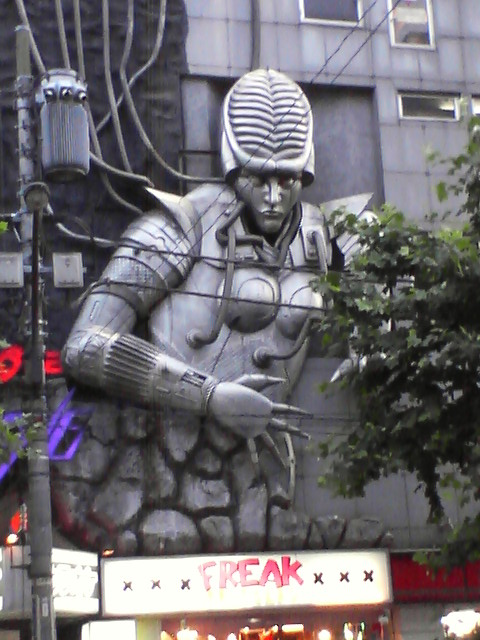
Here is the giant, weird Sci-Fi looking guy above the Freak Brothers clothing store on Roppongi Street near where I work.

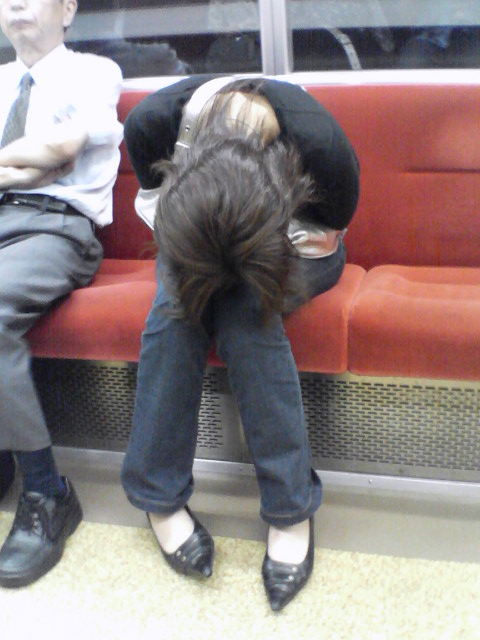
A lady sleeping on the train bench in front of me. She started upright, but gradually sunk deeper and deeper as sleep took its toll.

Sunday, July 30, 2006

Saturday, July 29, 2006

Best Clip EVER!!!

While in Shinjuku waiting to see the crummy anime movie Brave Story, my friend Kevin and I were ambushed by the Shinjuku Internet TV station. A female worker named Yoshitomi-san asked us to step into a recording room right next to the theater (you'll see in the video that the room had a glass wall so onlookers from the street could examine the gaijin).

I was wary of the whole shady setup. Just one hit on the head with a blackjack and my organs would be going to the highest bidder on Ebay.

The guy working the camera instructed me to say some sort of message in English to people back home. Drumroll please...Here's the world premiere of Ben's Internet Greeting courtesy of Shinjuku Internet Television. Click the link below and hit the button that says “Movie Reproduction.”

You’ll quickly understand why I chose to write my entries for A White Boy in Japan instead of do video blog.

CLICK THE LINK!!!

B.E.W.
Fireworks! (花火)

This evening marked the nth annual Asakusa Summer Fireworks Show or "Hanabi Taikai" over the Sumida River (隅田川花火大会). This is the largest and greatest fireworks show in Japan, and while I cannot give you an accurate count as to how many people lined the streets of my neighborhood, I can safely report that it felt like no fewer than 10 billion people were in attendance.

I came back from my Takarazuka musical (wait till the next post) on the jam-packed train. Boys and girls in kimono and wooden clogs were packed in alongside me – we were all going to the same place. When I arrived in Asakusa, I was immediately engulfed in a mass of people. I started perspiring profusely and could not move much of anywhere (it didn’t help that it was over 90 degrees today in Tokyo with insane humidity).

I had a simple goal – get home. Easier said than done! When I usually get off the Asakusa Train Line, it takes me 10 minutes to walk home down the simple straight line route. The most immediate problem tonight however was that just about every road was closed and packed to full capacity with people of all shapes and sizes. They were sitting, eating, kissing, and being stepped on.

Thus, I couldn’t simply walk home in a straight line – police guards prevented this. I began my trek down the side streets labeled “fireworks route”, spying colorful blossoming blasts over the tops of the nearby office buildings. Whenever an especially big or impressive blast would go off, everyone would burst out clapping and cheering like we were fans at the World Cup. They would accompany the applause with screaming “Sugoiiiiii” or “Sugeeeeeeh” which roughly translates into “WOW!!!” “YEA!!!” or “F*CK YEAH!!!”

Walking down the side streets was not too bad. The worst part came when you reached an intersection that needed to be crossed and were once again swallowed up by the leviathan of people. There’s a fine line between being in a very crowded area and coming to a standstill (which I can begrudgingly handle), and being part of an actually dangerous mob environment. There’s a reason why one was able to hear ambulance sirens every 10 minutes or so – there is a real danger in traversing these crowded streets.

When Japanese people are packed into an immovable mass, they push. This must come from the crowded subway and train mentality where one must silently push in order to snag a space on the train car that will get them to work on time. They must push to survive! At my first intersection, I was immediately pushed against very hard by the blob in back of me. Consequently, the woman ahead of me started yelling at me in Japanese not to push or we would all fall over. I told her I wasn’t the one pushing, but she didn’t seem to be listening. I looked behind me to the man resting his hands on my back and pushing me forward. I told him to stop pushing because there was no where I could move. He didn’t respond - he just looked ahead, eyes glazed over, silently pushing with his arms outstretched, like a zombie from Dawn of the Dead. Slowly but surely, one step at a time, the mass crept forward to the next destination.

During this process, I managed not to step on any of the thousands of people sitting on blankets in the streets. I was very worried about stepping on a small child. Because of my un-Japanese regard for my neighbors, I was the one who fell. I was bracing myself against a wooden stake in the ground as the earthquake simulator of people lurched backwards and forwards at a second intersection, when the stake gave way and down I went.

Luckily, I was able to get up in time so as to not be trampled. Just in case, I had already mentally brainstormed how to curl myself up into a ball, in the event of being trampled. Next, when I rested for a moment near a convenience store and actually caught a glimpse of the fireworks through a crack in the buildings, a parked bicycle was thrown quite forcefully into my right leg by and oblivious woman who knocked it over on her way to buy beer. I was angry, sweaty, tired, and sore – I never thought I’d actually want to return to my one-room mansion.

When I finally got to my Umaya Bridge, I found that it was closed as well. The finish line was in sight, however, the second fireworks show had just started directly over the Umaya Bridge and police officers were denying people access to the bridge. I showed the police officer my room cardkey and told him that I was going back home, literally across the bridge. He was nice enough to open the checkpoint and let me walk in the special lane of the bridge they had reserved for wheelchair transport and other medical supplies. At that point I felt like I needed both.

Thus, I was finally rewarded! I got to leisurely hobble across my bridge right as they began launching fireworks over the top of it. For two minutes, I had the best seat in Asakusa! It was very beautiful indeed. I tried to snap pictures and take video, but whenever I paused for a moment; a police officer would nudge me and tell me to, “keep it moving. ” Once I arrived home, to my surprise, I found that the front steps of my housing complex provided a perfect view of the second fireworks show (my room window faced the opposite direction). So, I sat outside and watched the end of the show on the front steps.

And that was my first (and likely only) Hanabi Taikai. Messy, but done!

B.E.W.

If you'd like to see a pretty blurry video of the Asakusa fireworks I took from the front steps of my housing complex, click away!

Sardines climbing the stairs to see the fireworks.

Here is a view of the Asakusa train station on street level. If you multiply this feeling by 13, you'll begin to get a sense of what it was like on the streets around my housing complex.

The only good still shot of the fireworks I was able to get. I captured this while walking across my bridge in the special emergency lane. Whenever I paused for a moment to snap a picture, a police officer would yell at me.

Wednesday, July 26, 2006

Yokohama (横浜)

Below are pictures from my daytrip to Yokohama (about 45 minutes west of Tokyo proper, by the seaside). I had the day off today because I have to work a concert event this Sunday for a group called Psychic Lover. They perform the title song for the new Power Rangers movie that comes out next month. I will actually be going to an advance screening of the movie tomorrow night at Toei Films in Ginza, so I will let you all know how it was. It can't be any worse than Brave Story!

Yokohama is the second most populous city in Japan behind Tokyo, but it sure didn’t feel like it (this could have been because everybody was working). Unsurprisingly, Yokohama felt like a bigger and more vibrant version of another port city I have already visited; Kobe. Like Kobe, there is a maritime museum, various touristy boat rides, a large seafront tower for viewing the bay area, and a Chinatown.

As of right now, Yokohama is my new most desired future living destination in Japan. This is mainly because it was a gorgeous day today (very hot though) and the breeze coming off the sea was just great. The streets were also wide with hardly anybody walking on them, a welcome change from the crowded, narrow streets of Shibuya or Shinagawa.

I first walked around the harbor and port area, looking in shops, and walking through parks. Yokohama wants to be San Diego, CA. Clothing stores sell surfer gear, old glass bottle-style Coca-Cola machines are in abundance on street corners, and it was the first time I saw Mexican food establishments in Japan! There were many opportunities to be a tourist, but I did not partake. I would have been the only gaijin AND the only customer at said attractions and rides because most people were working.

I finished up my day with a trip to the famous Yokohama Chinatown, the largest Chinatown in Japan (Kobe had one of these too). Having actually shopped in the haggling, cut throat environment of Beijing, Chinatowns fail to wow me anymore. How come Chinatowns never sell all the pirated stuff that they actually have in China? I ate dinner at a buffet-style restaurant in Chinatown and it was surprisingly good and cheap (well, cheap by Japanese standards, not Chinese standards). As far as I could tell, the majority of the people who worked in Chinatown were actually Chinese immigrants. Though they could speak fluent Japanese, I often had a hard time understanding their heavily accented speech. I’m sure Japanese people have the same problem when I speak.

After dinner, I took my time walking back towards the train station through an upper-class shopping boardwalk - It was very nice and peaceful. The jam-packed train I rode back to Tokyo was not very nice or peaceful. On the train, the girl to my left read her book by smashing her face against the page, so that the paper actually rested against her left eyeball. She would then manipulate the book in a way that her eye would slide down the paper, reading the story one vertical line at a time. At first I thought she was blind, or had poor eyesight, but she seemed to be looking around at all the advertisements in the train car just fine, and when she got off, she walked away from the train just fine. Oh, and men in Japan carry man purses. The guy to my right’s Louis Vuitton bag, which was just about as big as his chest, smashed me into my seat. It didn’t matter, I was still dreaming of my new home…Yokohama!

B.E.W.

Ascending the escalator from Minato-Mirai Station. *I first went to Yokohama Station and wandered around there for about 30 minutes, wondering where all the touristy stuff was, before realizing that I needed to take a different line about 10 minutes further to the port and harbor area itself.* Please note the giant Snoopy on the left hand side - they have Snoopy Stores in Japan - that's why he's there.
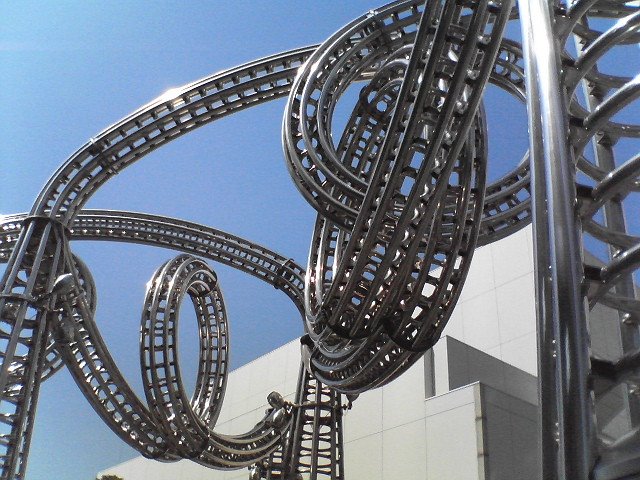
A nifty looking sculpture that reminded me of a rollercoaster track, right when you step off the escalator (assuming you look up that is).

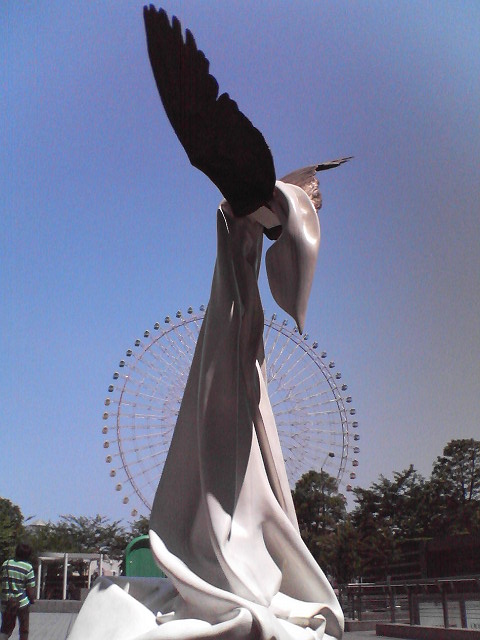
An interesting, semi-patriotic statue right outside the Minato-Mirai (Yokohama Sea Front) train station. You can see the giant ferris wheel in the background. I think this statue must have something to do with U.S. - Japan relations, since Yokohama was the first port city that was opened at the end of Japan's isolationist period thanks to Commodore Perry's intimidating black ships.

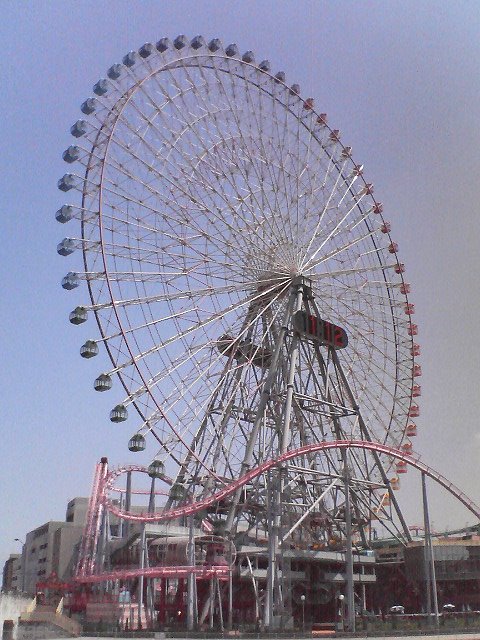
Yokohama's famous giant ferris wheel, part of the Cosmo World theme park. This picture was taken at 1:12 PM. I didn't ride the wheel because I had already been on the world's tallest ferris wheel, which is actually located in the Odaiba area of Tokyo (just FYI).

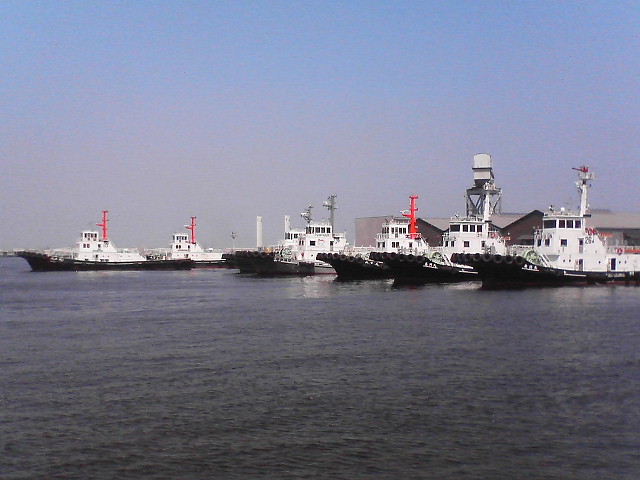
Ships lined up at Yokohama Port.

Trees with the ocean in the background.

A view of Yokohama Port from the top of a park, whose uninspiring name when translated back from Japanese was literally, "The park where one can see the harbor."

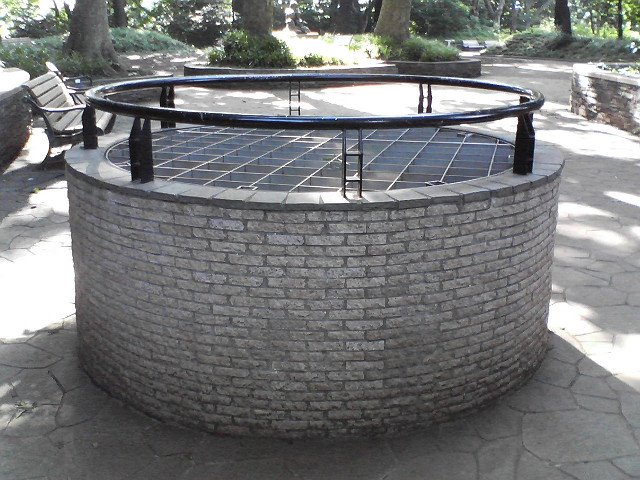
Here's the well that the creepy girl from The Ring climbed out of. They've sealed off the top, so her reign of terror is over...OR IS IT?!

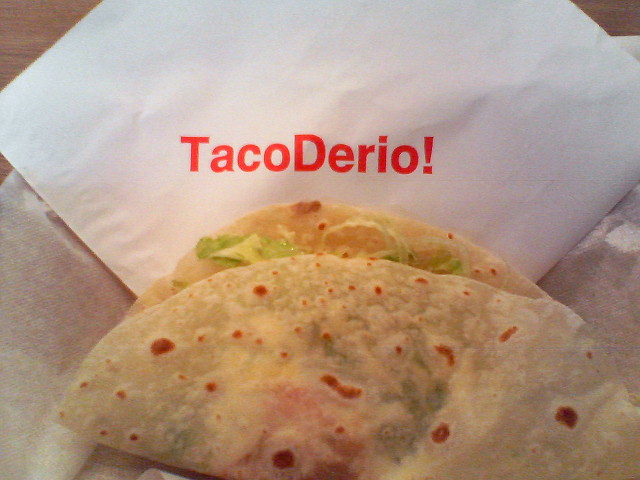
Here's the imported booze that gives "Corona's Bar" its name. After nearly four full months without anything that even remotely resembled Mexican food, I stared in awe at the mirage of TacoDerio like a tribe member who just won a reward challenge from Jeff Probst. Tears of joy dribbled down my cheeks as I savored the salsa, guacamole, sour cream, cheese, and homemade tortilla. It was the greatest lunch money could buy!

"Take a picture, it'll last longer!" Okay, I will. Behold, the singular taco of the Japanese island nation.

Here is the Nippon Maru, the most famous ship in Yokohama. This ship was built in 1930 for the purpose of training Japanese seamen and deckhands. Heavily restored after WWII, the ship is now sea worthy and has sailed to Hawaii. Nowadays, it sails out into Yokohama Harbor once a month for public demonstrations.

The English says Nippon Maru. The Japanese says the same thing if you read the characters right to left. This is interesting because nowadays, they would write the Japanese characters left to right just like the English. Most books, comics, and magazines in Japan are still read up - down, right to left, but there is also a large amount of stuff (advertisements and textbooks for instance) that is read left to right just like English.