Wednesday, August 16, 2006


Here is an asexual Mobile Suit Gundam pilot.

Here is a blurry picture of some sort of Gundam ship or space station thingy? Sorry, I left my Idiot's Guide to Gundam book in my room. See the red square with the triangles in the picture? This was the spot labeled "special viewing point" where you were instructed to press your face up against the protective glass case and behold the secret wonders of the model up close. Dads were lifting their kids up on their shoulders and everyone seemed super excited about the "special viewing point." I didn't see a single noteworthy thing when I peered through the square.

Here is the front of the giant Mobile Suit Gundam. For only 500 Yen, you could go up on the little lift and take pictures of the robot up close, just like the guy in the picture is doing.

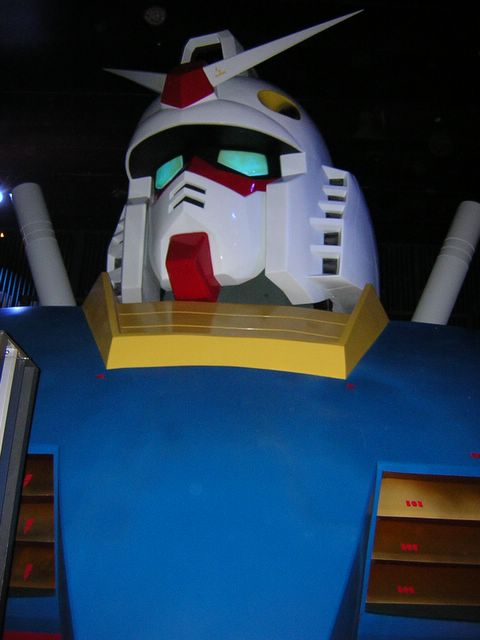
Here is the Gundam's head - and life size I might add!

The back of the Gundam. I wonder what the little numbers mean? Were they assembly instructions?

One more shot of the the big guy.

Ogikubo Anime Museum (荻窪アニメ博物館)

Below are a few pictures from the much inferior Ogikubo Anime Museum in Ogikubo (near Mitaka). The museum was free, so I guess you get what you pay for. The museum was also a 30 minute walk from the train station and very difficult to find. I had to ask at two police boxes before I found the museum, which was nestled on the third floor of a discreet office building in a back alley.

The main problem with the museum was that since it is not associated with any major anime house (such as Bandai, Toei, or Action Comics), there were no exhibits on characters one would actually know. Thus you’ll see the generic anime characters below (if you know who these characters are, let me know!). The only character I knew was Gatchaman, a comedic superhero from 30-years ago who is very similar in design to Junior Birdman.

There was also no one in the museum except for me. One of the volunteers became my human shadow, following me around the museum and watching me look at exhibits (I guess she grew tired of sitting at the front desk and surfing the web). About halfway through my visit, the founder of the museum appeared with a film crew and began shooting a promotional video or news segment, pausing at each of the displays to talk about its significance.

The centerpiece of the museum was a booth where you could record your own dubbing for Tezuka Osamu’s action cartoon Blackjack. I had two problems with the activity: 1) the recording mechanism didn’t seem to be working, and 2) the words moved so fast on the screen that I couldn’t actually read them in time. Thus, when the machine played me back my work, I was treated to a nice scene where my character Blackjack did his best Helen Keller impression.

The only neat thing about the museum was a room where one could sit and watch any of the museum’s anime DVDs at a small TV station. There were also manga books and magazines you could peruse in the same room as well.

All in all, while I don’t feel like it was a total waste of time, I certainly wouldn’t put the Ogikubo Anime Museum on my list of recommended Tokyo sites. Visit if you wish, but prepare to be disappointed.

B.E.W.

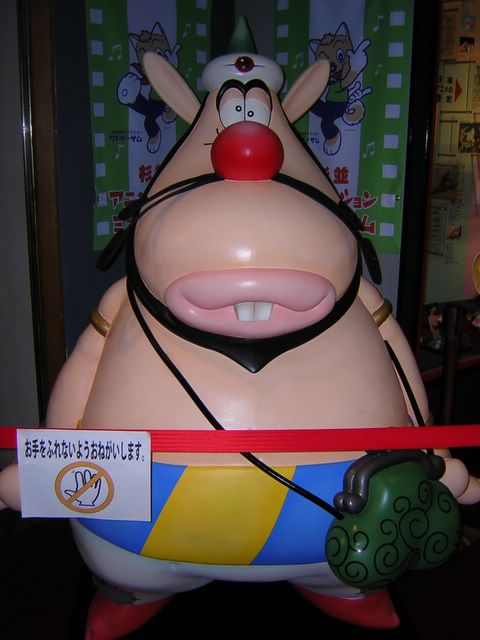
I don't even know what type of creature he is.

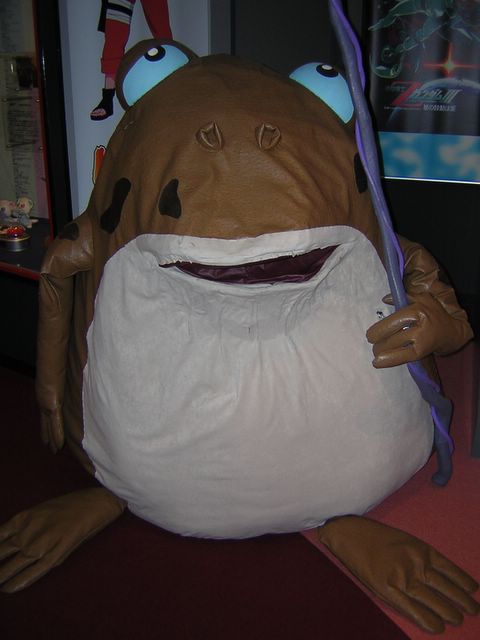
Here's a big frog dude.

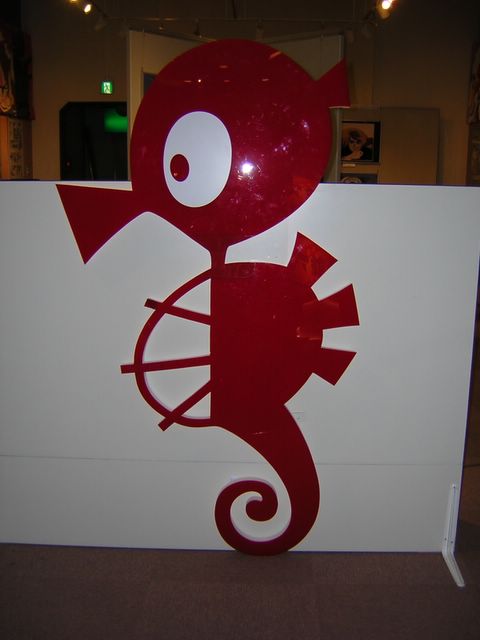
A seahorse character. I thought that this might be the mascot for a a specific anime publishing company, but I really don't know.

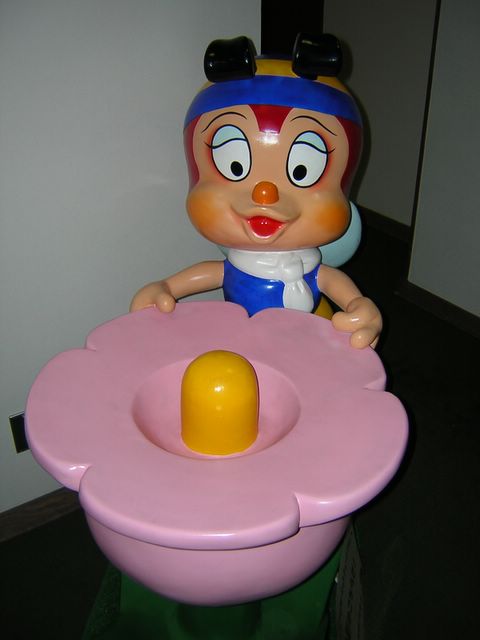
Here is a honey bee character with her (?) favorite flower.

Tuesday, August 15, 2006

White Boy Wanted Dead or Alive

Yesterday night while walking home, I was racially profiled and stopped by the cops - it was approximately 11:20 at night. I was taking my usual route home from Asakusa Station when two bike cops pulled up in front of me in order to prevent me from walking.

They asked me in Japanese where I was going. I told them I was going home. They asked me what I was doing in Japan. I told them I was an international student. At that point they asked to see my gaikokujin touroku (foreign resident card). I took it out of my wallet and handed it to them before asking them what this was all about.

Over the next ten minutes, I made small talk with the cop who wasn’t scribbling down my name, appearance, local address, phone number, disembarkation date, and favorite type of sushi on a clipboard. As I suspected, they were checking to make sure I wasn’t an illegal. The areas of Asakusa and nearby Ueno are notorious for red-light districts, yakuza headquarters, and drugs. I guess there must be a lot of illegal immigrants there too.

There weren’t any problems with the run-in that led to me being immobilized in fast hardening anti-crime foam or hit in the kneecap with nightsticks, though the cops did think it was a bit fishy that I was registered in Kyoto but currently reside in Tokyo. I explained to them the whole summer internship thing via Stanford University and they seemed to get the picture.

As they were finishing up, the cops said I spoke great Japanese and wished me good luck with my studies before biking off. That was it.

I wasn’t frightened or anything during the inquiry; more than anything, I couldn’t get over how funny the whole thing was. First of all, I wonder why they approached me in Japanese if I was clearly a foreigner. Were they trying to test me to see if I could speak the language? What would have happened had I played dumb and only spoke to them in English as though I hadn’t a clue what they were saying? Would they have been intimidated and gone away or switched to English to confront me further?

While they were just doing their job, it is obvious that the Japanese police profile and target white people because they are visibly different from the Japanese. The real illegal aliens in Japan however (some of whom I have met), are predominantly people from nearby Korea, China, and Taiwan. Indeed, a trip to the nearest 100-Yen Shop a block from where I was pulled over would surely yield several illegal workers.

However, given the same circumstances that night, had I been a Chinese-American or Korean walking home, I would have surely not been stopped. While Japan is certainly still a homogenous society, Tokyo feels more multicultural than ever. A Japanese coworker at Columbia once told me, “It used to be that you could tell who everybody was. Japanese people looked like Japanese, Chinese looked Chinese and so on. But nowadays, everybody looks the same. It all mixes. That’s Tokyo fer ya.”

Thus, ironically, it seems that if you’re a non-Japanese Asian or Asian American in Japan you may still be grouped under the umbrella of “looks Japanese” and left alone. White skin, on the other hand (and black skin for that matter, though there are very few black people in Japan), is a dead giveaway that one is not Japanese, and as good of a reason as any to hassle someone about a wrongdoing or infringement.

All it takes is a change of scenery to flip everything upside-down. This was the first occasion where I ever felt like a minority. It's not a feeling I will likely forget.

B.E.W.

Here is a picture of my new game systems (well...the PSP isn't that new). I named my PSP "Columbia Rose" because it's sleek and sexy. I named my Nintendo DS Lite "Columbia Rose Lite" because it's fun and flirty.

I like a store that is honest about the items it sells.

Monday, August 14, 2006

Comic Market (コミケ)

Yesterday, I went to Comic Market, known as Comiket for short (pronounced comi-kay), at the Tokyo Convention Center. The convention center is also referred to as the“Tokyo Big Sight.” Don’t ask me about the name; perhaps the designers of the building wanted to make you feel like you’re in a space station while visiting.

Comiket is the largest comic convention in the world, and occurs twice a year at the Tokyo Big Sight, once in August and again in December. Unlike the American Comic Con in San Diego, which showcases upcoming Hollywood movies and toy lines, Comiket is entirely for unknown, independent comic book artists.

One can buy the Comic Market magazine at any comic shop in Japan. The phonebook sized monthly publication lets any aspiring artist submit a picture and profile of their homemade character or series (for a small fee) to appear on the pages of the magazine. The hope is that the artist will get some sort of publishing deal or at the very least a growing fan base.

Think of Comiket as an indie music or movie festival only with comic books (manga). Because the convention supports aspiring artists and series, you will not find any of the canonical Japanese texts at the rows and rows of private vendors in the airplane hanger sized exhibition spaces. No Bleach, no Dragonball, no Fullmetal Alchemist, and certainly no Pokemon.

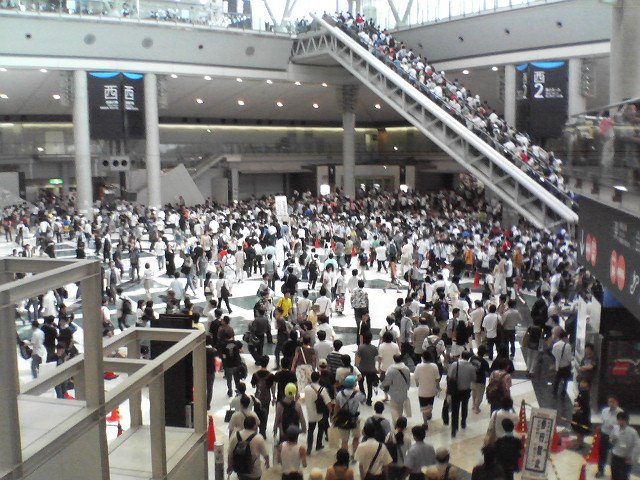
To say the event was crowded would be an understatement of epic proportions. Like the Asakusa fireworks show I wrote about earlier, I was packed ear-to-ear with people in the Big Sight. People line up hours before the event starts and stampede inside when the doors open to get to their favorite vendors and buy the all- important “limited edition” goods before they sell out. Many artists sit at tables and will draw personalized artwork featuring their characters for fans.

I didn’t know any of the series, so I breezed through each of the nine exhibition halls relatively quickly, dodging through the human obstacle course; however, some patrons were in it for the long haul, carting around rolling suitcases filled with purchases.

When I told my coworker that I was going to Comiket, she told me not to wear any of the promotional shirts that the anime department at Columbia had given me or they would likely be ripped off by rabid fans screaming, “Where are they selling this. WHERE ARE THEY SELLING THIS?!” Evidently this happened to her a while back.

Lovers of pornographic manga were likely in heaven at Comiket. Tables as far as the eye could see were filled with books and books of naked girls with bulging breasts, petite school girls, and vicious S&M specialty stuff. Unsurprisingly, people in this area were entirely male.

The newest fad in Japanese Manga is “Boys' Love” (BL) or homosexual male manga. Just like the heterosexual female pornographic manga, BL books feature guys having sex in romantic locations. Interestingly however, when I went to the exhibition hall that sold the genre, the artists, sellers, and purchasing fans were all women. I didn’t see a single man (straight or otherwise) in the area.

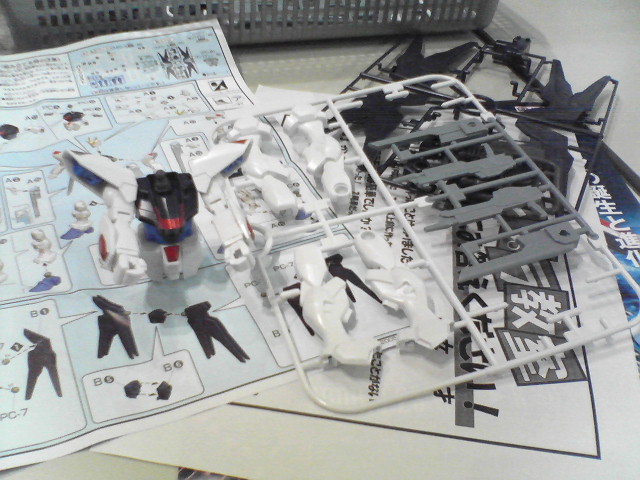
The only "name-brand" thing at the convention was a table sponsored by Ban-Dai that let you build a Mobile Suit Gundam snap-together model for free if you waited in line. I sat across from a ten year old Japanese boy who snapped his together in five minutes flat while barking orders at his mother for what piece he needed next. My chubby links shook as I tried to place the microscopic stickers on my Gundam's plastic chest plate. I left the Comiket feeling exhausted; I must be getting old.

B.E.W.

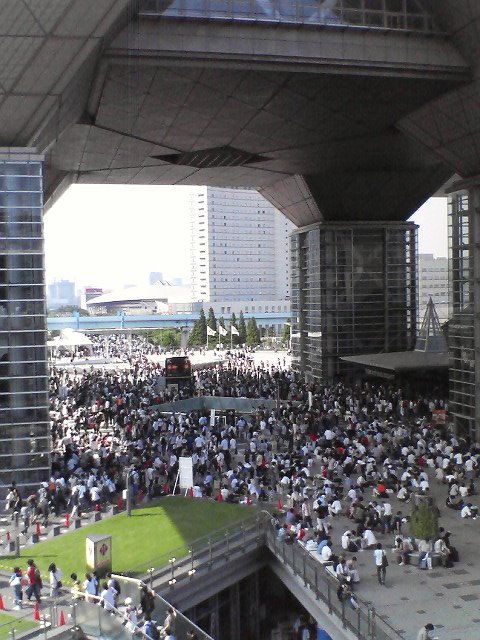
Here is the entrance of Tokyo Big Sight viewed from above at the 70th Annual Comic Market.

Run ants run!!!

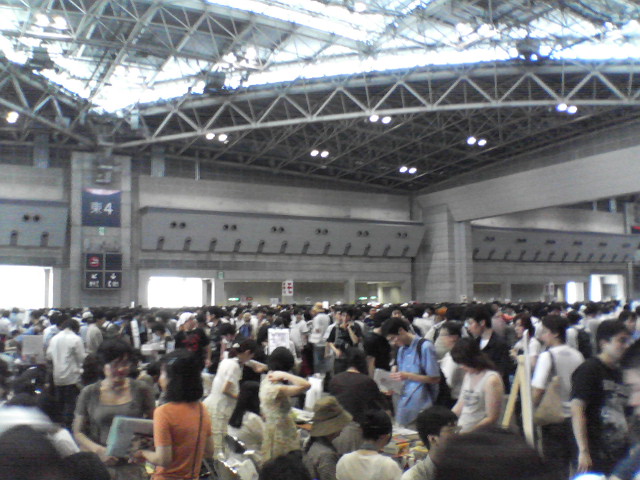
Here is a shot of one of the exhibition halls.

Me assembling my Gundam.

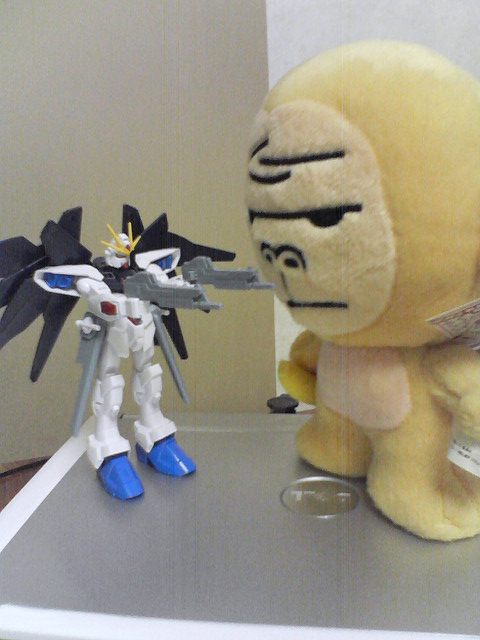
Gundam Vs. Mondo Monkey!!! Ready...FIGHT!

Cosplay (コスプレ)

What would a comic convention be without cosplay?!

I’ll admit it; I went to a midnight showing of Star Wars Episode III with some of my college buddies on the night the movie came out. However, I didn’t bring my own lightsaber, nor did I dress up in a custom fitted storm trooper outfit. While Star Wars and LOTR fanatics are certainly visible in America, and likely camped out in front of the multiplexes weeks before their respective movies hit the theaters, Japan wrote the book on dressing up like a dork.

The Japanese term “cosplay” (コスプレ) is a combination of the words costume and play. Cosplay is the art of dressing up like your favorite comic book, videogame, and movie characters, and traveling in mass to comic book conventions, movie premieres, and parents’ basements to congregate with other social dropouts.

Indeed, Comiket’s own website has the following warning to convention participants written in both English and Japanese:

“Please be aware that cosplay and masquerading have yet to be widely accepted in mainstream Japanese society. Do not come to or leave the Comiket wearing a costume or people will point and laugh at you.”

Okay, I added the last bit about pointing and laughing, but the rest is straight from the online convention materials.

The rooftop outdoor exhibition area of the Tokyo Big Sight was renamed the “Cosplay Plaza” and served as home for the hundreds of people who let their freak flags fly. The best cosplayers do not only wear an exact replica of their favorite character’s suit down to the last button, they have also perfected their character’s trademark poses by practicing them in front of the mirror for hours on end. This is so they can freely strike any number of dramatic poses for a picture when asked by one of the 35-year-old, unmarried, overweight, Japanese otaku fan boys with a Nintendo DS Lite case attached to their khaki shorts via a karabiner.

That’s right, you’re supposed to take their picture – that’s what the cosplayers live for. Once you see some of the cosplayers below, you’ll quickly get a sense for how perverted the whole environment felt. I was secretly giddy as a schoolboy snapping picture after picture (the only thing that slowed me down was the scorching Tokyo sun).

Judging from the people I saw, “hot” costume accessories included band-aids (placed on the face or upper arm), eye patches made out of white gauze, rainbow striped pantyhose, and camouflage anything. A classic accessory that never gets old is the headband with cat ears on it. The traditional sailor schoolgirl suit with knee-high cotton socks appeared to have taken a hit this year. Maids were very popular though, as were pirates (both those who looked like Captain Jack Sparrow and those who looked like Capn’ Crunch).

Like I always say (this might actually be the first time I’ve said it), if you’re going to immerse yourself in a foreign culture, you have to examine all aspects of it, not just the postcard worthy traditional stuff.

I hope you enjoy the pictures below as much as I enjoyed taking them for you, but I don’t think that’s possible.

B.E.W.

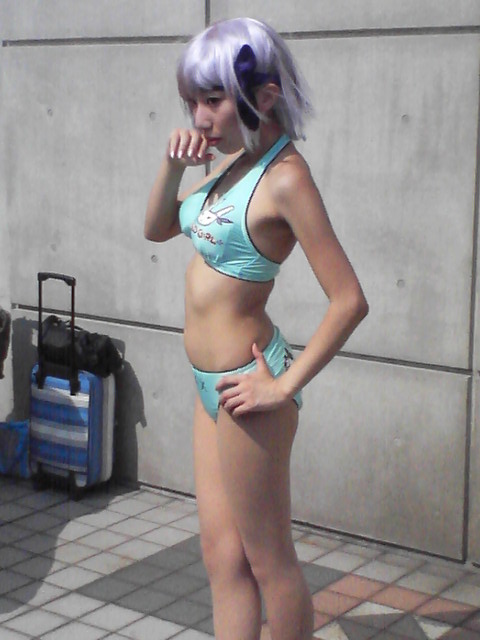
I actually know this character! She's one of the femme fatales from the Dead Or Alive videogame series.

ready...and POSE!

Your guess is as good as mine.

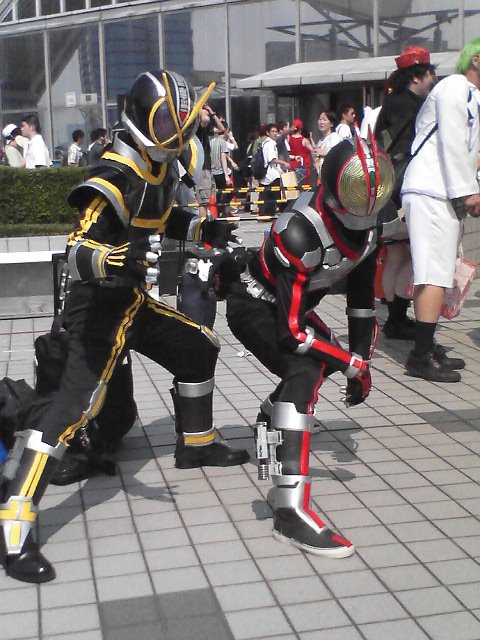
Masked Riders from the current television show and movie. These guys must have had to work an awful lot of hours at the pachinko parlor parking lot to pay for these suits.

I'm not sure if she is supposed to be a specific character, or if she merely got hot standing on the roof of Big Sight in the 95-plus degree weather. Man was it hot! I certainly had the desire to take off all my clothes and create a new hero called "Super Magma Powered Fighting Naked White Dude." (スーパーマグマ力ファイティング裸の白人!)

HOLY CRAP it's Psychic Lover! I originally had a different caption for this picture when I published it yesterday, and didn't even notice it was them until I looked at the picture again this morning. Now I understand why there was such a big crowd in front of them snapping furious pictures. The maid with the orange-ish hair in the middle is Jo and the one with the black bonnet next to him is Yoffy.

Look who I ran into! The man himself, Hayao Miyazaki.

They can make coffee for me anytime!

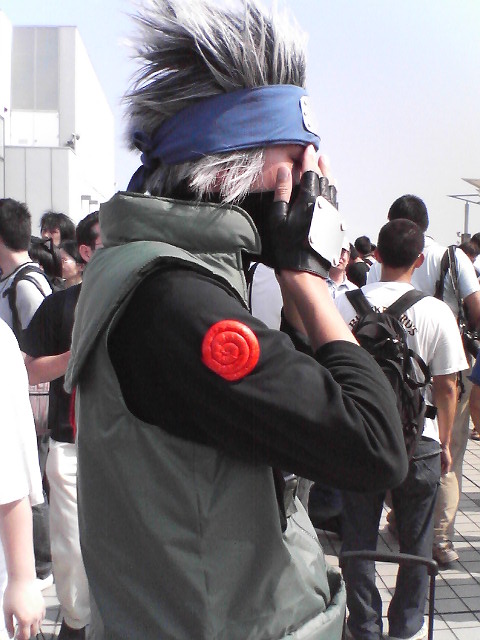
One cosplayer wipes the weariness from his face. It must be tiring to walk around all day looking like a complete idiot.

Meeeeeeeow!

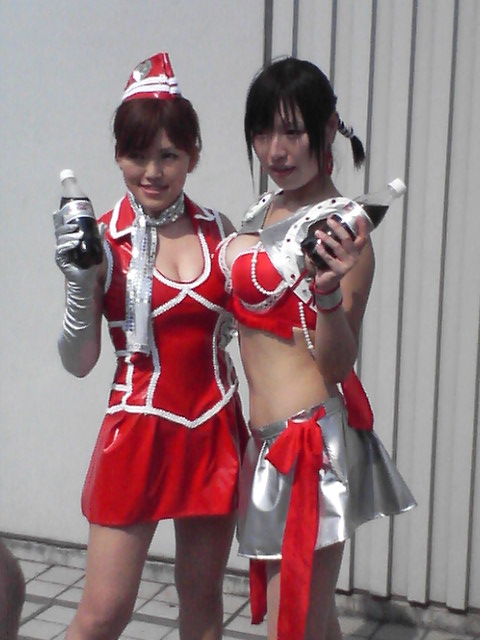
I'll have a Coke!!!!

Sunday, August 13, 2006

Living the Dream: Part I – “This is a pen”


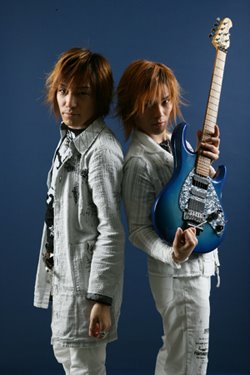
¥1000 says you have never heard of them. Their name is Psychic Lover (サイキックラバー), and I spent my past two weeks in the anime division hanging out with them. The guy on the left is Yoffy (pronounced yoh-fee) and the guy on the right is Jo (pronounced Jo). Both guys are 29, though like every Japanese person, they certainly don’t look that old. Yoffy is responsible for the band’s name, and is the composer and lead vocalist for all the duo’s songs. Jo works on lyrics, provides backup vocals, and shreds through wicked guitar solos.

Psychic Lover is one of the biggest names in Japanese anime music. They have written theme songs or supporting music for Power Rangers, Witchblade, Gaiking, and Transformers (among many others). Their most recent single is the ending theme for to the current Power Rangers series in Japan, Go Go Adventure Rangers (轟轟戦隊ボウケンジャー). Their song, entitled “On The Road,” rose to number 14 in the Japanese singles chart, an unprecedented feat for an anime song not associated with a Miyazaki film.

I would describe Psychic Lover’s musical style as an upbeat pop-rock. While their stuff does definitely sound like anime music, there are enough overdriven guitar solos to keep rock fans happy. Also, since every song features a very catchy and upbeat chorus, you’ll be humming the tune upon repeated listening. For those interested, Psychic Lover’s album was released in June of this year and is entitled, you guessed it, “Psychic Lover.” The album contains all of the duo’s hit singles (including the new Power Rangers theme) and is readily available on amazon.co.jp. I highly recommend it, and not just because I’m friends with the guys.

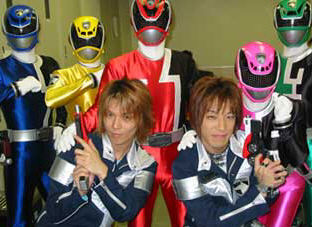
I met Psychic Lover at Tokyo AM radio as they prepared to participate in a short promotional program (i.e. they were signing tons of release forms and couldn’t do anything but bow and say “hi”). I have taken many pictures with Yoffy & Jo, and they said they would add me on their internet blog (I’ll provide a link when this happens). I messaged Yoffy on my phone and asked him to forward me pictures of the three of us together, but he hasn’t forwarded me any yet, hence the stock photos.

Yoffy and Jo were participating in a pretty average Japanese radio program. Japanese radio stations often feature short twenty minute shows with actors, musicians, and other social celebrities who banter comedic dialogue back and forth (comedic if you’re Japanese that is) and introduce the songs that the radio station is currently broadcasting during that half hour block. Think of these guests as celebrity DJs. In turn for hosting, the artists get to plug their latest product and upcoming events a million times on the air.

This radio station visit was considerably more relaxed than the previous trip with my enka colleagues, where I was hit on constantly by a gay Japanese man. Sakamoto-chan, as he calls himself, was a 22-year old, head-shaven, designer glasses sporting college student (I didn’t catch his major), who became a radio personality sensation thanks to his unique ability to mimic the voice of a perpetually startled, chain-smoking Japanese schoolgirl.

He squeals phrases like “You are my everything,” on the radio complete with the female-specific suffixes (there are male-specific suffixes as well in Japanaese). When I first met Sakamoto-chan, he jumped straight into, “You’re cute,” in lieu of a personal introduction, and asked me if I liked boys, only to sigh under his breath, “You probably like girls huh?”

But I digress...

I spent most of my pre-show time at Tokyo AM talking with one of my new love interests, Nana. This makes three possible soul mates now. Rose, baby, if you’re reading this…then wow, you certainly got talented in English quick! Hahahahaha. Sorry, stupid joke (lowers head).

Nana is my age and works for the radio station (she just graduated college). She also went to high school in America so she could speak great English (though we spoke ¾ of the time in Japanese). Nana is a second-tier DJ. She was honest, however, and told me that she really only reads that line at the end of the broadcast that goes, “The proceeding program was brought to you by Fukamoto Whale Blubber, Tofu-a-Go-Go, Discount Samurai Swords and listeners like you!

I watched Psychic Lover do their show – Nana was in the hot seat right alongside them, though she didn’t say much. The three of them were provided with a script of all their stupid jokes and banter, but were encouraged to improvise by the director in the sound booth. I laughed at a few jokes which were pretty funny (due mostly to the overenthusiastic delivery of Yoffy and Jo who were reminiscent of a really bad standup comedy routine).

Occasionally, someone would mess up and everyone would pause and retry a bit multiple times. One bit had to be rerecorded several times until Jo could successfully say with a straight face that he pretends to fall asleep on the train in order to rest his head on the shoulder of the lady sitting beside him. This is the kind of humor that had everyone in the sound booth (except me) wiping tears of laughter from their eyes.

Psychic Lover’s Director, Mizuhara-san, showed up after the recording process was done and his boisterous presence was almost impossible to ignore. Mizuhara-san is a big man, over six feet tall, with enough fat mass attached to his bones to give him an imposing, jiggly presence. He wore a black suit, had spiky short hair, and wiped sweat from his brow with a purple washcloth. There will be much more on Mizuhara-san later, but believe me when I say he is a true character.

Mizuhara-san knew Nana from previous dealings with the radio station and, as she and Psychic Lover left the recording booth, he immediately told her that he could see her underpants. Nana frowned, joking it off, and would tell me later in Japanese that workplace sexual harassment is still a big problem in Japan and that she doesn’t like Mizuhara-san for precisely this reason. I can’t say that I blame her.

After introducing myself, Mizuhara-san said, “I English genius!” repeatedly in America-speak. After tiring from overusing that set phrase, he proceeded to repeat “Look, I’m Stanford,” “Look, I’m Stanford” in English while miming typing on a computer or tapping himself on the noggin with his tongue hanging out. He kept prompting me to tell Nana that her English was horrible, but I refused, and defended her until he was interrupted by Psychic Lover asking me to read some of their English song lyrics with my native pronunciation.

I read the lyrics and was treated to ooohs and aaaaahs and a round of applause. The Japanese people in the room took turns telling me how good my English pronunciation was. I told them that I had been studying English for 22 years, so they shouldn’t feel bad.

As Psychic Lover, myself, and Kubota-san (my anime section coworker and Psychic Lover’s representative from Columbia) were readying to go to our post-recording kanpai, the radio station was flooded with young female voice actresses from radio shows, CD albums, and anime programs, all lined up to participate in the next broadcast. This delayed our departure by a few minutes, as all the girls wanted to giggle and fawn over Psychic Lover.

All of said voice actresses were sugar and spice and everything “gag me with a spoon” nice. One easy-to-remember voice actress was dressed in a full bubblegum pink-colored track suit with bright green Converse shoes and her hair in tight pigtails. “She is very very adorable,” Mizuhara-san said, pointing to her as she practiced blowing kisses on the couch, despite there being no one to receive the kisses in front of her. She was able to get out, “Hello my name is_____” during our meeting, followed by, “I love you!” and assorted giggles. It was all I could do to bow without upchucking my lunch. Death by cuteness; I guess such a thing really does exist in Japan.

Much to my disappointment, Nana was unable to come to dinner with us. I tried my best to persuade her to come but she said she had another engagement.

Psychic Lover, Kubota-san, and I went to a nearby yakitori or skewered assorted meat parts restaurant (it is not that bad when you wash it down with crisp, cold Asahi Super Dry!). Our waiter was super energetic and would fire punches off and say “OKAY” in English whenever anybody ordered.

What can I say, Psychic Lover are really fun guys. All smiles, not only were Yoffy and Jo both super friendly, they seemed genuinely interested in talking and getting to know me.

Yoffy asked me which of the girls I liked the best at the studio and I of course answered Nana. He proceeded to message her from his phone on my behalf, and snag her contact information for me saying, “Nana is free.” The two of them loved the fact that I could speak Japanese and would gasp in awe when I told them about the different Japanese foods I eat or that I had been to a maid café.

As we all drank more, the Japanese side began attempting more English and I attempted to keep my Japanese intelligible after repeated glasses of booze. Kubota-san, who had traveled to Australia and America, asked me questions in English about American culture or my family and I would answer him in Japanese. This dual language exchange brought Jo nearly rolling on the floor in laughter. While Yoffy said he had been to Hawaii once, Jo has never left Japan.

Though they use a lot of English phrases in their lyrics, it is fair to say that Yoffy and Jo don’t speak English. Yoffy told me that he came up with the name “Psychic Lover” and asked me what it meant in English. At the time, I said that it didn’t really have a meaning, but retrospectively, I guess the band’s name could refer to someone who can psychically predict and fulfill one’s sexual and relationship desires. I think that much would have been lost in translation had I attempted to explain it in Japanese.

Jo asked me to explain “l” and “r” sounds to him since Japanese people don’t have these sounds in their language. I always use the example of “lice” versus “rice” to illustrate the pronunciation differences. Jo told me that all Japanese people study English starting from middle school starting with the phrase “this is a pen." He explained to me that there is a song you listen to in middle school with the lyrics “this is a pen.” Thus, Yoffy and Jo began singing, “this is a pen – a pen – a pen. This is a pen – a pen – a pen” in unison while swinging their chopsticks back and forth. Before I knew it Kubota-san had joined in and I figured I might as well fill in the harmony.

There we were, the four of us, laughing and singing like idiots about ball point pens in the middle of a hole-in-the-wall drinking place in some corner of Tokyo. Though the drinks and food orders stopped soon after...“this is a pen” would linger on through the night air.

To Be Continued...

B.E.W.

Part II - "You GOT IT!!!"


Here is an arcade game where you chuck plastic balls, like those you'd find in the McDonald’s Play Place ball pit, at a video screen and try to hit targets. Fun for the whole family! Watch the dad on the left, he's really getting into it; Randy Johnson LOOK OUT!

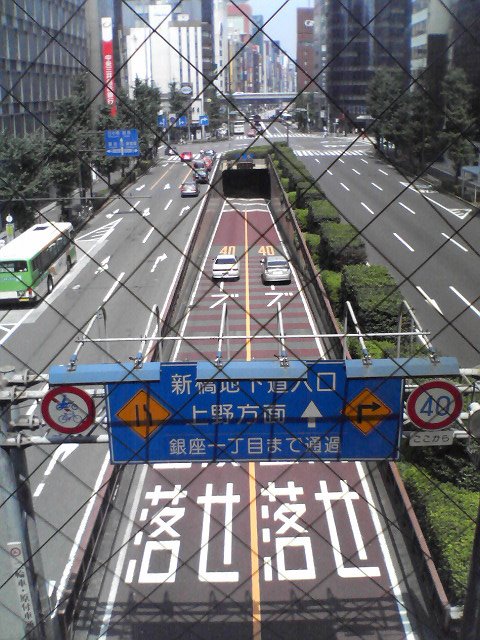
My anime section coworker and I couldn't figure out if this was the tunnel where they filmed the motorcycle chase for Kill Bill: Volume 1. What do you think?

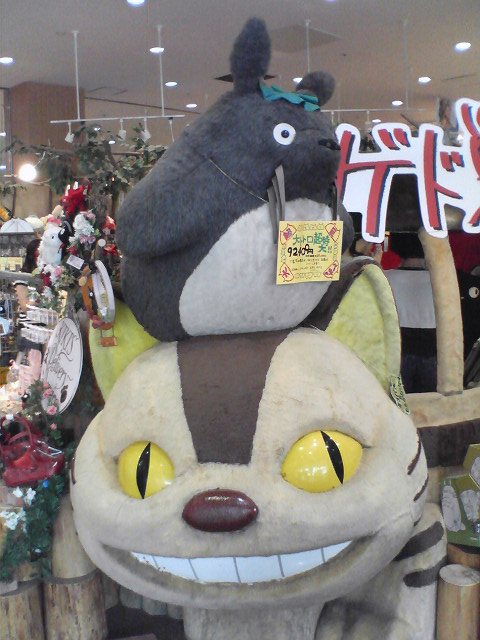
A neat storefront display with a pretty lifelike nekobus from Tonari no Totoro.

Saturday, August 12, 2006


It’s a guarantee that even the newest mobile phones on sale in the west are light-years behind what they have in Japan. With 4 mega pixel digital cameras, mp3 players, internet browsing, and videophone all standard nowadays, the latest must have feature is the ability to watch live television on your phone. While earlier phones did in fact let you watch television, only this generation makes use of the new digital network for crystal-clear picture and sound.

My service provider DoCoMo released their TV phone around the same time I arrived in Japan. Here, however, is the newest and coolest mobile phone to hit the market in Japan made by competing company Vodafone. Watching TV on this bad boy will only set you back $350 or so.

And the super special secret feature is? Well, you’ll see…

B.E.W.

P.S. – I am sorry it has taken a week for any movement on the blog. I have been busy and out till late as usual in my new, less-than-stellar, sales department. On top of that, I recently caught a cold and feel pretty crummy to boot. I have some really good stuff coming though, including the start of my “Living the Dream” series of posts. Stay Tuned!

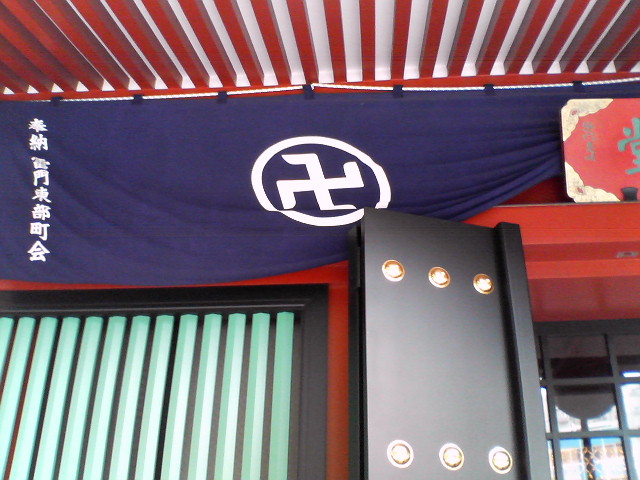
As I was walking my usual route to the train station this morning, I spotted this at a small street-corner temple. You'll notice that it is a backwards version of the Nazi Swastika. This symbol that the Nazis manipulated actually comes from China. While not used in Japanese writing, this character will occasionally adorn signs or buildings in a purely as decoration. Certain Jewish social groups protest in Japan (and other Asian countries) against the use of this decorative symbol due to its proximity to the Nazi insignia.

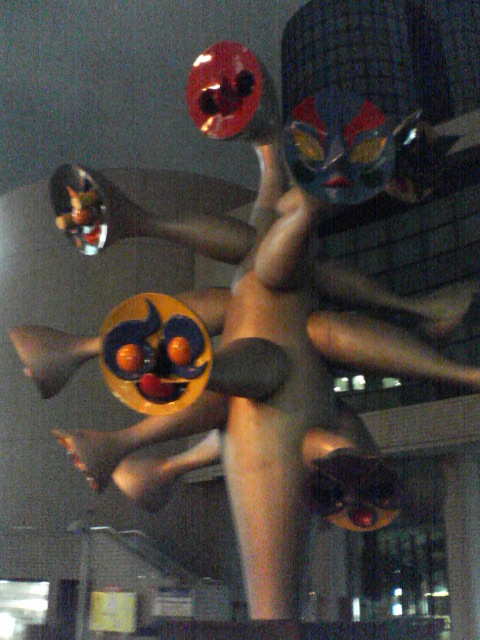
Here is a sculpture that caught my eye on the streets of Aoyama (near the public library and Aoyama University). It kind of reminds me of the type of boss you'd battle in Zelda.

Wednesday, August 09, 2006


「これはペンです。通じる?」 ~ ジョー

Monday, August 07, 2006

Yasukuni Shrine (靖国神社)

Below you can see pictures from my trip to Yasukuni Shrine (靖国神社) – literally “peaceful country” in Japanese. Located about 20 minutes from where I live, Yasukuni Shrine continues to be a politically charged, controversial site.

Originally built in 1869 by the Meiji Emperor to commemorate those who died in the Bonshin war (1268-69) between the Tokugawa Shogunate and pro-imperial forces, Yasukuni Shrine has now come to be Japan’s wartime memorial, enshrining those who have died for the emperor in past wars.

As of 2004, the Yasukuni Shrine Book of Souls lists the names of 2,466,532 people who are enshrined at the site. This is a symbolic enshrinement of one’s soul; no actual bodily remains are kept in the shrine. Of these 2,466,532, 15 members were convicted of class-A war crimes in the Tokyo war tribunals following WWII.

Prime Minister Junichiro Koizumi visits the shrine annually and pays his respect to Japan’s fallen war heroes. Just last week, the current frontrunner in September’s prime minister race, Shinzo Abe, visited the Tokyo shrine as well. However, the Emperor of Japan ceased visiting the shrine in protest after the class-A war criminals were enshrined in the postwar era.

Whenever a Japanese politician visits Yasukuni Shrine, citizens in Korea and China protest and demonstrate in the streets. They believe that these visits are evidence of Japan’s revisionist war history and a lack of remorse over colonial rule in China and Korea, and wartime atrocities such as the Rape of Nanking.

I trudged up a hill leading to the shrine grounds, sweat pouring down me due to the 96 degree sun. I was not alone. I passed a line of parked tour busses that ran the entire length of the hill. These days, Yasukuni Shrine is one of Tokyo’s main tourist attractions due entirely to the political controversy that surrounds the site. Yasukuni Shrine was no different from any of the shrines and temples I visited in Kyoto; There was an ablution pavilion to clean your hands and mouth, an alter where you could donate money and pray, a garden that displayed beautiful flower arrangements, and vending machines as far as the eye could see.

Next to the shrine is the Yasukuni Shrine War Museum; Japan’s premiere wartime (revisionist) history museum. The museum was indeed a patriotic and nationalistic look at Japan’s involvement in wars and global conflict. I would not say that the museum is revisionist, because the exhibits do not deny or revise painful historical events. Rather, I would say that the museum is excusionist. That is, the museum seeks to justify (often with very thin logic) and give excuses for why Japan acted the way it did in many global conflicts.

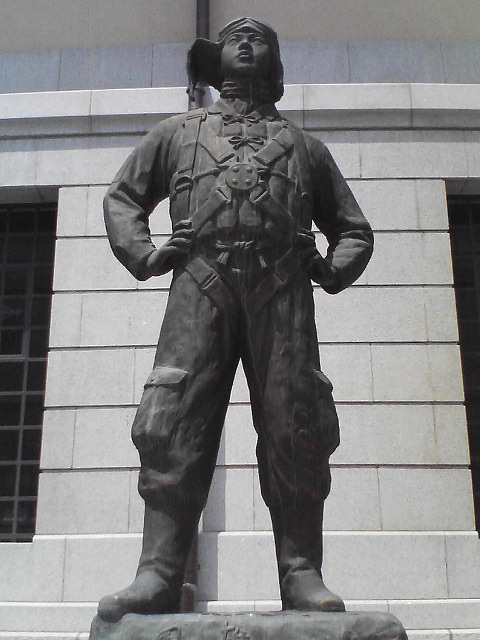
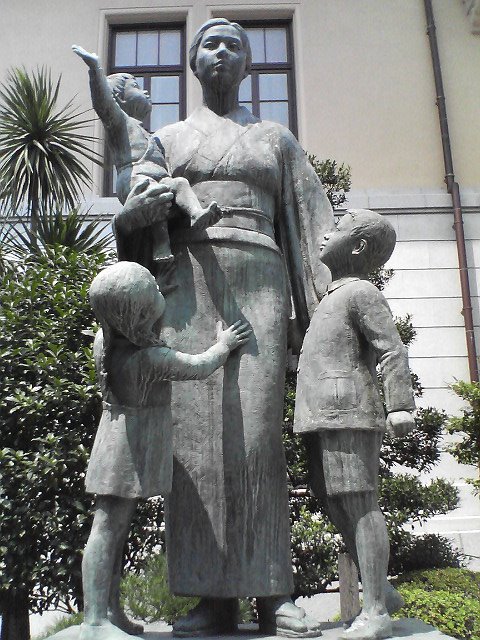
The courtyard outside the museum had a statue of a young bomber pilot striking a gallant pose, while another statue was a mother cradling her “children of Japan.” Statues inside the museum depicted a lone Japanese soldier, while another showed a platoon of wounded friends lending each other a helping hand. Are these statues overly patriotic? You bet! Are they any different in tone from the “Iwojima Memorial” statue in Washington DC? I personally didn’t think so.

The museum has numerous showrooms with replicas of wartime bomber planes, artillery shells, gun turrets, tanks, and weaponry. More interesting however, are the quotes that dangle from the ceiling on giant illuminated plaques that ask soldiers to die for the emperor and possess the yamato (samurai) spirit.

Showrooms in the museum also take the visitor through each of Japan’s major conflicts. One room presents information about colonizing Korea and Japan’s “desire to see the country liberated.” Plaques leading up to the wall-length panel on the Japanese attack on Pearl Harbor discuss Japan’s dire economic situation, and a map shows how foreign nations (represented by colorful arrows) were all encroaching on Japan’s backyard.

Moreover the notion of denying Pearl Harbor or prewar imperialism, I would say that the Yasukuni Museum seeks to present excuses for why Japan acted the way it did and asks the visitor to sympathize with the country, asking “what would you have done if you were in our shoes?” Whether you choose to sympathize with the Japan that is presented in the museum is entirely up to you. I don’t. Japan did a lot of very horrible things in the world, this much is clear. But, Japan has also been an entirely peaceful, socially minded, beneficial contributor to the world community for over 60 years now. While it is important that we never forget history (or be doomed to repeat it), we must also believe in and look towards the future and respect that people and the times can change.

It seems to me that these days, too many people and too many nations are presenting excuses and evoking past sympathy to further their own private aims and conflicts. It’s up to everyone to individually weigh the facts, make their own decisions, and fly their flags in support respectively, be they protest leaflets or votes. Don’t let a war museum or the latest headline on the six o’clock evening news tell you what to think. Research the facts and make up your own mind; that’s what free citizens are supposed to do.

B.E.W.

Sunday, August 06, 2006


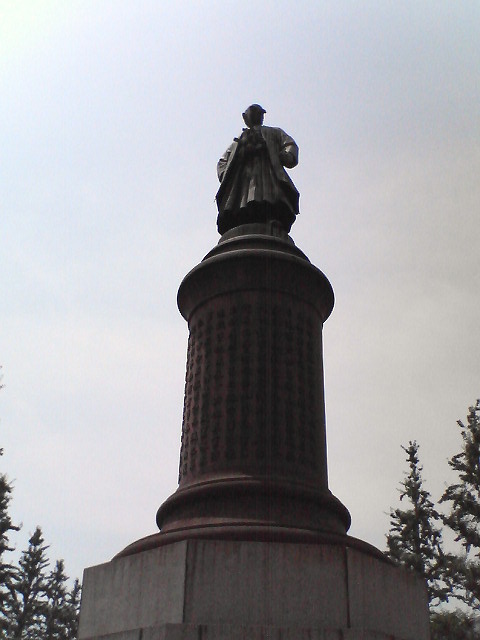
A statue of a Japanese wartime general that marks the entrance to Yasukuni Shrine proper. IKUZO!!!

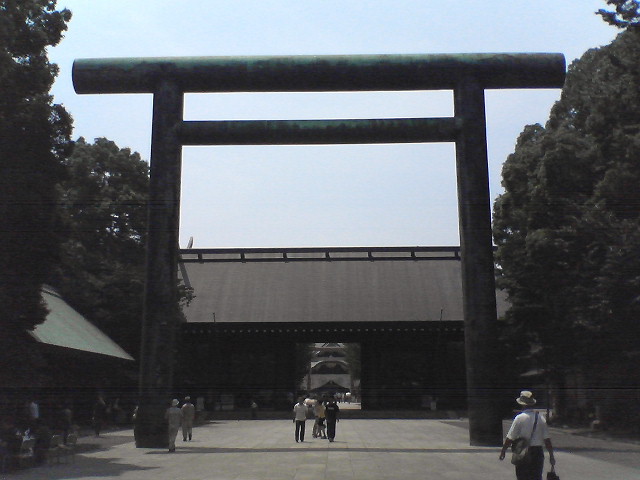
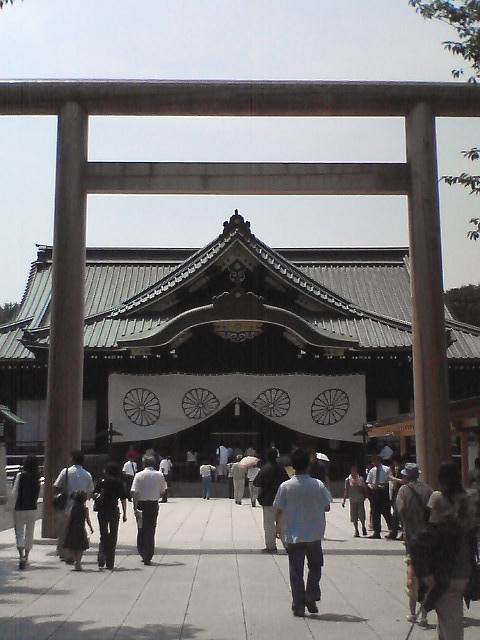
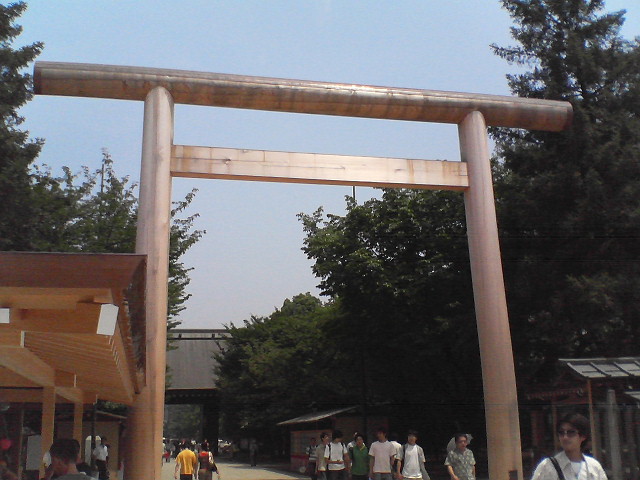
A large torii and the main gate leading to the shrine grounds. Look familiar? No? Try picturing about ten thousand lanterns and spotlights. I was actually at Yasukuni Shrine earlier! Remember the pictures from the matsuri (festival) I posted earlier? I didn't know it then, but I was actually in the exact same place during the festival.

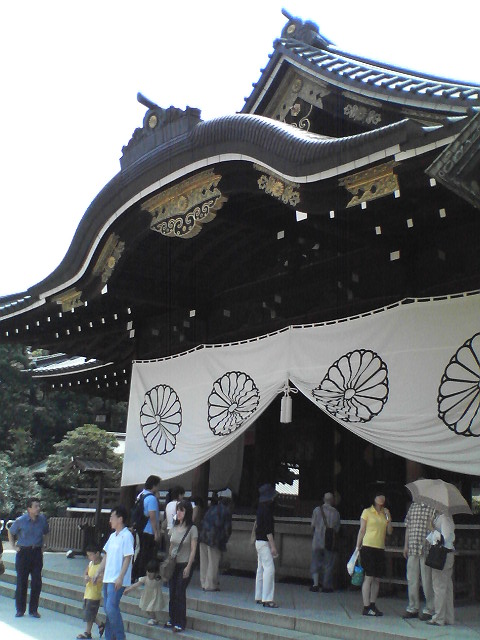
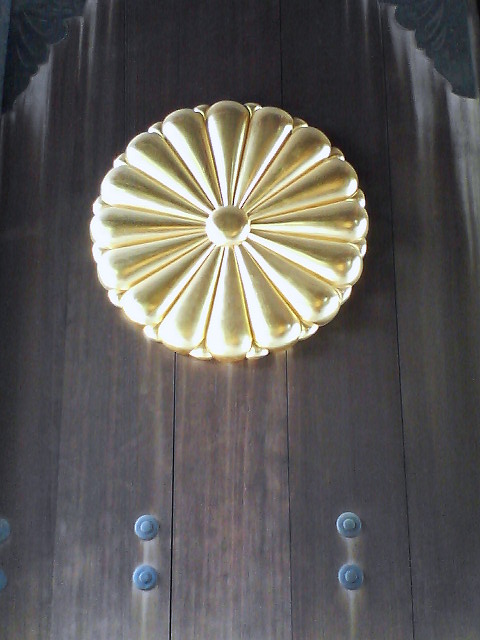
A large gold chrysanthemum on one of the doors of the main gate to the Yasukuni Shrine grounds. This is the imperial seal.

Getting closer to the shrine...

There she is, the controversial Yasukuni Shrine. This is where the Prime Minister visits each year to pay his respects to fallen Japanese soldiers from the various wars. This annual act results in an immediate explosion of international outrage from many citizens in China and Korea, who oppose the fact that the shrine also pays homage to certain individuals who were tried as wartime criminals.

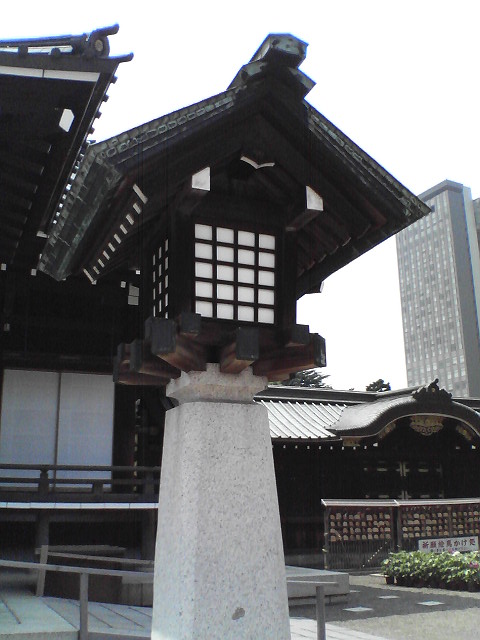
A lantern beside the shrine. Simple in design, but beautiful nonetheless.

A shot looking backwards through the torii towards the main entrance to the shrine area.

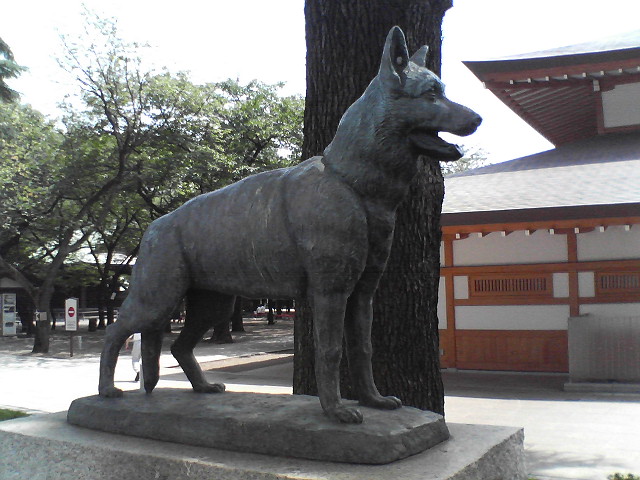
A statue of a dog; the first statue you see upon entering the courtyard outside of the wartime museum at Yasukuni Shrine. I honestly can't tell you what the dog symbolizes...maybe the Japanese peoples' love for sled racing?

A statue of a young Japanese bomber pilot, proud to serve his Emperor.

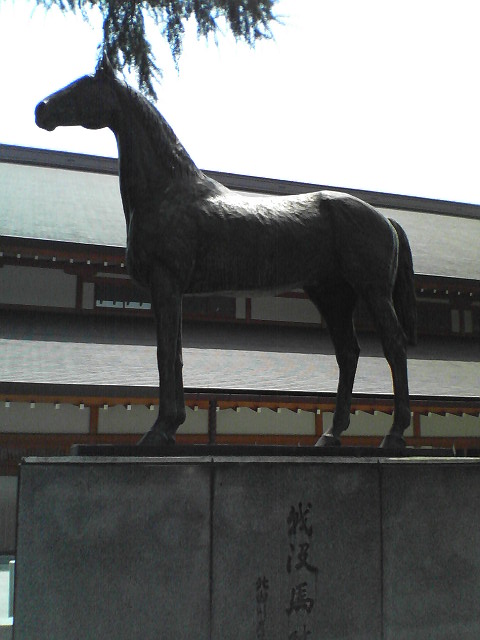
A statue of a horse, symbolizing how samurai warriors once rode through the wooded Japanese countryside.

Another statue in the courtyard outside of the wartime museum; this one is called "The Mother of Japan."
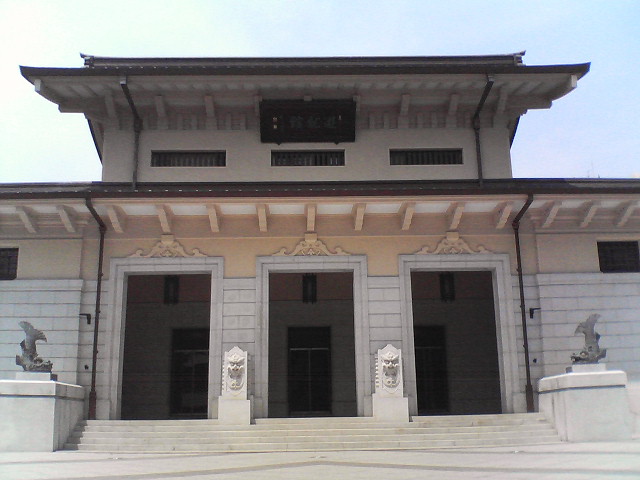
The front of the wartime museum at Yasukuni Shrine.

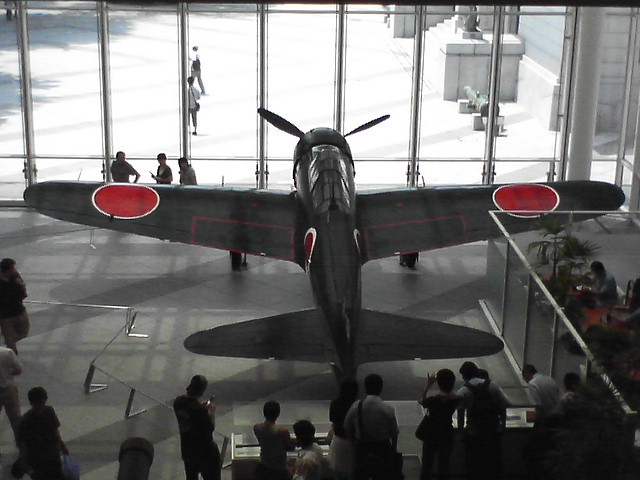
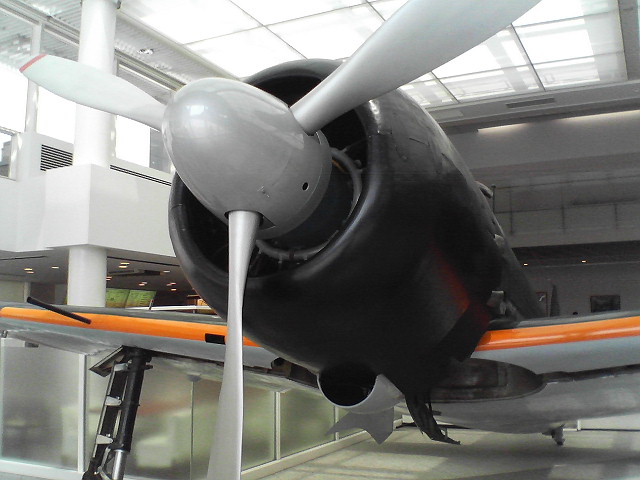
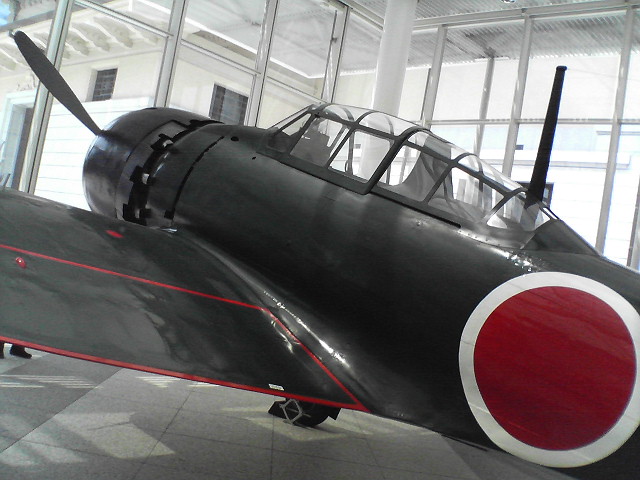
A Japanese warplane like those that attacked Pearl Harbor.

BIG propeller!

The bomber up close.

A white Japanese warplane.