Thursday, August 17, 2006


Another view of Saba.

I thought I'd take a break from all the superheroes for a moment and switch to Godzilla. I mean, who doesn't love Godzilla?!

Godzilla's bust. This particular piece was used to film scenes when the lizard emerged from the depths of the ocean and was partially submerged in water.

The big guy from the rear.

Here is the lower leg of the Godzilla suit.

A giant beetle means only one thing...Get on your bike and RIDE!!!

Here he is, the original Masked Rider in all his Phantom Belt wearing, bike riding glory. HENSHIN A GO-GO BABY!!!

Kamen Rider has gone through many costume designs over his 35 year history. This design represents an attempt to make the character more buglike than superhero. This design move proved unpopular and the Rider soon returned to his more classic look.

Here are the two Riders from the current show Kamen Rider Kabuto. They can be seen weekly on TV and in the recent Power Rangers / Masked Rider movie. The armor and muscle structure has been enhanced to make them appeal stronger and faster for the new generation of kids. The same thing was done with Superman and Batman in America. Original renditions in toys and comics of the classic American heroes show characters with builds not that different from your average physically fit man. Today, however, Batman, Superman, and any other superhero have the muscles of Mr. Universe. In an unrelated note, you can also see a picture down below of people at the Comic Market dressed up as these same characters.

Ultraman celebrates his 40th anniversary this year. Unlike the subsequent Masked Rider and Power Ranger series which featured heros who were of human size, this original Japanese super hero grew to gigantic proportions to fight evil.

One of Ultraman's most famous adversaries. Just don't ask me to tell you his name.

Another scary looking Ultraman baddie. Pinch pinch!

A bunch of Ultraman helmets from the superhero's different incarnations.

Robots were also in display in the museum. It is common knowledge that the Japanese people are obsessed with robots. In fact, skyscraper-sized bipedal robots roam the streets in Japan to enforce curfew. Here are some of Japan's original robots from TV and movies.

Voltron! We miss you and want you back!

A golden oldie; Majingah. I actually had one of these robot toys when I was younger. Though his days in the spotlight are long gone, Majingah lives on in Bandai's videogame series Super Robot Wars as a playable character.

A bunch of flying rocket fists. Viva la revolution!

A giant Majingah!

Here is Majingah's flying rocket fist! LOOK OUT!

And finally, some newer anime characters who appeared in the museum devoid of any large exhibits. A small panda in his giant panda-bot!

Two female characters from one of Bandai's anime targeted at young girls.

Here is Keroro the frog, another popular Bandai anime character who has his own TV show and line of cutesy products.

A cardboard cutout for the live action sailor moon show in Japan. For some reason, I expected the sailor scouts to be prettier.

Wednesday, August 16, 2006

Bandai Museum Part 2: Gundam

Up one floor from the Bandai Super Hero Museum was the Gundam-specific Mobile Suit Museum (another 500 Yen for admission). Gundam celebrates its 20th-anniversary this year. Gundam is a series where people pilot giant, supersonic flying, battle robots in space. Since I know literally NOTHING about Gundam, I didn’t enjoy the museum as much as one should.

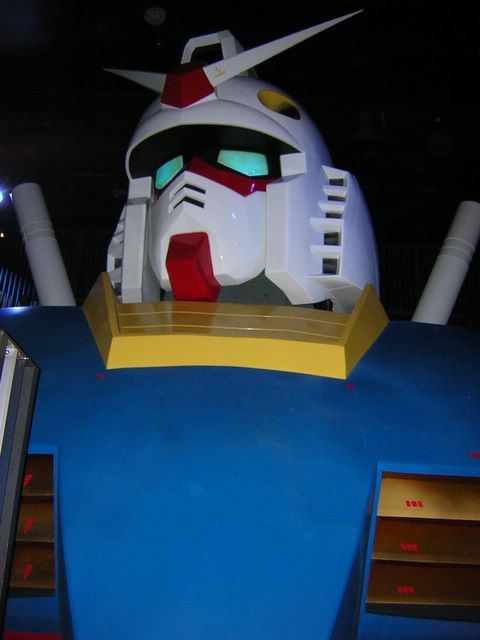
The centerpieces of the museum are the giant, to scale replicas of the head of a Green Zakhu Gundam and the upper body of the famous white mobile suit. You basically pay to take pictures of these two installation pieces since the museum is devoid of any other types of exhibits.

There was some sort of “Gundam Cockpit” simulation motion theater ride you could go on for an additional 500 Yen, but I passed. I also passed on the interactive videogame that let you unload a chain gun at a screen of approaching enemy mechs. The sight of a tiny Japanese man snarling at the screen as the force feedback from the gun shook his diminutive frame was enough to keep me walking right past the game booth.

The interior to the museum was very dark (most likely to create the feeling of being in outer space), and I consequently found myself bumping into the hordes of Japanese people swarming around the tiny booth where you can stamp your museum passbook. Collect all five stamps hidden throughout the mobile suit museum and you get a free postcard! Yippee!

B.E.W.

Here is shot of the letter from Selber Dodds, welcoming you to the Mobile Suit Museum. It's written using the complete Gundam lingo, referring to "Mr. Zoldin" and "Admiral Tigre." If you're a Gundam fan, give it a read!

Here is the scale replica of the head of a "Green Zakhu" Gundam. Don't worry, I had to look up the name of the robot online. I'm not that big of a nerd!

It's a big wire! And it's protruding from an opening on the robot head!!! Quick, where's my camera!

This giant robot head has seen better days!

#324. The numbers 2, 3, and 4 usually come in sequence, but here they don't. Coincidence? I THINK NOT!

Here is an asexual Mobile Suit Gundam pilot.

Here is a blurry picture of some sort of Gundam ship or space station thingy? Sorry, I left my Idiot's Guide to Gundam book in my room. See the red square with the triangles in the picture? This was the spot labeled "special viewing point" where you were instructed to press your face up against the protective glass case and behold the secret wonders of the model up close. Dads were lifting their kids up on their shoulders and everyone seemed super excited about the "special viewing point." I didn't see a single noteworthy thing when I peered through the square.

Here is the front of the giant Mobile Suit Gundam. For only 500 Yen, you could go up on the little lift and take pictures of the robot up close, just like the guy in the picture is doing.

Here is the Gundam's head - and life size I might add!

The back of the Gundam. I wonder what the little numbers mean? Were they assembly instructions?

One more shot of the the big guy.

Ogikubo Anime Museum (荻窪アニメ博物館)

Below are a few pictures from the much inferior Ogikubo Anime Museum in Ogikubo (near Mitaka). The museum was free, so I guess you get what you pay for. The museum was also a 30 minute walk from the train station and very difficult to find. I had to ask at two police boxes before I found the museum, which was nestled on the third floor of a discreet office building in a back alley.

The main problem with the museum was that since it is not associated with any major anime house (such as Bandai, Toei, or Action Comics), there were no exhibits on characters one would actually know. Thus you’ll see the generic anime characters below (if you know who these characters are, let me know!). The only character I knew was Gatchaman, a comedic superhero from 30-years ago who is very similar in design to Junior Birdman.

There was also no one in the museum except for me. One of the volunteers became my human shadow, following me around the museum and watching me look at exhibits (I guess she grew tired of sitting at the front desk and surfing the web). About halfway through my visit, the founder of the museum appeared with a film crew and began shooting a promotional video or news segment, pausing at each of the displays to talk about its significance.

The centerpiece of the museum was a booth where you could record your own dubbing for Tezuka Osamu’s action cartoon Blackjack. I had two problems with the activity: 1) the recording mechanism didn’t seem to be working, and 2) the words moved so fast on the screen that I couldn’t actually read them in time. Thus, when the machine played me back my work, I was treated to a nice scene where my character Blackjack did his best Helen Keller impression.

The only neat thing about the museum was a room where one could sit and watch any of the museum’s anime DVDs at a small TV station. There were also manga books and magazines you could peruse in the same room as well.

All in all, while I don’t feel like it was a total waste of time, I certainly wouldn’t put the Ogikubo Anime Museum on my list of recommended Tokyo sites. Visit if you wish, but prepare to be disappointed.

B.E.W.

I don't even know what type of creature he is.

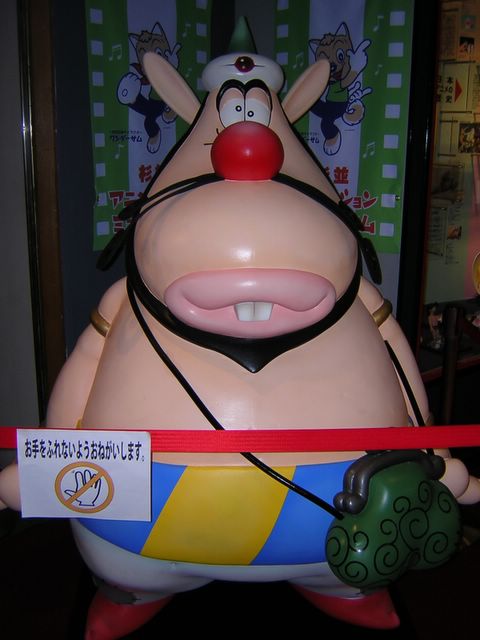
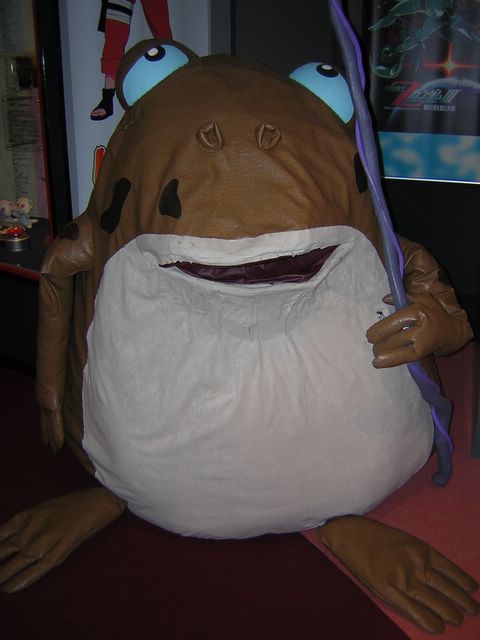
Here's a big frog dude.

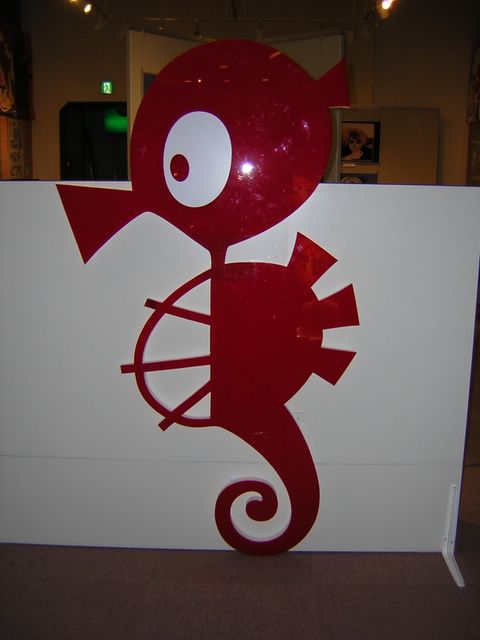
A seahorse character. I thought that this might be the mascot for a a specific anime publishing company, but I really don't know.

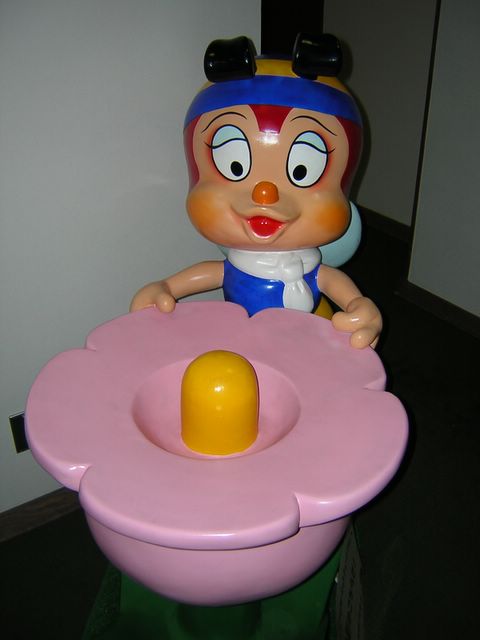
Here is a honey bee character with her (?) favorite flower.

Tuesday, August 15, 2006

White Boy Wanted Dead or Alive

Yesterday night while walking home, I was racially profiled and stopped by the cops - it was approximately 11:20 at night. I was taking my usual route home from Asakusa Station when two bike cops pulled up in front of me in order to prevent me from walking.

They asked me in Japanese where I was going. I told them I was going home. They asked me what I was doing in Japan. I told them I was an international student. At that point they asked to see my gaikokujin touroku (foreign resident card). I took it out of my wallet and handed it to them before asking them what this was all about.

Over the next ten minutes, I made small talk with the cop who wasn’t scribbling down my name, appearance, local address, phone number, disembarkation date, and favorite type of sushi on a clipboard. As I suspected, they were checking to make sure I wasn’t an illegal. The areas of Asakusa and nearby Ueno are notorious for red-light districts, yakuza headquarters, and drugs. I guess there must be a lot of illegal immigrants there too.

There weren’t any problems with the run-in that led to me being immobilized in fast hardening anti-crime foam or hit in the kneecap with nightsticks, though the cops did think it was a bit fishy that I was registered in Kyoto but currently reside in Tokyo. I explained to them the whole summer internship thing via Stanford University and they seemed to get the picture.

As they were finishing up, the cops said I spoke great Japanese and wished me good luck with my studies before biking off. That was it.

I wasn’t frightened or anything during the inquiry; more than anything, I couldn’t get over how funny the whole thing was. First of all, I wonder why they approached me in Japanese if I was clearly a foreigner. Were they trying to test me to see if I could speak the language? What would have happened had I played dumb and only spoke to them in English as though I hadn’t a clue what they were saying? Would they have been intimidated and gone away or switched to English to confront me further?

While they were just doing their job, it is obvious that the Japanese police profile and target white people because they are visibly different from the Japanese. The real illegal aliens in Japan however (some of whom I have met), are predominantly people from nearby Korea, China, and Taiwan. Indeed, a trip to the nearest 100-Yen Shop a block from where I was pulled over would surely yield several illegal workers.

However, given the same circumstances that night, had I been a Chinese-American or Korean walking home, I would have surely not been stopped. While Japan is certainly still a homogenous society, Tokyo feels more multicultural than ever. A Japanese coworker at Columbia once told me, “It used to be that you could tell who everybody was. Japanese people looked like Japanese, Chinese looked Chinese and so on. But nowadays, everybody looks the same. It all mixes. That’s Tokyo fer ya.”

Thus, ironically, it seems that if you’re a non-Japanese Asian or Asian American in Japan you may still be grouped under the umbrella of “looks Japanese” and left alone. White skin, on the other hand (and black skin for that matter, though there are very few black people in Japan), is a dead giveaway that one is not Japanese, and as good of a reason as any to hassle someone about a wrongdoing or infringement.

All it takes is a change of scenery to flip everything upside-down. This was the first occasion where I ever felt like a minority. It's not a feeling I will likely forget.

B.E.W.

Here is a picture of my new game systems (well...the PSP isn't that new). I named my PSP "Columbia Rose" because it's sleek and sexy. I named my Nintendo DS Lite "Columbia Rose Lite" because it's fun and flirty.

I like a store that is honest about the items it sells.

Monday, August 14, 2006

Comic Market (コミケ)

Yesterday, I went to Comic Market, known as Comiket for short (pronounced comi-kay), at the Tokyo Convention Center. The convention center is also referred to as the“Tokyo Big Sight.” Don’t ask me about the name; perhaps the designers of the building wanted to make you feel like you’re in a space station while visiting.

Comiket is the largest comic convention in the world, and occurs twice a year at the Tokyo Big Sight, once in August and again in December. Unlike the American Comic Con in San Diego, which showcases upcoming Hollywood movies and toy lines, Comiket is entirely for unknown, independent comic book artists.

One can buy the Comic Market magazine at any comic shop in Japan. The phonebook sized monthly publication lets any aspiring artist submit a picture and profile of their homemade character or series (for a small fee) to appear on the pages of the magazine. The hope is that the artist will get some sort of publishing deal or at the very least a growing fan base.

Think of Comiket as an indie music or movie festival only with comic books (manga). Because the convention supports aspiring artists and series, you will not find any of the canonical Japanese texts at the rows and rows of private vendors in the airplane hanger sized exhibition spaces. No Bleach, no Dragonball, no Fullmetal Alchemist, and certainly no Pokemon.

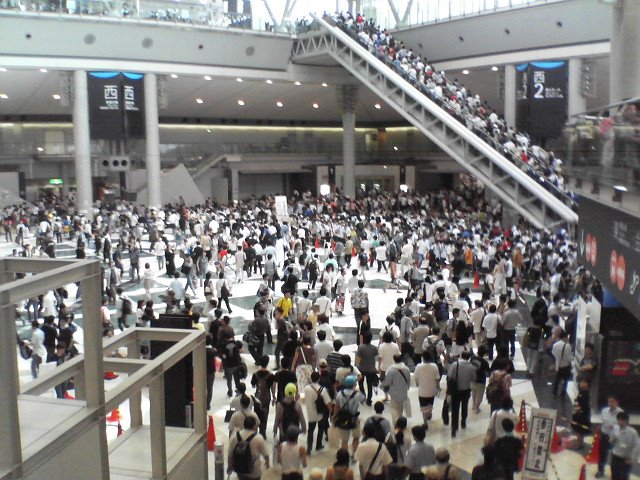
To say the event was crowded would be an understatement of epic proportions. Like the Asakusa fireworks show I wrote about earlier, I was packed ear-to-ear with people in the Big Sight. People line up hours before the event starts and stampede inside when the doors open to get to their favorite vendors and buy the all- important “limited edition” goods before they sell out. Many artists sit at tables and will draw personalized artwork featuring their characters for fans.

I didn’t know any of the series, so I breezed through each of the nine exhibition halls relatively quickly, dodging through the human obstacle course; however, some patrons were in it for the long haul, carting around rolling suitcases filled with purchases.

When I told my coworker that I was going to Comiket, she told me not to wear any of the promotional shirts that the anime department at Columbia had given me or they would likely be ripped off by rabid fans screaming, “Where are they selling this. WHERE ARE THEY SELLING THIS?!” Evidently this happened to her a while back.

Lovers of pornographic manga were likely in heaven at Comiket. Tables as far as the eye could see were filled with books and books of naked girls with bulging breasts, petite school girls, and vicious S&M specialty stuff. Unsurprisingly, people in this area were entirely male.

The newest fad in Japanese Manga is “Boys' Love” (BL) or homosexual male manga. Just like the heterosexual female pornographic manga, BL books feature guys having sex in romantic locations. Interestingly however, when I went to the exhibition hall that sold the genre, the artists, sellers, and purchasing fans were all women. I didn’t see a single man (straight or otherwise) in the area.

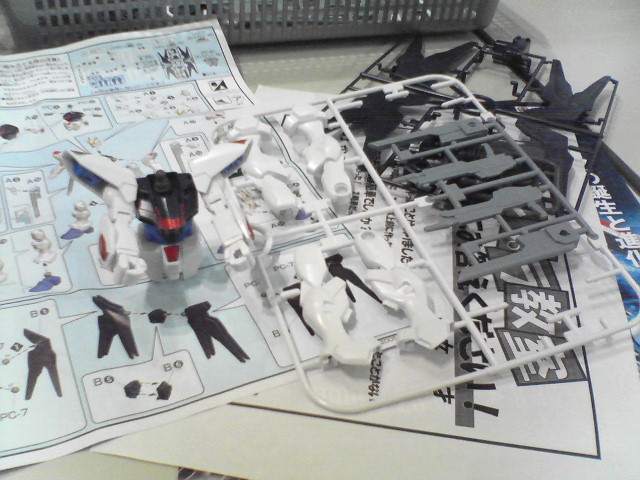
The only "name-brand" thing at the convention was a table sponsored by Ban-Dai that let you build a Mobile Suit Gundam snap-together model for free if you waited in line. I sat across from a ten year old Japanese boy who snapped his together in five minutes flat while barking orders at his mother for what piece he needed next. My chubby links shook as I tried to place the microscopic stickers on my Gundam's plastic chest plate. I left the Comiket feeling exhausted; I must be getting old.

B.E.W.

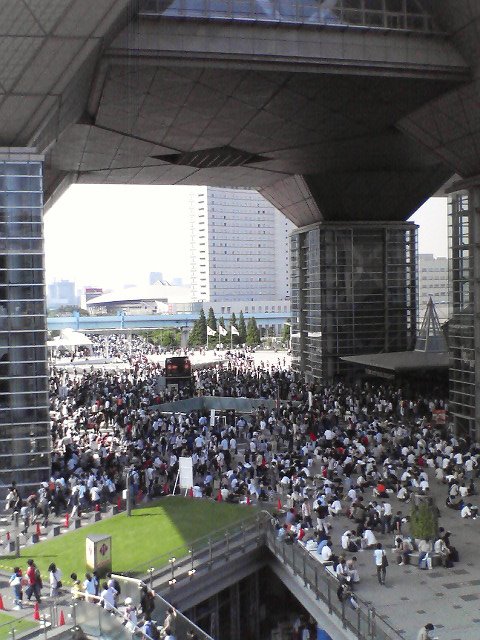
Here is the entrance of Tokyo Big Sight viewed from above at the 70th Annual Comic Market.

Run ants run!!!

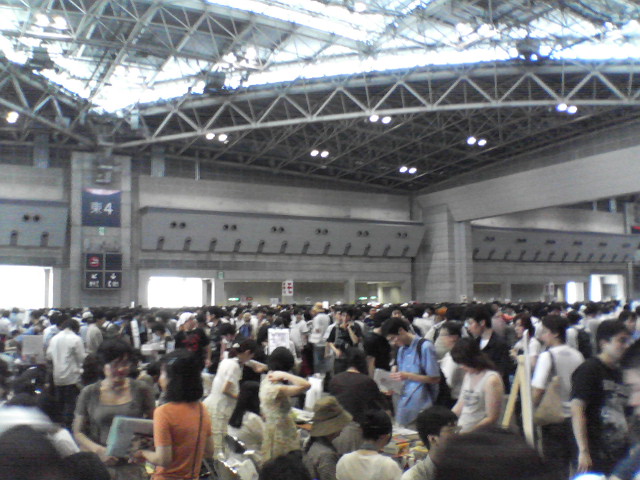
Here is a shot of one of the exhibition halls.

Me assembling my Gundam.

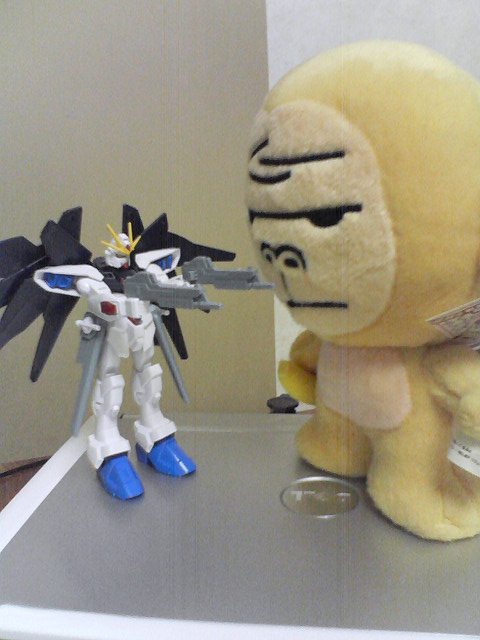
Gundam Vs. Mondo Monkey!!! Ready...FIGHT!

Cosplay (コスプレ)

What would a comic convention be without cosplay?!

I’ll admit it; I went to a midnight showing of Star Wars Episode III with some of my college buddies on the night the movie came out. However, I didn’t bring my own lightsaber, nor did I dress up in a custom fitted storm trooper outfit. While Star Wars and LOTR fanatics are certainly visible in America, and likely camped out in front of the multiplexes weeks before their respective movies hit the theaters, Japan wrote the book on dressing up like a dork.

The Japanese term “cosplay” (コスプレ) is a combination of the words costume and play. Cosplay is the art of dressing up like your favorite comic book, videogame, and movie characters, and traveling in mass to comic book conventions, movie premieres, and parents’ basements to congregate with other social dropouts.

Indeed, Comiket’s own website has the following warning to convention participants written in both English and Japanese:

“Please be aware that cosplay and masquerading have yet to be widely accepted in mainstream Japanese society. Do not come to or leave the Comiket wearing a costume or people will point and laugh at you.”

Okay, I added the last bit about pointing and laughing, but the rest is straight from the online convention materials.

The rooftop outdoor exhibition area of the Tokyo Big Sight was renamed the “Cosplay Plaza” and served as home for the hundreds of people who let their freak flags fly. The best cosplayers do not only wear an exact replica of their favorite character’s suit down to the last button, they have also perfected their character’s trademark poses by practicing them in front of the mirror for hours on end. This is so they can freely strike any number of dramatic poses for a picture when asked by one of the 35-year-old, unmarried, overweight, Japanese otaku fan boys with a Nintendo DS Lite case attached to their khaki shorts via a karabiner.

That’s right, you’re supposed to take their picture – that’s what the cosplayers live for. Once you see some of the cosplayers below, you’ll quickly get a sense for how perverted the whole environment felt. I was secretly giddy as a schoolboy snapping picture after picture (the only thing that slowed me down was the scorching Tokyo sun).

Judging from the people I saw, “hot” costume accessories included band-aids (placed on the face or upper arm), eye patches made out of white gauze, rainbow striped pantyhose, and camouflage anything. A classic accessory that never gets old is the headband with cat ears on it. The traditional sailor schoolgirl suit with knee-high cotton socks appeared to have taken a hit this year. Maids were very popular though, as were pirates (both those who looked like Captain Jack Sparrow and those who looked like Capn’ Crunch).

Like I always say (this might actually be the first time I’ve said it), if you’re going to immerse yourself in a foreign culture, you have to examine all aspects of it, not just the postcard worthy traditional stuff.

I hope you enjoy the pictures below as much as I enjoyed taking them for you, but I don’t think that’s possible.

B.E.W.

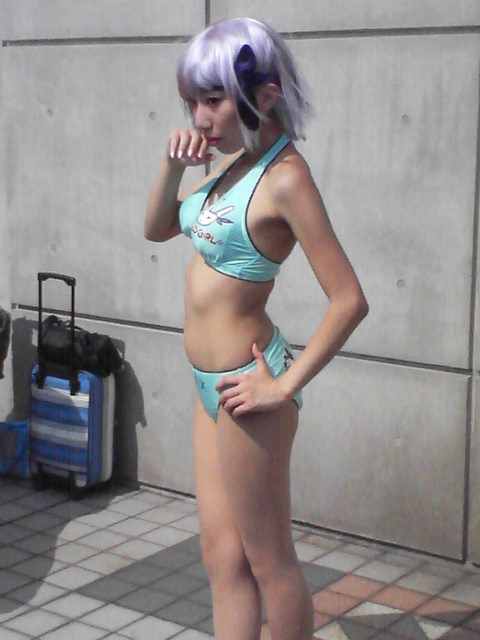
I actually know this character! She's one of the femme fatales from the Dead Or Alive videogame series.
ready...and POSE!

Your guess is as good as mine.

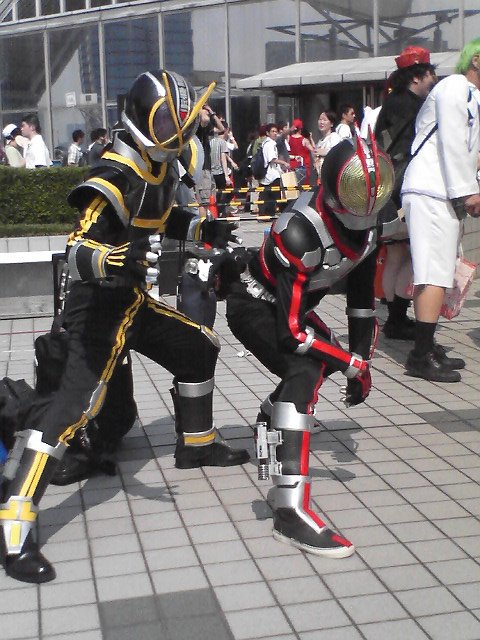
Masked Riders from the current television show and movie. These guys must have had to work an awful lot of hours at the pachinko parlor parking lot to pay for these suits.

I'm not sure if she is supposed to be a specific character, or if she merely got hot standing on the roof of Big Sight in the 95-plus degree weather. Man was it hot! I certainly had the desire to take off all my clothes and create a new hero called "Super Magma Powered Fighting Naked White Dude." (スーパーマグマ力ファイティング裸の白人!)