One nice thing about the Japanese major at Stanford is that it is small. Scratch that – it’s “intimate.” The word small conjures up images of a student huddled underneath a desk lamp, reading an ancient Japanese text in preparation for a one-on-one meeting with their professor. Come to think of it, this is a pretty accurate description of the life of a Japanese major…but I digress. I mean to emphasize that the group of professors and students in the Asian Languages Department are a close-knit bunch. We all know each other and we are all friends. I have been in Japanese class with the same group of friends throughout my four years at Stanford. This story takes place during 3rd Year Japanese class sophomore year.
The assignment from Tomiyama Sensei was to read a short article in a series about Japanese educational philosophy from our textbook and prepare an overhead transparency. We would then each use said transparency in our short individual presentations, summarizing the article’s main points for our classmates.
After two thought provoking student presentations, one on bullying in grade school and one on English language education in Japan, a third student got up to present. He placed his transparency on the overhead projector. The title was written in blue vis-à-vis pen and read “zurashi zubon.” Zurashi zubon roughly translates into “loose pants.” More specifically, pants that are so loose that they slide down past the buttocks, leaving the wearer’s underwear exposed. This is apparently a growing fad with young people in Japan, much to the chagrin of parents.
The student got only a few minutes into his introduction of zurashi zubon before he realized that he had selected his article from the wrong section of the book. I had been chuckling throughout the beginning of the presentation, but I couldn’t hold it in anymore; I burst out laughing. Something about the absurdity of two incredibly serious topics about education and one about pants finally hit me. My laughter got louder and louder, spiraling out of control.
The student giving the presentation crossed out his previous title with the same blue vis-à-vis pen and flipped to the correct section of the book, trying admirably to deliver an off-the-cuff presentation on an article he had never set eyes on before. I couldn’t do this in English, let alone in Japanese.
By this point I had removed my glasses, which were damming up the tears streaming down my face. I couldn’t stop laughing – I mean I really couldn’t stop. I hid my face as best I could behind my textbook, but somehow, like a moth to a flame, my eyes kept being drawn to the projection of the now crossed out title zurashi zubon. Every time I saw the title I re-erupted with tears of laughter.
At this point in the class, everyone had become well aware of my hysterics. I hadn’t stopped laughing for the past five minutes, and had now taken to banging on the table while gasping for air. Consequently, other students in the class started laughing at my ridiculous display. Eventually even Tomiyama Sensei started laughing, as did the student presenter. There we were, all of us, laughing like fools at something as silly as zurashi zubon. It would be a long while before our laughter would die down. I honestly don’t even remember what else was covered that day in class.
Over my years working as an office assistant and studying as a student in the Asian Languages Department, I have had many such hilarious, touching, and memorable experiences with friends and faculty. However, something about this particular memory sticks with me. I think it must be the feeling of friendship and support that can only come from a small…I mean…“intimate” major.
If you are reading this, then Ben Whaley has successfully received his B.A. with honors in Japanese. Next year Ben hopes to be living and working in Japan. He plans to wear zurashi zubon on the plane flight over.
*The preceding short story originally appeared in the 2007 DLCL commencement bulletin.
Sunday, June 24, 2007


Friday, June 22, 2007
Graduation! (卒業式)

Well, I finally made it! I am now officially a college graduate. Here is a picture of me receiving my diploma from Asian Languages department chair, Professor Steven Carter.
Thank you to all the people that have encouraged and supported me throughout my college education.
This is only the beginning...
Stay Tuned!
B.E.W.


Friday, May 18, 2007
Honors Thesis DONE! (卒論)

My senior honors thesis entitled: Why is Curly a Woman? Presentationality and American Nostalgia in the Takarazuka Revue 「どうしてカーリーは女か?宝塚歌劇におけるアメリカンノスタルジアのイメージ」is finally complete! After close to a year of hard work, the paper is printed and submitted to my department advisers.
Just for clarification, the paper was written entirely in English, though due to the subject matter, many Japanese vocabulary words, phrases, and concepts were utilized.
In a nutshell, my thesis looks at the Takarazuka adaptation of Rodgers and Hammerstein’s classic American musical Oklahoma!. More specifically, I examine how the all-female Japanese production simultaneously evokes nostalgia for images of American culture but also maintains a distinctly “presentational” (over-the-top) Japanese theatrical style.
If any readers are heading to Japan in the near future, do not miss the opportunity to see Takarazuka. I guarantee you will not be disappointed!
B.E.W.
P.S. - In recent news, my honors thesis has been nominated for university-wide awards. Maybe I'll take home academia's equivalent of the Oscar!
Monday, April 23, 2007
Happy Language Anniversary! (日本語記念日)
In light of my recent 5000th hit, I have decided to write a post about language learning.
By the time I graduate from Stanford this spring, I will have been studying Japanese for ten consecutive years. I have certainly come a long way since my first Japanese class with Ms. Morse at Eckstein Middle School in Seattle, however, every week as I meet with my current teacher Nakamura-Sensei and pour over sample test questions from the Japanese Language Proficiency Exam, I realize how far there is still to go!
My ultimate goal is to be bilingual, or as close to that as a non-native speaker can get. The Japanese have several phrases that speak to language fluency, such as the onomatopoeic word “pera pera,” or the formal word “ryūchō.” Throughout my time in Japan, I found myself telling countless people about my love of the Japanese language and my desire to speak it at a near-native level.
Half of the Japanese people I spoke to, using the word “fluency” to articulate my ultimate goal, would respond that I was already fluent in Japanese and didn’t need to study anymore. While some were undoubtedly being polite, others were genuinely serious. They really couldn’t see why I would want to continue studying Japanese; to them, as a foreigner, I was as good as it gets.
I am always dubious when I hear that so-and-so is “fluent” in Japanese, especially if they are a westerner. Call me jealous if you must, but these aforementioned responses illustrate a common problem with labeling someone as “fluent” in a given foreign language. Namely, what does the word fluent even mean? It means different things to different people. For me, true fluency in Japanese (or any language for that matter) is the ability to freely switch between reading, writing, or speaking different languages, and have there be a relatively small gap in the quality of personal expression.
That is to say, if I were to suddenly switch and continue this post entirely in Japanese, my word choice, humor, and for a lack of a better word, personality, would be largely unaffected. To me, this is the true sign of a fluent individual and the thing to strive for in foreign language study. できるかな?
If you were sat down in front of a camera or tape recorder and interviewed in a foreign language without the ability to speak English (as I have been), what would the quality of your answers be? Would they be radically different from what you intended? Or, would you find that you could freely articulate all the points and emotions you wanted to? Could you make the interviewer laugh and cry at the appropriate moments during your story? These are the questions that plague those in search of language “fluency.”
I would find myself thinking about these questions from time to time when I was in Japan, usually when I was particularly horny and fantasized about kissing and taking a Japanese woman as my future wife. I began to contemplate, if my wife spoke little or no English, would I be able to articulate my “true self” to the woman I loved? Would I appear as a complete person or just half of the funny, charming, and loveable person I could be were I wooing someone in my native tongue? What about my parents? Could they talk to my wife? Would they be upset if they couldn’t?
It all sounds like a reality show waiting to be pitched. A white guy who speaks no Japanese dates a Japanese woman. Taking a cue from a classic episode of I Love Lucy, he wears a wireless earpiece and is constantly being fed what to say in Japanese to impress her throughout the date. At the end of the show it is revealed that the white guy can’t actually speak any Japanese without the help of the bilingual translator and the girl has to choose whether she still likes him or not.
Allow me to shift gears for a moment and reflect on learning Japanese. People often comment that Japanese must be very hard to learn. It is! Well, parts of it are anyways. I don’t know how hard or easy Japanese ranks in the grand scheme of foreign languages, but I would say to speak Japanese naturally is difficult. I have certainly been kept busy over the past 10 years. I love learning foreign languages because there is always the possibility for improvement – there are always natives to speak to, books to read, and things to write. In this sense the sky’s the limit in terms of language growth if one is committed.
People also ask me why I began studying in the first place. I don’t know exactly why I started studying Japanese but I know why I continue: studying and getting better in the language makes me happy. As a kid, I always liked sushi and videogames, but I don’t think either of those products of Japan particularly spurred my interest in the country. More than anything, I started studying Japanese in middle school because it was radically different from English and because I thought (rightfully so) that it would be fun.
It can sometimes be difficult to be a language major at Stanford – a penguin in a flock of seagulls. A friend once asked me what my major was and I said “Japanese.” She responded, “and what else?” When I said that was it, she immediately started backpedaling and telling me how “cool" Japanese was. I laughed…it was fine. Most people at Stanford view language majors as a light snack before dinner, a fun romp when compared to more rigorous engineering or scientific majors. People often pick up a minor or double-major in Spanish / Portuguese, but will rarely devote their entire course of study to the language. The same can be said in my department where only one other guy besides myself is a “true” Japanese-only major. The rest are double-majors or minors.
I hope there is something to be said for those that dedicate themselves to the study of a different language and culture. I am happy that I have made this a priority during my time at Stanford. I very much believe in learning languages and expanding your cultural horizons. I think that is something that the world needs more of.
Japanese is a wonderful language to study…so is any other! What are you waiting for? Get out there and start learning one!
B.E.W.
Saturday, January 27, 2007
Too Late!

While I was searching around the web I found this advertisement for McGriddles. The Japanese reads, 「だれも知らない朝ごはん、はじまる。」 or "The breakfast nobody knows is coming!" When I was in Japan, my beloved McGriddles were nowhere to be found. It seems like they are finally making their way to the land of the rising sun!
About time!
B.E.W.
The King of Beers!

Happy 20th Anniversary Asahi Super Dry!!!
アサヒスーパードライ20周年:
まだ一番うまいビールだぜ!
-----------------------------------------------------------------
Speaking of Japanese beer, if you ever find a store that sells Hitachino Nest Beer (常陸野ネストビール), DO NOT miss the opportunity to sample a truly wonderful and unique beer unlike any other - guaranteed! The Hitachino beer brand is actually produced by a sake brewery named Kiuchi. They make a series of ales brewed with rice – the result is a crisp, refreshing beer that tastes like sake.
Nest Beer (named so because of the cute owl mascot) comes in two varieties, white rice (白米) and red rice (赤米). Both are incredibly complex and flavorful. I was completely unfamiliar with this brand until I happened to come across it at a beer and wine store specializing in imports. If you happen to find a bottle, don’t miss the opportunity to snag a real drinking jewel!
B.E.W.
Saturday, January 20, 2007
Get a Job, Ya’ Bum! (就職活動)

Nowadays every time my cell rings I wonder if it’s the real world calling. I am fast coming to grips with the realization that in a short period of time I will be fresh out of the ‘Stanford bubble’ and charged with the task of finding something to do with my life. This is terrifying to say the least, the stuff of nightmares.
Maybe the guy pictured in the red cap and overalls will be my future employer. Nintendo of Japan slipped five golden tickets into their first one million Wii systems. The lucky soles who find them get to compose videogame music at the Kyoto based headquarters and meet Willy Wonka himself, Super Mario and Legend of Zelda creator Shigeru Miyamoto. Composing game music for Nintendo would be a dream, especially considering my interest in music and entertainment. Is it possible? I don’t know. Is it worth a shot? You bet!
Applying to Japanese companies is a daunting process for a foreigner, made worse by the fact that you begin to doubt if said company is even willing to hire non-Japanese employees to begin with. Most global companies such as Sony, Nintendo, Microsoft, Google, and Amazon.com all have headquarters in Japan that operate autonomously from the American branch. Nintendo of Japan and Nintendo of America are completely different companies and understandably have different job opportunities and management staffs. A typical high school kid who wants to make videogames some day won’t be doing that in Redmond,
Washington, but they might be doing it in Kyoto.
I have the PDF application to be a composer at Nintendo on my computer, but I had to falsely enter personal information into their online database to even get the application. There were no options to receive employment materials if you didn’t have a permanent residence in Japan. Does Nintendo or any Japanese company for that matter want foreigners? I think they do, but one’s way might only come from a Japanese contact within the company or a headhunting firm.
Perhaps I’ll be back at Columbia Music Entertainment in Roppongi. Hey, at least I have friends there already. I have been debating asking my internship coordinator for a job. He also happens to be the director of Human Resources. But would I enjoy my job?
The choice ultimately comes down to what I value more, location or job. If living and working in Japan is my first and most important requirement, then I have to settle for what might not be my dream job. There is a plethora of English teaching and private tutoring jobs available in Tokyo. Other easy-to-enter employment opportunities in Japan include kebab stand operator, tissue packet distributor, and 100 Yen shop manager. At this point I don’t know which I’m leaning towards.
There are plenty of neat companies in Japan such as Miyazaki’s Studio Ghibli and Nana-on-Sha (the makers of the Parappa videogame series) that are just dying to be infiltrated by westerners. But then there’s rock steady U.S.A. Wouldn’t I be crazy not to seek employment in America first? I met the American ex-head of Tower Records Japan while I was working at Columbia. He worked for Tower in California first before they shipped him off to Japan. He rose up the ranks in the Japanese company, ultimately landing at the top, and managed to make the record store chain the most popular in Japan. The same cannot be said for Tower in America which filed for bankruptcy in 2004.
One thing is for certain, however, I miss Japan! With my roommate spending the quarter in Berlin and friends popping off to Australia and South America in the middle of the school year for week long excursions, I really do miss living abroad and I would like to return as soon as possible!
I’ll keep you all posted.
B.E.W.
Tuesday, January 09, 2007
Happy New Year!

新年明けましておめでとうございます。
Welcome to 2007 everyone! Best wishes for a healthy and happy new year. 2007 is the year of the boar or "inoshishi" (猪) in Japanese.
では、今年も宜しくお願い致します。
B.E.W.
Monday, January 08, 2007


Saturday, December 02, 2006
Going Home (帰国)

This concludes our broadcast…
While I was away, the bathroom in my Seattle home got a new addition. Staring at this Toto Washlet toilet in my American bathroom, a mirror image of what my rear graced countless times while in Japan, I cannot help but feel that all things come full circle...
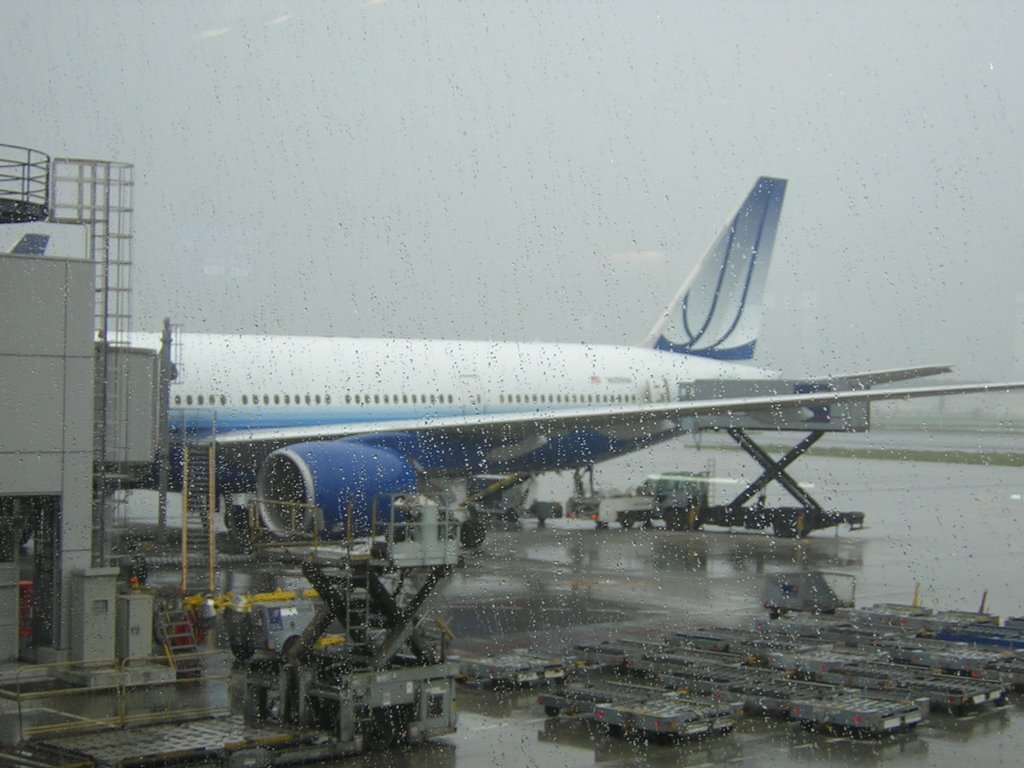
A typhoon hit Tokyo during my last week. Tokyo Disney Sea was wet, but when departure day arrived, waves of water rolled down the street near my Asakusa Weekly Mansion and the howling wind was easily audible outside my window. I needed to wire money to my host brother in Kyoto to close out my mobile phone account, so I braved my way through the torrential onslaught, trudging through ankle deep water to a nearby convenience store ATM.
Even with written directions from my host brother on how to transfer money to his account (displayed on my cell phone in Japanese characters), I was still completely baffled by the electronic process and had to enlist the help of the friendly store clerk. He was very patient and I eventually got the money sent after several unsuccessful attempts at punching buttons on the machine myself.
Japanese ATMs also have no deposit or withdrawal limits, so I was able to take all of my summer internship earnings with me in a huge stack of cash – just like an international drug dealer. I left a hundred dollars in the account to keep it open. Now, when I become a super villain, I can rightfully say that I have an “offshore account.”
After the banking was taken care of (and I was thoroughly soaked from the roundtrip), I was ready to check out and head to the airport. Leaving my Asakusa Weekly Mansion was a painless affair. There were no additional charges on my account, so I signed a piece of paper and walked out the door. I can’t say that I was particularly sad to leave my broom closet prison cell.
A special train line runs directly from nearby Ueno to Narita International Airport. The ride was very quick, clocking in at only a little over an hour, but the train cars were absolutely packed with people. I had to stand for ¾ of the ride, smashed in between people and pieces of rolling luggage, as the train sped through the icy rain. Luckily I had shipped my luggage ahead to the airport so I only had to deal with a backpack.
United Airlines only allows two pieces of checked baggage, so I had to pay the equivalent of $170 in yen in order to check my third bag. I was infuriated at the astronomical cost, but there was nothing I could do – the airline had me over a barrel. I spent my time in the airport looking in the shops (they have a whole mall in the airport). There is also an observation field with benches and tables where one can sit and watch the planes take off.
I don’t remember how long the flight back was, but it was certainly shorter than the trip over. I watched several movies and ate the same crummy vegetarian pilaf. Before I knew it, I was staring at a blue customs declaration form on my tray table. I had no idea what to write on the form as I was bringing back suitcases filled with CDs, DVDs, and videogames. Most of my booty was personal gifts or unmarked audio / video product samples from Columbia, so I didn’t know how to accurately estimate their value on the form. I filled in some ballpark prices and took a gamble that the customs agents wouldn’t care.
In customs, one particularly annoying male agent decided to harass any person under the age of 25. He paced around the group and interrogated any college-age kid he could find. Things went well once I told him I was a Stanford student and started gushing about my summer internship at Columbia, after he asked me to describe what I did in Japan. Not knowing anything about Japan, the agent quickly disengaged me. He stared at my blue form with the itemization “CDs / DVDs = $500” and then stared at me. “Five hundred dollars huh? That’s how much it cost? You’re not bringing back like hundreds of CDs are ya?”
I didn’t have the heart to tell him that he was actually correct – Instead, I told him that CDs and DVDs are very expensive in Japan (which isn’t a lie). All things considered, customs was just fine. The only things the authorities seemed concerned with were powdered or liquid curry packets. Since I didn’t have either, I was home free.
…I am now in my senior year at Stanford, and busy myself with advanced coursework in Japanese language and literature, preparing for the Ministry of Education’s national proficiency exam. I am also writing an honors thesis for my major on the subject of the all-female Takarazuka Revue Theatre Company.
I hope that my stories were funny and entertaining when they needed to be, but also educational and inspiring as well. If you enjoyed my adventures and learned something new about Japan, then I did a good job. Japan is truly a country unlike any other in the world and a place that I love dearly. I urge all of you to experience it first hand. What are you waiting for? Make your own adventures!
Finally, I would like to thank all of the friends, family members, and strangers who read, commented on, and enjoyed A White Boy in Japan. Usually blogs like this only benefit school friends and grandparents. I feel privileged to have had people from all over the world reading my musings.
This blog will remain active and open from now on. It is now possible to read my entire adventure from beginning to end! While frequent updates on the site will drop to a minimum, I will post any and all new information regarding my senior thesis, Japan job search, and future Japan trips on this website, so please don’t forget the address!
I will leave you with my favorite Japanese quote, straight from the special edition DVD poster:
「自分が見えない時は、ライオンキングを見ればいい」
“When you forget who you are, watch Disney’s The Lion King.”
Thank you for reading.
Most Sincerely,
Benjamin Evan Whaley
A White Boy in Japan

Subscribe to:
Posts (Atom)