Saturday, July 29, 2006


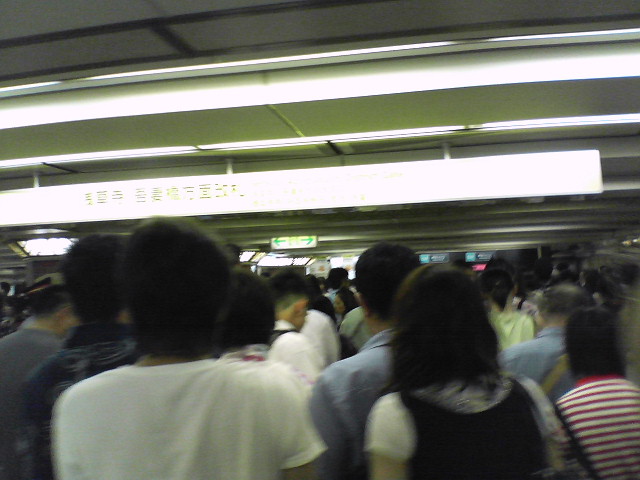
Sardines climbing the stairs to see the fireworks.

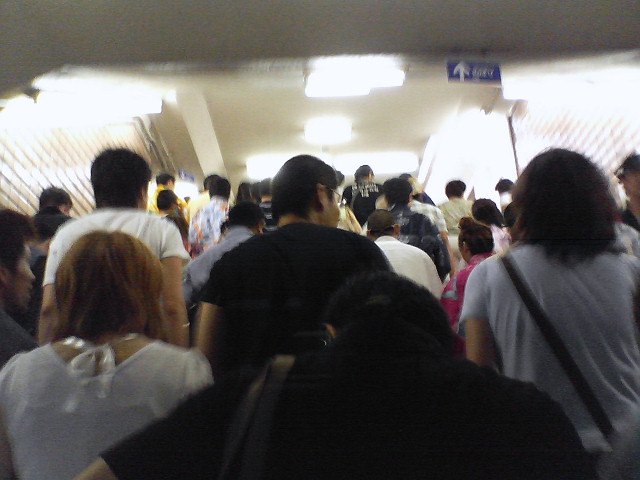
Here is a view of the Asakusa train station on street level. If you multiply this feeling by 13, you'll begin to get a sense of what it was like on the streets around my housing complex.

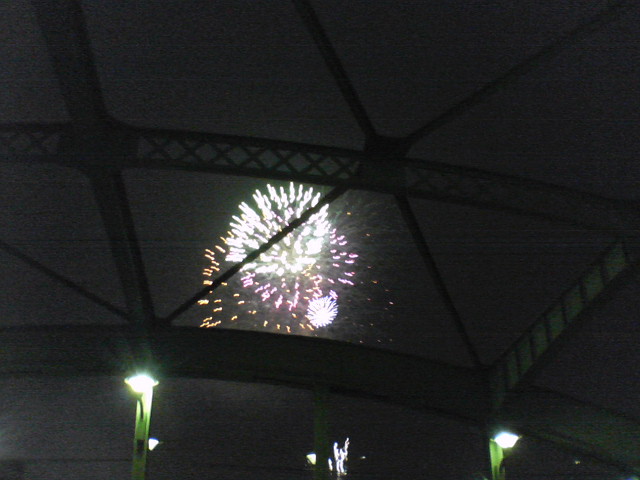
The only good still shot of the fireworks I was able to get. I captured this while walking across my bridge in the special emergency lane. Whenever I paused for a moment to snap a picture, a police officer would yell at me.

Wednesday, July 26, 2006

Yokohama (横浜)

Below are pictures from my daytrip to Yokohama (about 45 minutes west of Tokyo proper, by the seaside). I had the day off today because I have to work a concert event this Sunday for a group called Psychic Lover. They perform the title song for the new Power Rangers movie that comes out next month. I will actually be going to an advance screening of the movie tomorrow night at Toei Films in Ginza, so I will let you all know how it was. It can't be any worse than Brave Story!

Yokohama is the second most populous city in Japan behind Tokyo, but it sure didn’t feel like it (this could have been because everybody was working). Unsurprisingly, Yokohama felt like a bigger and more vibrant version of another port city I have already visited; Kobe. Like Kobe, there is a maritime museum, various touristy boat rides, a large seafront tower for viewing the bay area, and a Chinatown.

As of right now, Yokohama is my new most desired future living destination in Japan. This is mainly because it was a gorgeous day today (very hot though) and the breeze coming off the sea was just great. The streets were also wide with hardly anybody walking on them, a welcome change from the crowded, narrow streets of Shibuya or Shinagawa.

I first walked around the harbor and port area, looking in shops, and walking through parks. Yokohama wants to be San Diego, CA. Clothing stores sell surfer gear, old glass bottle-style Coca-Cola machines are in abundance on street corners, and it was the first time I saw Mexican food establishments in Japan! There were many opportunities to be a tourist, but I did not partake. I would have been the only gaijin AND the only customer at said attractions and rides because most people were working.

I finished up my day with a trip to the famous Yokohama Chinatown, the largest Chinatown in Japan (Kobe had one of these too). Having actually shopped in the haggling, cut throat environment of Beijing, Chinatowns fail to wow me anymore. How come Chinatowns never sell all the pirated stuff that they actually have in China? I ate dinner at a buffet-style restaurant in Chinatown and it was surprisingly good and cheap (well, cheap by Japanese standards, not Chinese standards). As far as I could tell, the majority of the people who worked in Chinatown were actually Chinese immigrants. Though they could speak fluent Japanese, I often had a hard time understanding their heavily accented speech. I’m sure Japanese people have the same problem when I speak.

After dinner, I took my time walking back towards the train station through an upper-class shopping boardwalk - It was very nice and peaceful. The jam-packed train I rode back to Tokyo was not very nice or peaceful. On the train, the girl to my left read her book by smashing her face against the page, so that the paper actually rested against her left eyeball. She would then manipulate the book in a way that her eye would slide down the paper, reading the story one vertical line at a time. At first I thought she was blind, or had poor eyesight, but she seemed to be looking around at all the advertisements in the train car just fine, and when she got off, she walked away from the train just fine. Oh, and men in Japan carry man purses. The guy to my right’s Louis Vuitton bag, which was just about as big as his chest, smashed me into my seat. It didn’t matter, I was still dreaming of my new home…Yokohama!

B.E.W.
Ascending the escalator from Minato-Mirai Station. *I first went to Yokohama Station and wandered around there for about 30 minutes, wondering where all the touristy stuff was, before realizing that I needed to take a different line about 10 minutes further to the port and harbor area itself.* Please note the giant Snoopy on the left hand side - they have Snoopy Stores in Japan - that's why he's there.

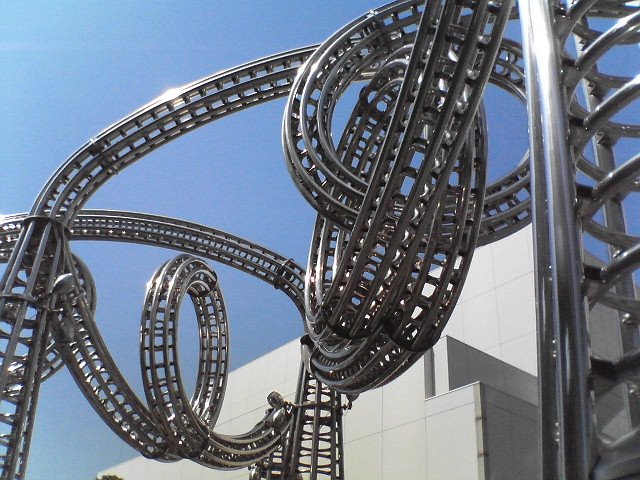
A nifty looking sculpture that reminded me of a rollercoaster track, right when you step off the escalator (assuming you look up that is).

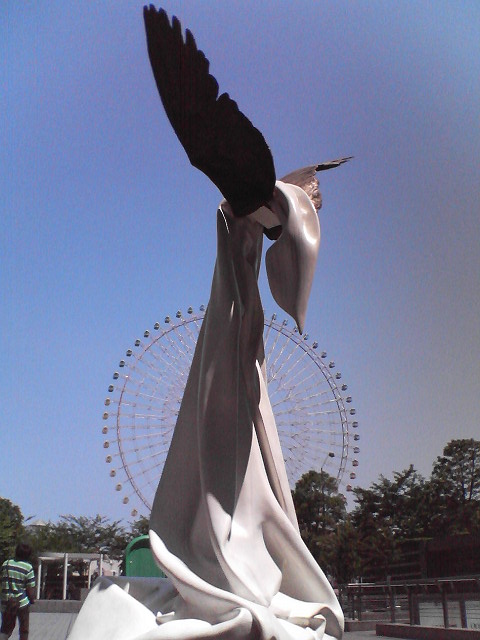
An interesting, semi-patriotic statue right outside the Minato-Mirai (Yokohama Sea Front) train station. You can see the giant ferris wheel in the background. I think this statue must have something to do with U.S. - Japan relations, since Yokohama was the first port city that was opened at the end of Japan's isolationist period thanks to Commodore Perry's intimidating black ships.

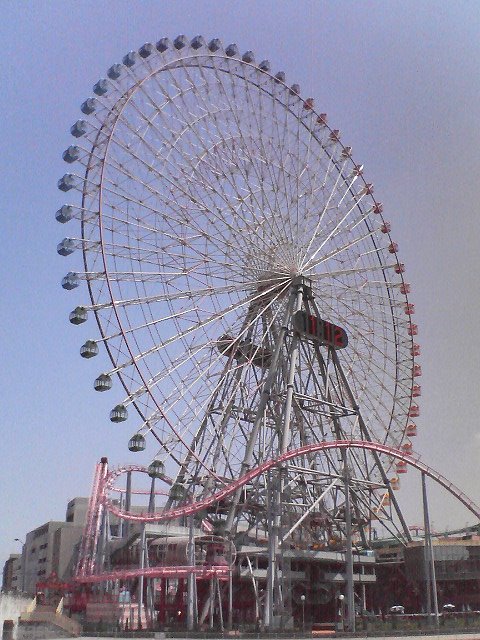
Yokohama's famous giant ferris wheel, part of the Cosmo World theme park. This picture was taken at 1:12 PM. I didn't ride the wheel because I had already been on the world's tallest ferris wheel, which is actually located in the Odaiba area of Tokyo (just FYI).

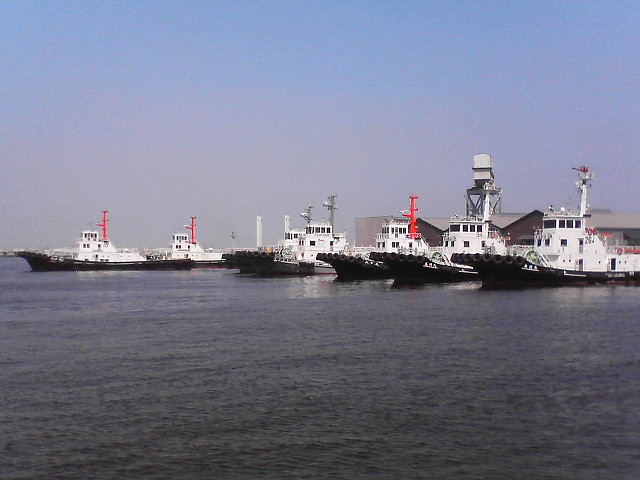
Ships lined up at Yokohama Port.

Trees with the ocean in the background.

A view of Yokohama Port from the top of a park, whose uninspiring name when translated back from Japanese was literally, "The park where one can see the harbor."

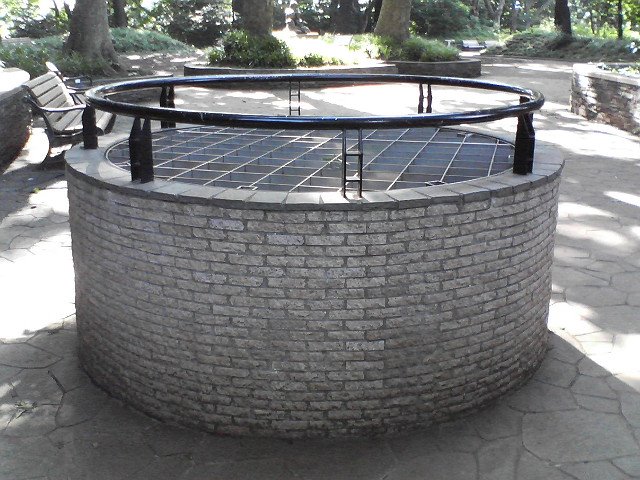
Here's the well that the creepy girl from The Ring climbed out of. They've sealed off the top, so her reign of terror is over...OR IS IT?!

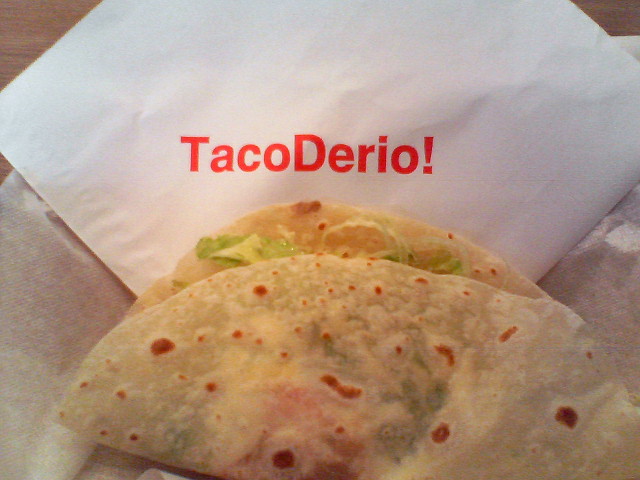
Here's the imported booze that gives "Corona's Bar" its name. After nearly four full months without anything that even remotely resembled Mexican food, I stared in awe at the mirage of TacoDerio like a tribe member who just won a reward challenge from Jeff Probst. Tears of joy dribbled down my cheeks as I savored the salsa, guacamole, sour cream, cheese, and homemade tortilla. It was the greatest lunch money could buy!

"Take a picture, it'll last longer!" Okay, I will. Behold, the singular taco of the Japanese island nation.

Here is the Nippon Maru, the most famous ship in Yokohama. This ship was built in 1930 for the purpose of training Japanese seamen and deckhands. Heavily restored after WWII, the ship is now sea worthy and has sailed to Hawaii. Nowadays, it sails out into Yokohama Harbor once a month for public demonstrations.

The English says Nippon Maru. The Japanese says the same thing if you read the characters right to left. This is interesting because nowadays, they would write the Japanese characters left to right just like the English. Most books, comics, and magazines in Japan are still read up - down, right to left, but there is also a large amount of stuff (advertisements and textbooks for instance) that is read left to right just like English.

The back of the ship. Sorry I'm not better with the nautical terms. Help me out...uh...hull?

A statue of a girl with open arms, expelling seagulls from her groin.

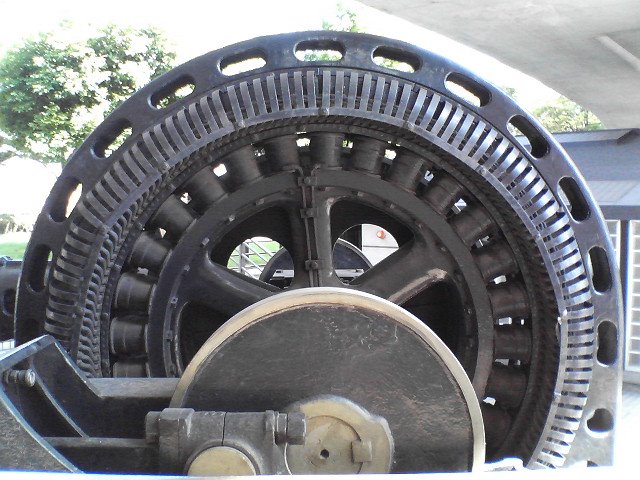
Here is a giant pneumatic thingy that was very important to ships and sailing and nautical stuff in many important ways. Such as...um...the...uh...

Here is the entrance to Yokohama's famous Chinatown, the largest Chinatown in Japan. The gates were created to mimic the architecture found at the Emperor's Summer Palace, a building that I actually visited during my trip to Beijing. Most of the people working in Chinatown were actually Chinese immigrants. While fluent in Japanese, their speech was heavily accented and at times very difficult to understand.